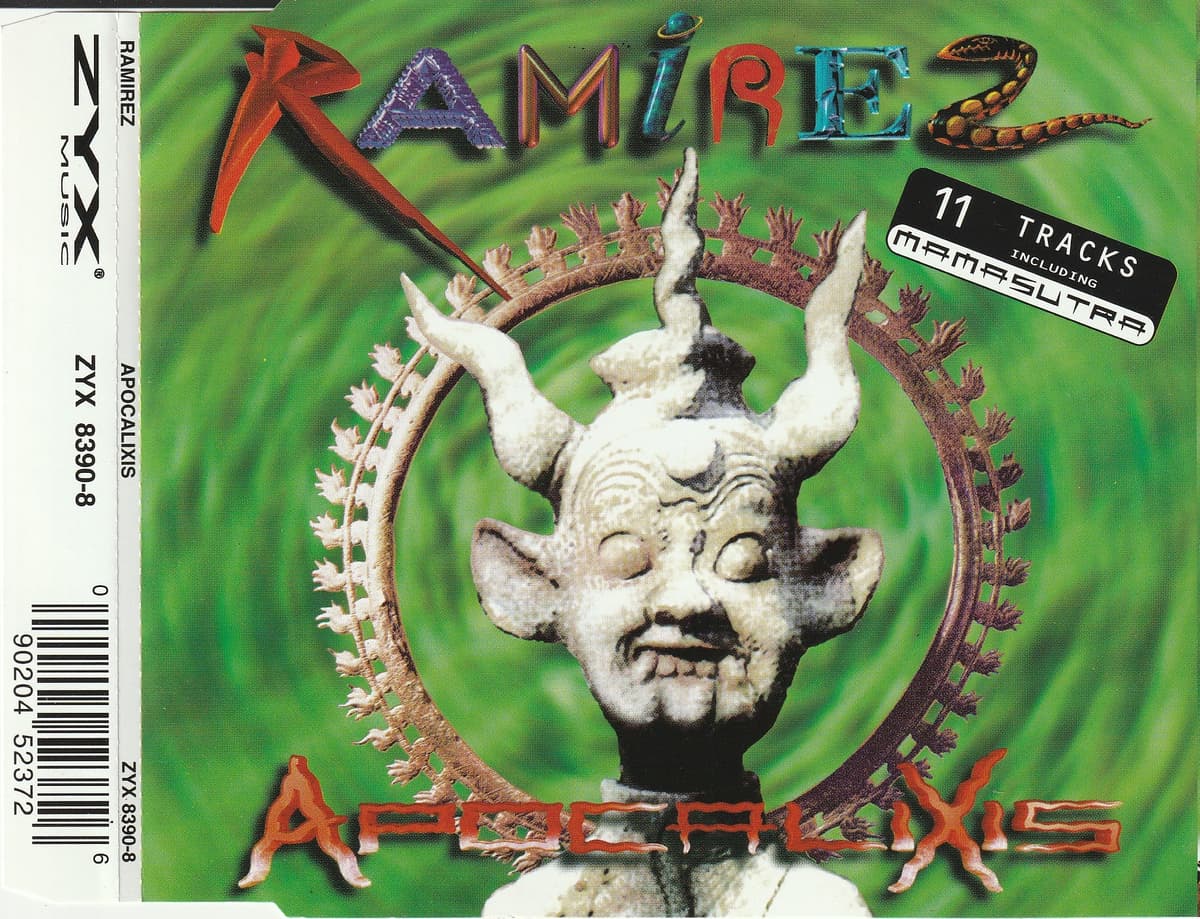
Apocalixis
Ramirez's 1996 EP "Apocalixis" delivers a potent dose of high-energy 90s electronic music, blending hard trance intensity with tech house grooves and gabber-influenced rhythms. Expect driving beats, i
1996 · DFC
Ramirez's 1996 EP "Apocalixis" delivers a potent dose of high-energy 90s electronic music, blending hard trance intensity with tech house grooves and gabber-influenced rhythms. Expect driving beats, i
1996 · DFC
This is the sound of a 90s rave at its absolute peak, a relentless surge of electronic power designed to move bodies and elevate spirits. "Apocalixis" is pure, unadulterated dancefloor fuel, characterized by its driving hard trance rhythms, pulsating basslines, and those instantly recognizable, often chanted, vocal hooks that burrow deep into your brain. It's an album for those moments when you need an injection of raw, euphoric energy, whether you're lost in a crowd or just trying to summon that same intensity in your own space. Own it if you crave the authentic, high-octane sound of 90s European club culture.
How does Apocalixis sound next to the rest of Ramirez's catalogue?
This album stays in step with the catalogue across the board — no axis departs enough to be worth its own note. Hover the dots to see where each one sits.
Cassette uses generative AI to enrich its catalog. How we use AI →