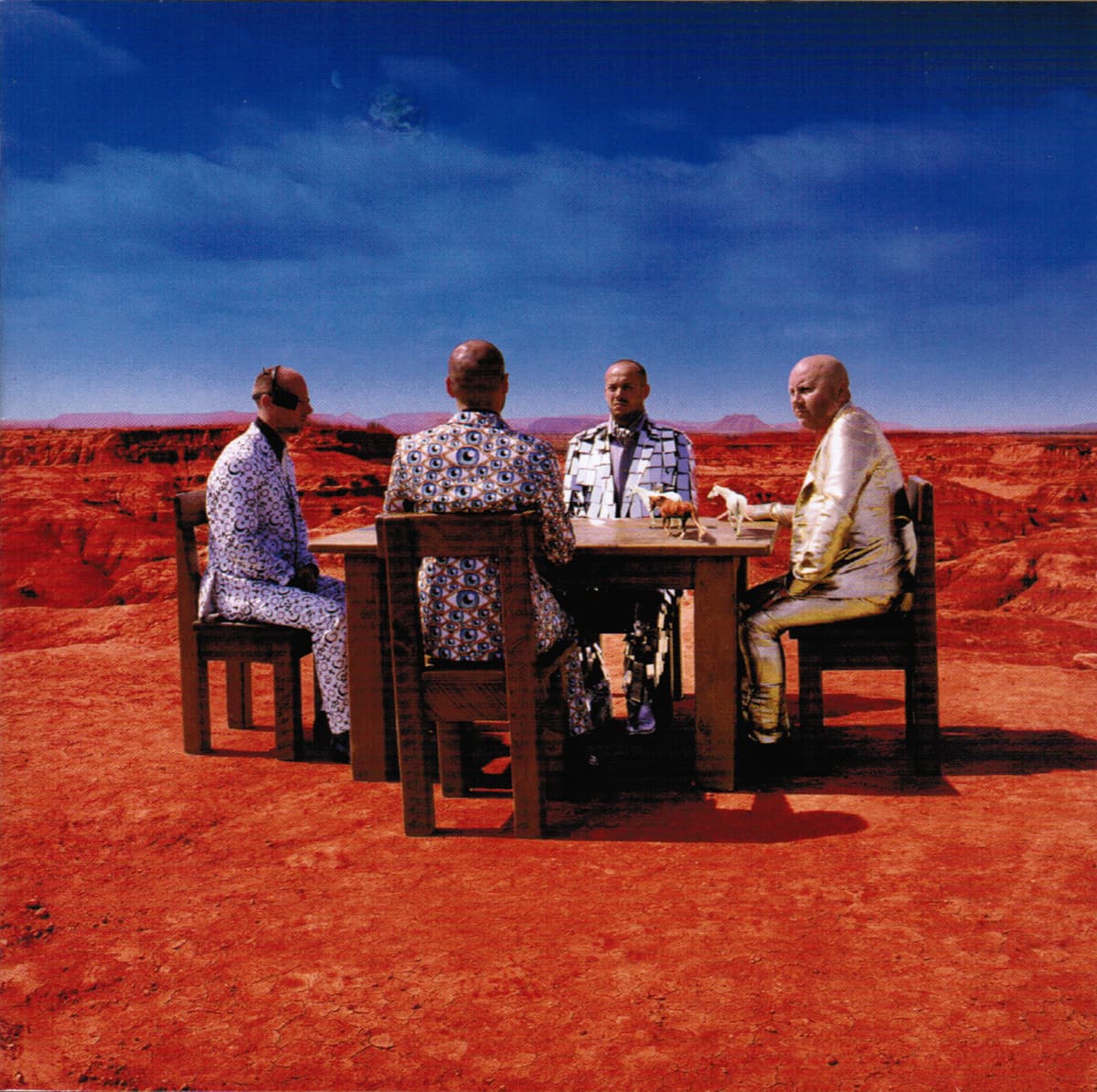
Black Holes and Revelations
A maximalist collision of space-age synthesizers, spaghetti-western guitars, and operatic defiance. It sounds like a high-stakes political thriller set on a distant planet.
June 28, 2006 · Warner Bros. Records
A maximalist collision of space-age synthesizers, spaghetti-western guitars, and operatic defiance. It sounds like a high-stakes political thriller set on a distant planet.
June 28, 2006 · Warner Bros. Records
The album is a sprawling, cinematic experience that feels like the soundtrack to a revolution occurring in a neon-drenched future. It captures a specific mid-2000s anxiety, blending the grandiosity of 1970s prog-rock with the sleek, digital sheen of the early internet age. It is music designed for the largest possible stages, yet it remains anchored by a deep-seated sense of individual isolation and suspicion toward authority. Sonically, it is a fascinating pivot for the band. While their previous work leaned heavily on Rachmaninoff-inspired piano and raw grunge distortion, this record introduces a heavy dose of synthesizers and rhythmic grooves. You will hear Prince-like funk on Supermassive Black Hole and Morricone-esque desert rock on Knights of Cydonia. The production is dense and layered, filled with laser-like synth arpeggios that bubble beneath Matt Bellamy's soaring, operatic falsetto. Owning this album is about embracing the more is more philosophy of rock music. It is for the listener who wants their music to feel like a high-stakes event, full of dramatic builds and explosive payoffs. Whether it is the apocalyptic warning of the opening track or the galloping, horse-riding rhythm of the finale, the album offers a sense of cosmic wonder and earthly defiance that few other records can match. It is a vital document of a band reaching their creative and commercial zenith.
How does Black Holes and Revelations sound next to the rest of Muse's catalogue?
Stargazing saturates this record far more than the artist's norm.
Cassette uses generative AI to enrich its catalog. How we use AI →