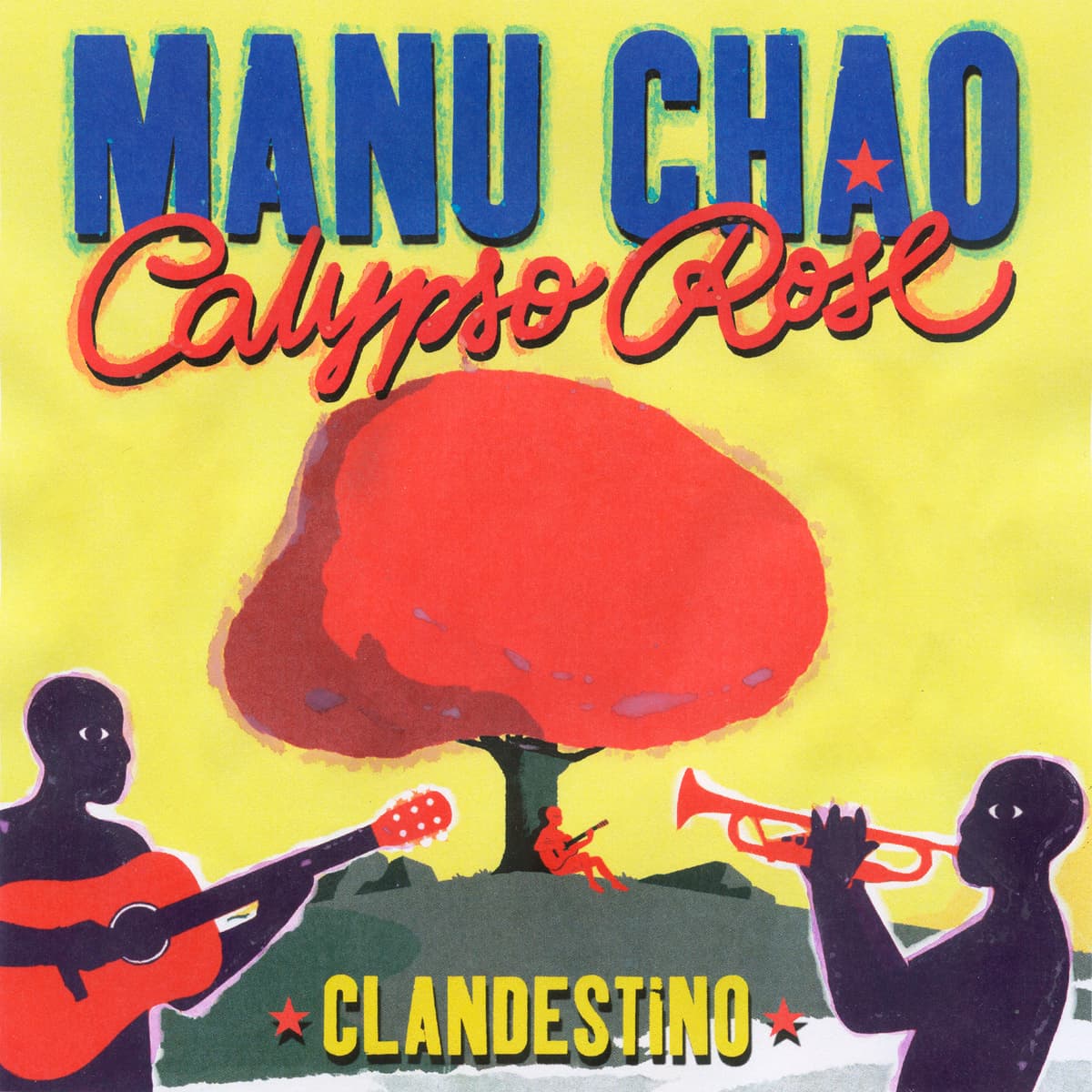
Clandestino is not just an album; it is a sonic passport.
It feels like a collection of postcards sent from the edges of the world, taped together with the hiss of a portable four-track recorder. The music is deceptively simple, built on repetitive acoustic guitar loops and gentle, shuffling percussion that suggests a constant state of motion.
There is a profound intimacy here, as if Manu Chao is whispering these stories of migration, loss, and survival directly into your ear while sitting on a park bench in a city where he doesn't quite belong.
The album’s brilliance lies in its recycled feel. Melodies from one track drift into the next, and radio static serves as the connective tissue between languages and cultures.
It captures the feeling of a clandestino, someone moving through the world without papers, living in the shadows but carrying a rich, vibrant internal life.
The production is warm and hazy, favoring the organic texture of a nylon-string guitar over studio polish, making it feel like a living, breathing document of a journey rather than a static product. Owning this album is like owning a piece of the global commons.
It is the ultimate companion for the solitary traveler or the person who feels like a stranger in their own land. It balances a deep, systemic sadness with a resilient, rhythmic joy that refuses to be extinguished.
Whether you understand the Spanish, French, or Portuguese lyrics, the emotional frequency is universal, offering a sense of solidarity and peace in an increasingly fragmented world.
How does Clandestino sound next to the rest of Manu Chao's catalogue?
This album stays in step with the catalogue across the board — no axis departs enough to be worth its own note. Hover the dots to see where each one sits.
Cassette uses generative AI to enrich its catalog. How we use AI →