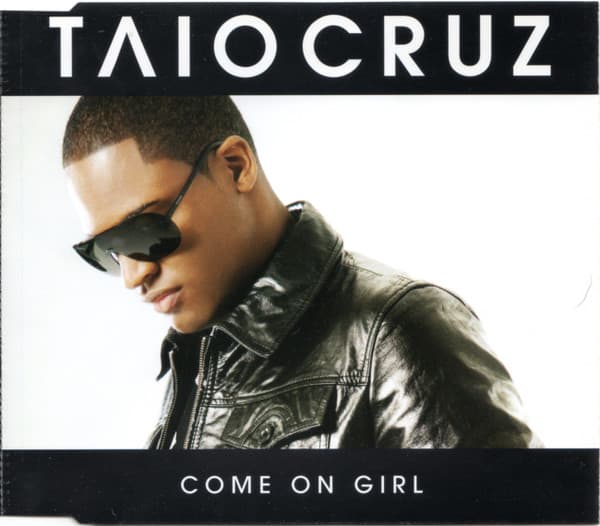
Come On Girl represents a pivotal moment in late-2000s pop, where the smooth textures of contemporary R&B collided head-on with the aggressive, buzzy energy of electro-house.
It is a release that feels like chrome and neon, polished to a mirror finish but possessing a gritty, sawtooth edge that keeps it from feeling too sterile. The central synth hook is iconic for its time, a distorted, rhythmic pulse that demands physical movement. What makes this release distinctive is Taio Cruz's dual role as a songwriter and a meticulous producer. Unlike many of his peers who relied on external hit-makers, Cruz crafted a sound that was uniquely his: a blend of soulful vocal runs and rigid, computerized beats. The track does not just invite you to the dancefloor; it commands the space with a confidence that was rare for a debut era. The layering of vocals, particularly the interplay between the lead and the sharp, female backing vocals, creates a sense of crowded, late-night excitement. Owning this piece of music is about capturing the specific zeitgeist of 2008 UK pop. It is for the listener who appreciates the dirty synth era: before EDM became a monolith but after the purely acoustic R&B of the early 2000s had faded. It is a high-energy artifact that remains surprisingly effective for workouts, pre-club rituals, or any moment requiring a surge of urban, electronic adrenaline. It is the sound of an artist finding his lane and accelerating into the mainstream.
How does Come On Girl sound next to the rest of Taio Cruz's catalogue?
The instrumentation foregrounds modular synth far more than the catalogue usually does.
Cassette uses generative AI to enrich its catalog. How we use AI →