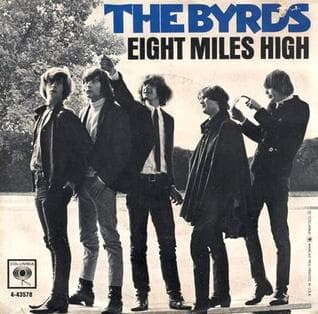
Eight Miles High
A dizzying collision of jazz-inflected guitar and haunting harmonies that redefined the limits of 1960s pop, capturing the disorientation of high-altitude flight.
1966 · CBS (2)
A dizzying collision of jazz-inflected guitar and haunting harmonies that redefined the limits of 1960s pop, capturing the disorientation of high-altitude flight.
1966 · CBS (2)
This isn't the sun-drenched jangle of Mr. Tambourine Man. Instead, it's a cold, high-altitude exploration of sound that feels both expansive and claustrophobic. The 12-string Rickenbacker, usually a source of warmth, is transformed here into a jagged, improvisational tool inspired by John Coltrane's saxophone runs. It sounds like the moment a familiar landscape becomes unrecognizable from thirty thousand feet in the air. The vocal harmonies are the anchor, yet they carry a ghostly, detached quality. They don't invite you in so much as they float above you, mirroring the lyrical themes of travel and displacement. The rhythm section provides a relentless, driving pulse that prevents the song from drifting off into total abstraction, creating a tension between the grounded beat and the soaring, chaotic lead guitar. Owning this single is owning a piece of a pivot point in music history. It represents the exact second folk-rock shattered into a thousand psychedelic shards. It is essential for anyone who wants to hear how jazz and Indian classical music first began to infect the DNA of Western pop, creating a sound that is as intellectually stimulating as it is sonically arresting. It is a record that demands your full attention, rewarding the listener with layers of sound that feel as fresh today as they did in the mid-sixties.
How does Eight Miles High sound next to the rest of The Byrds's catalogue?
Dreamy saturates this record far more than the artist's norm.
Cassette uses generative AI to enrich its catalog. How we use AI →