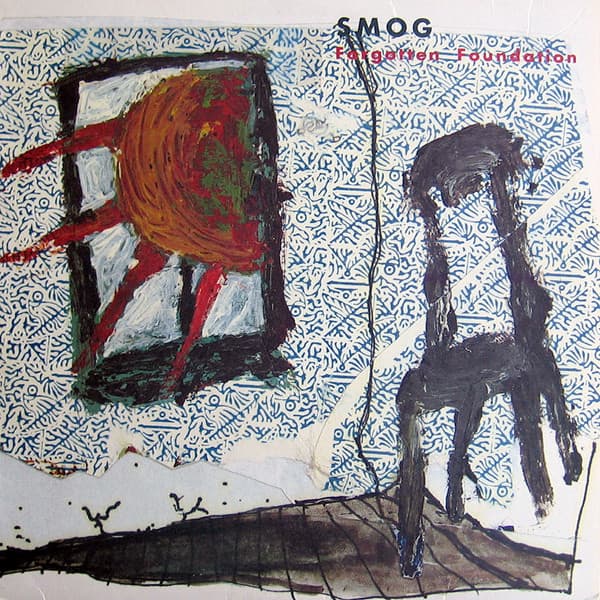
Forgotten Foundation
Abrasive, tape-hiss-drenched sketches of isolation. Bill Callahan’s early lo-fi experiments turn domestic claustrophobia into a haunting, fragmented art form.
May 25, 1992 · Drag City
Abrasive, tape-hiss-drenched sketches of isolation. Bill Callahan’s early lo-fi experiments turn domestic claustrophobia into a haunting, fragmented art form.
May 25, 1992 · Drag City
Forgotten Foundation sounds like a secret being whispered through a wall of static. It is an album defined by its textures: the grainy hiss of a four-track recorder, the dry thud of a primitive drum machine, and Bill Callahan's emerging baritone, which sounds here like it is being transmitted from a distant, lonely room. Unlike his later, more pastoral work, this record is urban and claustrophobic. It captures the feeling of being young, broke, and intensely creative in a space that feels too small for your thoughts. The songs are short, often ending just as they begin to cohere, which gives the entire experience a fragmented, dreamlike quality that demands your full attention. What makes this album truly distinctive is its commitment to anti-production. In an era where indie rock was beginning to find its way into the mainstream, Smog retreated further into the bedroom. There is a specific kind of beauty in the way Callahan uses noise not as a distraction, but as an emotional layer. The distortion on the vocals and the clatter of the percussion feel like physical manifestations of the social anxiety and existential dread that permeate the lyrics. It is not an easy listen, but it is a rewarding one for those who find comfort in the unvarnished truth of a home recording. You should own this album because it is a masterclass in how to do more with less. It proves that you do not need a studio or a band to create a world; you only need a tape recorder and a perspective. For fans of the early 1990s underground, it is an essential artifact that bridges the gap between noise art and folk music. It serves as a reminder that the most powerful musical moments often happen in the quietest, most private spaces, away from the polish of the industry.
How does Forgotten Foundation sound next to the rest of Smog's catalogue?
The production is pushed notably harder into lo fi than this artist usually allows.
Cassette uses generative AI to enrich its catalog. How we use AI →