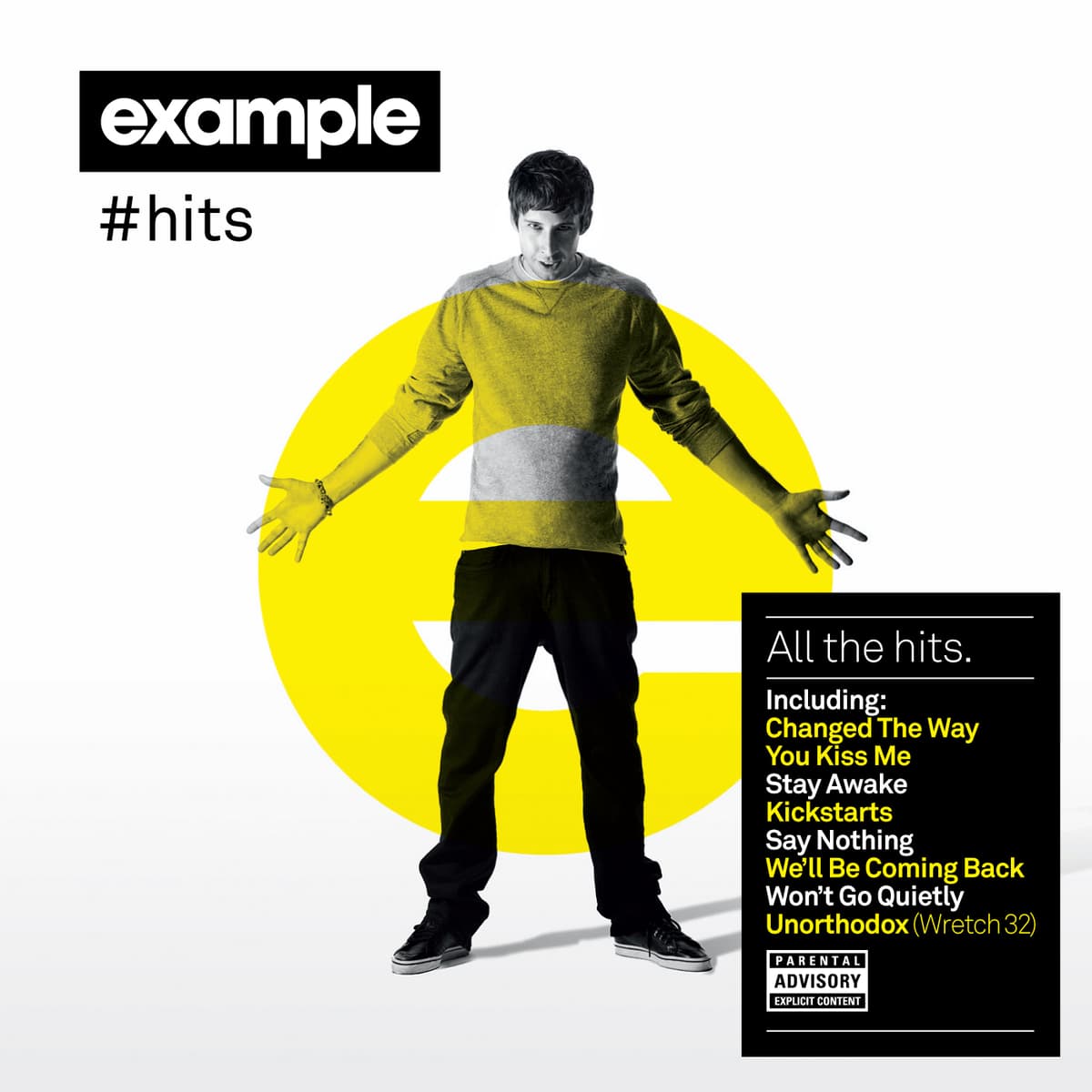
#hits is a high-velocity time capsule of the era when British electronic music conquered the global pop charts. It sounds like the blinding glare of a thousand LED screens and the physical pressure of a front-row festival barrier.
The album is defined by its massive, chainsaw-like synth leads and aggressive electro-house rhythms that demand movement.
What makes this collection distinctive is the tension between the maximalist, often abrasive production and Example’s grounded, baritone delivery. Unlike the anonymous vocalists often found in EDM, Elliot Gleave brings a specific London grit and a lyrical focus on the messy, unglamorous side of nightlife.
You should own this specifically because it captures the peak of the stadium dubstep and electro-pop crossover with more personality than its peers. It is an album of highs and lows, mirroring the cycle of a big night out: the initial rush of adrenaline, the peak of euphoric connection, and the inevitable, slightly bitter comedown.
The tracks here, produced by heavyweights like Nero and Calvin Harris, are masterclasses in tension and release, using side-chained compression and rising white noise to create a sense of constant, forward-leaning momentum. It is an essential document of a specific cultural moment where the rave and the radio became indistinguishable.
How does #hits sound next to the rest of Example's catalogue?
This album stays in step with the catalogue across the board — no axis departs enough to be worth its own note. Hover the dots to see where each one sits.
Cassette uses generative AI to enrich its catalog. How we use AI →