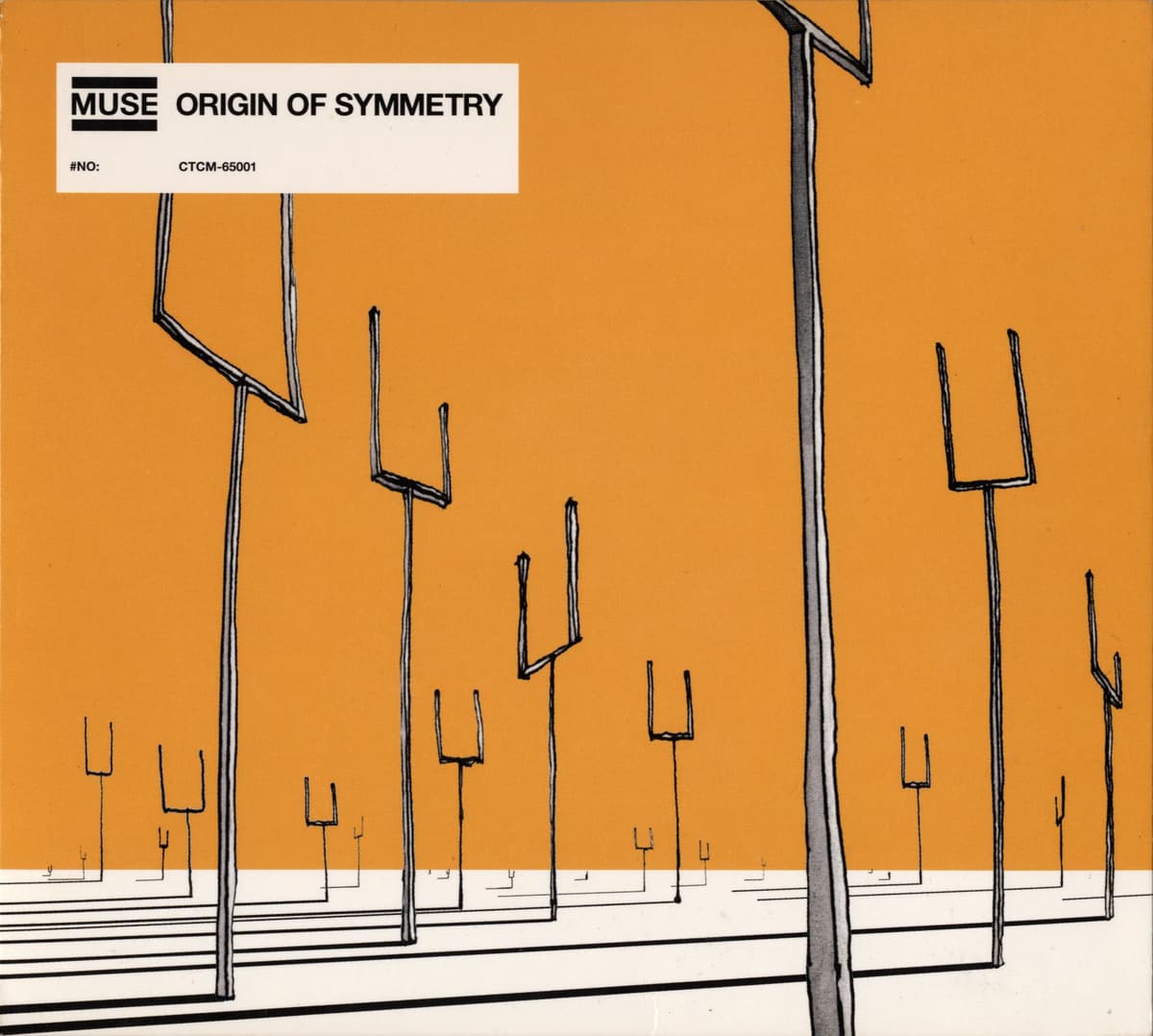
A high-tension fusion of Rachmaninoff-inspired piano, bone-rattling fuzz bass, and operatic vocals. Cinematic, paranoid, and unapologetically dramatic.
Origin of Symmetry is the sound of a band shedding their influences and ascending into a stratosphere of their own making.
Origin of Symmetry is the sound of a band shedding their influences and ascending into a stratosphere of their own making. It is an album that feels like a collision between the 19th-century concert hall and a dystopian future. The music is defined by a restless energy, where delicate, classical piano motifs are suddenly obliterated by some of the most aggressive, distorted bass tones ever committed to tape. It is a record that embraces melodrama not as a flaw, but as a primary engine of expression.
Released in 2001, Origin of Symmetry is the second studio album by the English rock band Muse. Recorded primarily at Ridge Farm Studios in Surrey, the album marked a significant departure from the more conventional alternative rock sound of their debut, Showbiz. The title was inspired by theoretical physicist Michio Kaku's book Hyperspace, reflecting the band's growing interest in theoretical physics, technology, and existentialism. Musically, the album is noted for its heavy use of the piano and church organ, influenced by Romantic-era composers like Sergei Rachmaninoff, and its signature 'fuzz' bass sound achieved through various effects pedals. This record solidified Muse's reputation for virtuosic musicianship and theatrical live performances. It is widely considered one of the definitive rock albums of the early 2000s, bridging the gap between Britpop's decline and the rise of more experimental, stadium-sized progressive rock.
Put this on for
staring at a city skyline while feeling a sense of impending technological doompacing a small room during a late-night existential crisisnavigating a crowded subway station while feeling completely alienatedwatching a thunderstorm break over an open field from a safe distanceanalyzing the stars through a telescope while contemplating human insignificancewalking through a museum of modern art while feeling sensory overload
Moments worth waiting for
The transition from the delicate piano intro to the crushing fuzz-bass riff in New Born.
The haunting, multi-tracked falsetto climax during the bridge of Micro Cuts.
The use of a massive church organ to ground the spacey melodrama of Megalomania.
The frantic, percussive piano arpeggios that drive the momentum of Space Dementia.
Sounds like
2001s production with a 2000s soul
Lyrical territory
existential, surreal_abstract, love_lost
03Deviation
Origin of Symmetry · vs · Muse
Artist
This Album
Peak Energy
Energy · ↑ +20% more than usual
On this album, peak energy sits about 20% more prominent than across the rest of the artist's catalogue.