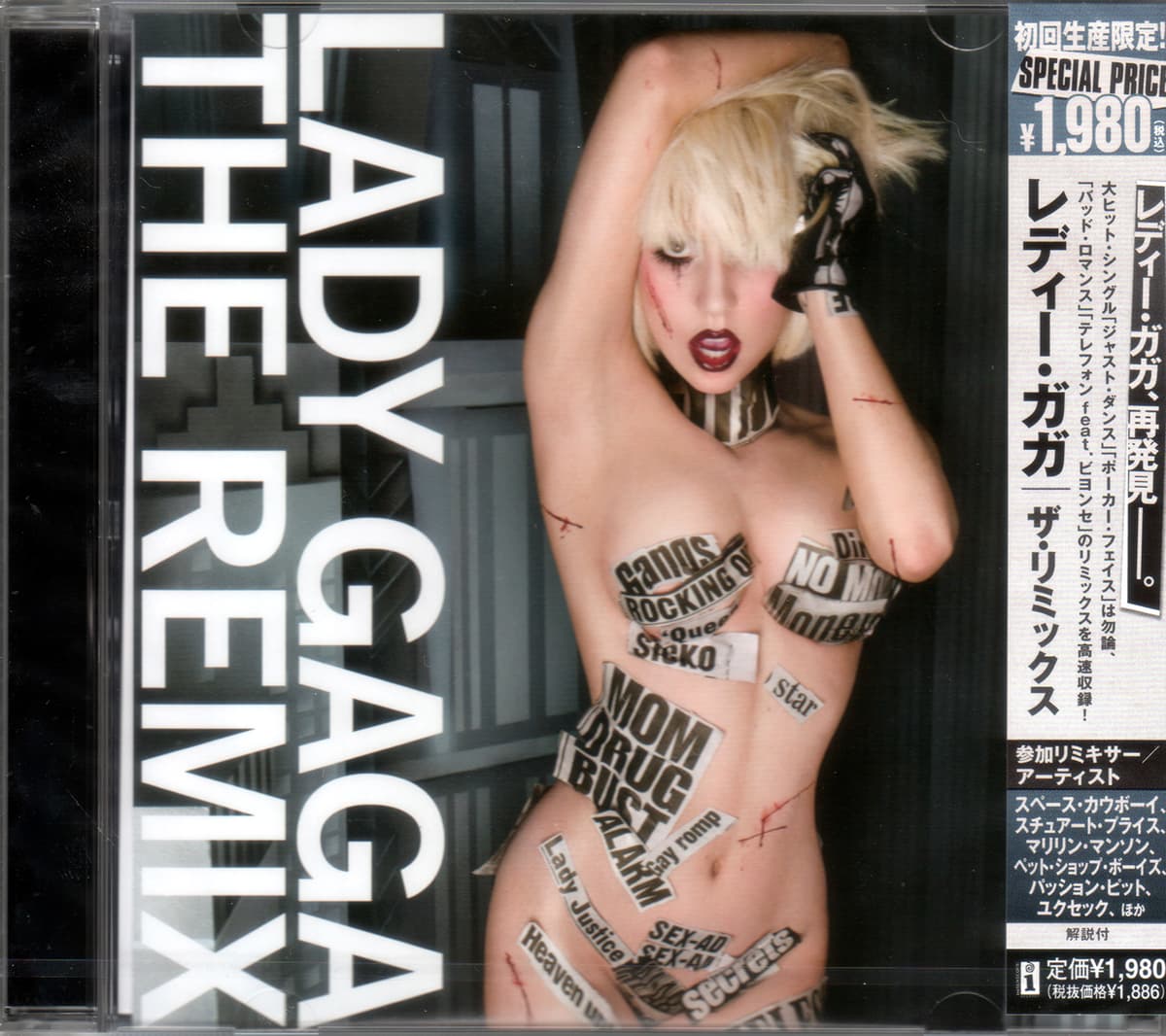
A high-concept deconstruction of stadium pop. Industrial textures, hazy R&B, and jagged techno remixes transform anthems of identity into dark, club-ready experiments.
Eh, Eh (Nothing Else I Can Say) (electric piano & human beat box version)
3:04
06
Eh, Eh (Nothing Else I Can Say) (Pet Shop Boys radio mix)
2:50
07
LoveGame (Space Cowboy remix)
3:21
09
Paparazzi (Yuksek remix)
4:48
10
Paparazzi (Stuart Price remix)
3:20
11
Bad Romance (Skrillex remix)
4:24
12
Bad Romance (Starsmith remix)
4:57
13
Bad Romance (Kaskade remix)
4:22
14
Telephone (Alphabeat remix)
4:50
15
Telephone (Passion Pit remix)
5:14
16
Telephone (Crookers vocal remix)
4:50
02Liner Notes
This album is a strobe-lit descent into the darker, more experimental corners of the Born This Way universe.
This album is a strobe-lit descent into the darker, more experimental corners of the Born This Way universe. It takes the maximalist, theatrical energy of the original record and filters it through the lenses of indie-rock upstarts and underground electronic architects. It is the sound of a pop icon surrendering her master tapes to the fringe, resulting in a collection that feels less like a celebratory lap and more like a gritty, late-night reimagining of her own mythology.
Released in late 2011, Born This Way: The Remix serves as a sonic companion to Lady Gaga’s second studio album, offering a curated look at the electronic and indie landscapes of the early 2010s. Rather than opting for standard radio-friendly dance edits, the project enlists a diverse roster of collaborators including Goldfrapp, Metronomy, Twin Shadow, and a then-emerging The Weeknd. This selection reflects Gaga's Mother Monster persona, championing the weird and the alternative. Musically, the album leans heavily into techno, industrial, and dubstep, often deconstructing the original tracks until only the core vocal melodies remain. Notable highlights include the Goldfrapp remix of Judas, which utilizes heavy pitch-shifting to create an androgynous, mechanical vocal effect, and The Weeknd’s atmospheric overhaul of Marry the Night. While critics were divided on the necessity of the release, many praised the imaginative liberties taken by the remixers, noting that it provided a unique platform for indie artists to interact with high-budget pop schemes.
Put this on for
navigating a rain-slicked city at 2am while the streetlights blur into neon streaksfinding power in your own strangeness while surrounded by a crowd of judgmental strangersthe moment the party shifts from celebratory to something darker and more industrialin a concrete basement studio where the only light comes from a flickering monitorpreparing for a high-concept performance in a mirror-filled dressing roomdecompressing after a massive stadium show while the adrenaline still hums in your teeth
Moments worth waiting for
The way the percussion vanishes at the 2:20 mark of The Weeknd's remix of Marry the Night, leaving only sparse piano.
The jarring pitch-shift in the Goldfrapp remix of Judas that transforms Gaga's vocals into a low, masculine industrial moan.
The sudden rhythmic shift and breakdown at the 3:20 mark of Foster the People's take on The Edge of Glory.
Sounds like
2010s production with a 2010s soul
Lyrical territory
identity, social_commentary, love_romantic
03Deviation
The Remix · vs · Lady Gaga
Artist
This Album
Identity
Lyrics · ↑ +6% more than usual
On this album, identity sits about 6% more prominent than across the rest of the artist's catalogue.