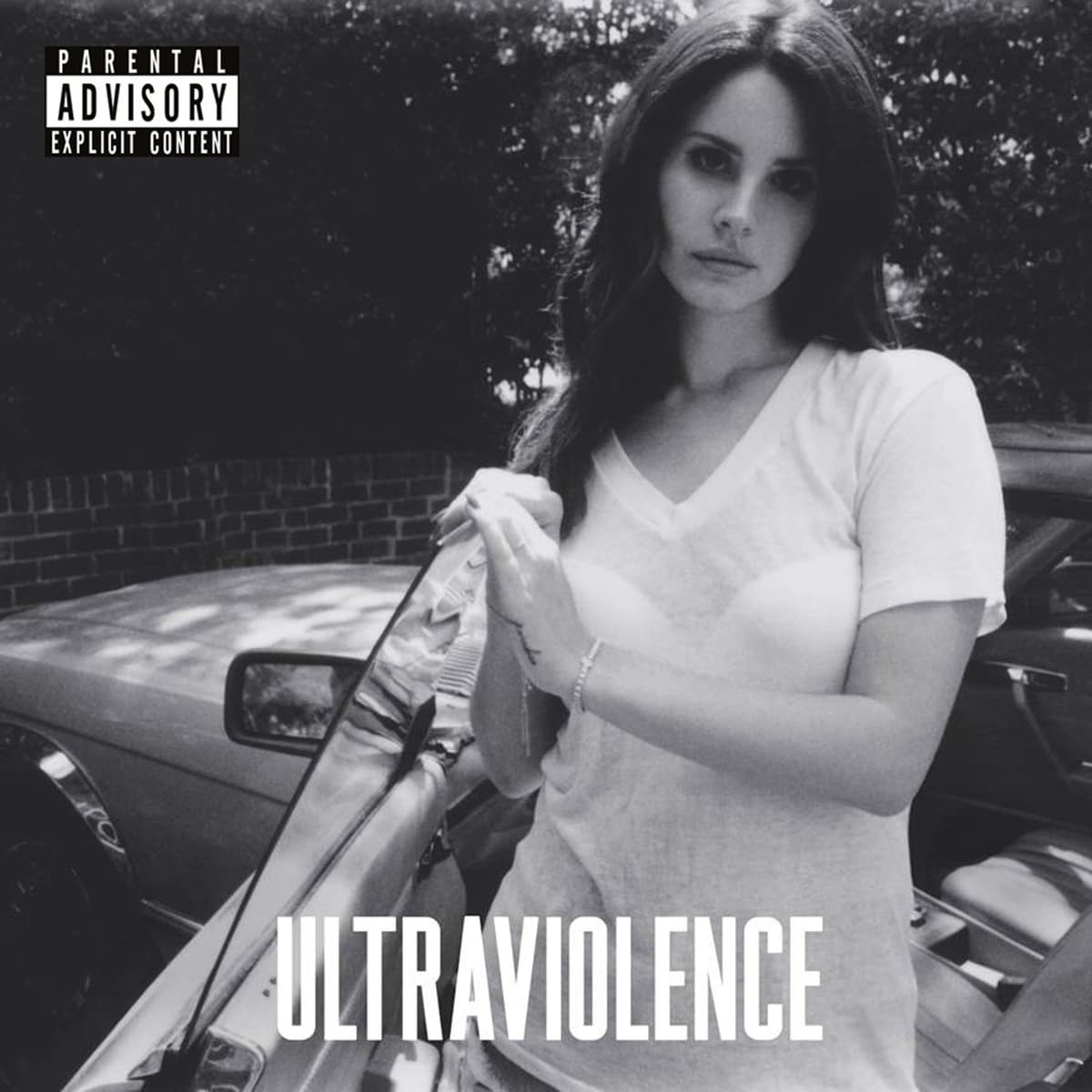
Ultraviolence
A dark, guitar-driven descent into vintage California noir. Drenched in tape hiss, spring reverb, and slow-burning psychedelic melancholy.
A dark, guitar-driven descent into vintage California noir. Drenched in tape hiss, spring reverb, and slow-burning psychedelic melancholy.
Psychedelic rock departure
Heavy, wet guitar chords drag through thick tape hiss, trading the polished hip-hop beats of her debut for a bruised, slow-burning California noir. Recorded in a haze of spring reverb with Dan Auerbach, these songs trade radio-ready pop for a humid, dangerous crawl. You can feel the heat radiating off the amplifiers as the music slows to a narcotic, psychedelic drift. It is the sound of an artist deliberately steering her massive celebrity into the shadows, choosing the grit of live, bleeding instruments over clean digital perfection. What emerges is a dark, cinematic fever dream that redefined her entire trajectory.
Drenched in cavernous spring reverb, her vocals dissolve into a slow-crawling, cinematic crooning that makes the tragic romanticism of each lyric feel intimate and lived-in.
While some reviewers noted the album was less immediately melodic and required a patient ear, critics broadly welcomed its shift toward a more reflective, guitar-driven desert rock and blues sound. The collection was warmly received for its cohesive, cinematic atmosphere and the sincere conviction running through its slow-tempo ballads.
“Ultraviolence prefers to glide and swoop and reverberate around an idea rather than ramming it home”Read review
“The ultimate downfall of Ultraviolence is that it fails to craft its own identity or forge its own creative vision”Read review
“Weird things make this less tuneful collection greater than the sum of its parts, like the quiet urgency as one tune moves to the next”Read review
“While Del Rey doesn’t take too many risks musically, it’s lyrically where she’s at her most interesting, even provocative”Read review
“Auerbach introduces dashes of bad ass blues and psychedelic guitar, but Del Rey – who co-wrote every song but the closing cover of Jessie Mae Robinson’s 1950s hit "The Other Woman" – holds tight to her pouty, cinematic aesthetic”Read review
“On Born to Die Del Rey’s dead-eyed moll-playing made for some interesting character drama. But here it has nowhere left to run”
“She’s a pop music original full-stop, and there are not nearly enough of those around”Read review
“As femme fatales go, you can’t help but wonder if this one isn’t fatally flawed. For the moment though, the latest chapter in the peculiar tale of Lana Del Rey still just about holds your attention”Read review
“Most of these 11 songs are stately ballads that swap her old hip-hop affectations and hiccupping-baby vocals for languid desert rock”Read review
“Ultraviolence prioritizes mood over innovation, classicism over experimentalism, and is better for it”
“Ultraviolence asserts that as a songwriter, she has complete control of her craft, deciding on songs far less flashy or immediate but still uniquely captivating”Read review
“As an album to invest in, feel sentimental about, or be genuinely thrilled by, Ultraviolence falls short. Take it simply as a sumptuously-presented pop record, though, and you have to wonder if you’ll hear a better one this year”Read review
Cassette uses generative AI to enrich its catalog. How we use AI →