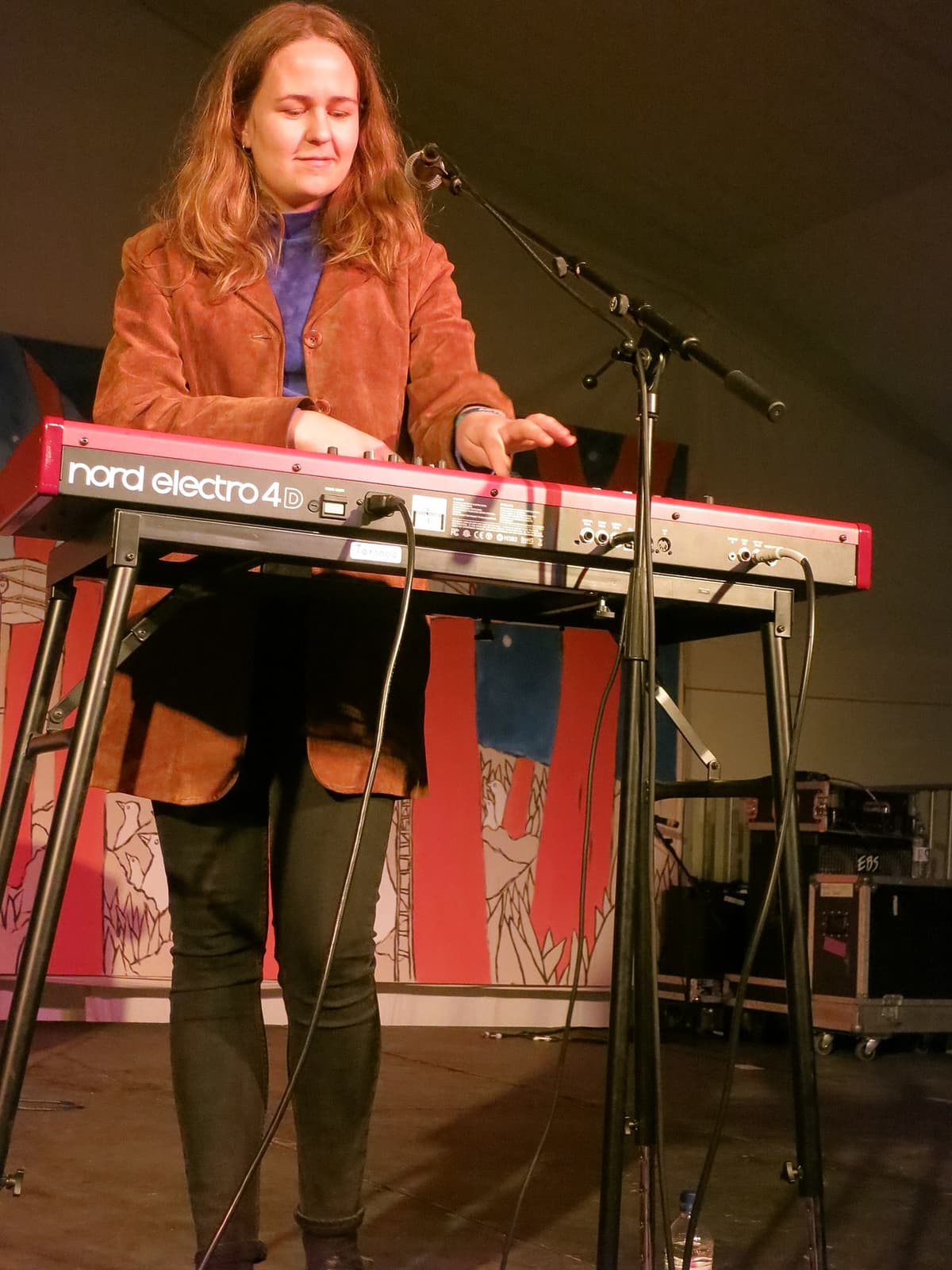
Alice Boman
Fragile, piano-led sketches that feel like overheard secrets. Hushed vocals and tape-hiss textures for moments of deep quiet and solitary reflection.
Fragile, piano-led sketches that feel like overheard secrets. Hushed vocals and tape-hiss textures for moments of deep quiet and solitary reflection.
Alice Boman is a Swedish singer-songwriter who emerged from Malmö with a sound defined by extreme intimacy and minimalist restraint. Her career began serendipitously when her home-recorded demos, intended only as sketches (Skisser), were discovered and released by Adrian Recordings in 2013.
This 'accidental' debut established her signature aesthetic: lo-fi bedroom recordings characterized by piano-driven melodies, heavy tape saturation, and a vocal delivery that draws comparisons to the emotional weight of Nina Simone but delivered with the breathy fragility of Stina Nordenstam. Her work sits at the intersection of dream pop and slowcore, eschewing traditional pop structures for atmospheric drift. Critically, she is lauded for her ability to convey immense emotional stakes through very few musical elements. Her music has become a staple for film and television supervisors seeking 'quiet intensity,' appearing in numerous high-profile dramas. Over time, her production has evolved from the skeletal hiss of her early EPs to the more polished, chamber-pop arrangements of her 2020 LP 'Dream On,' though she maintains a core identity of vulnerability and sonic 'dustiness' that remains her hallmark.
Shares slowcore, bedroom_production, dusty, indie folk (subgenre)
Shares slowcore, indie folk, dream pop, tender (subgenre)
Shares slowcore, dusty, indie folk, dream pop (subgenre)
Shares slowcore, bedroom_production, dusty, indie folk (subgenre)
Shares sparse_bare, slowcore, winter, indie folk (production)
Shares slowcore, indie folk, dream pop, tape_saturation (subgenre)
Shares bedroom_production, winter, indie folk, dream pop (signature)
Shares bedroom_production, indie folk, raw, tender (signature)
Shares slowcore, indie folk, dream pop, candlelit (subgenre)
Shares slowcore, bedroom_production, indie folk, dream pop (subgenre)
Cassette uses generative AI to enrich its catalog. How we use AI →

