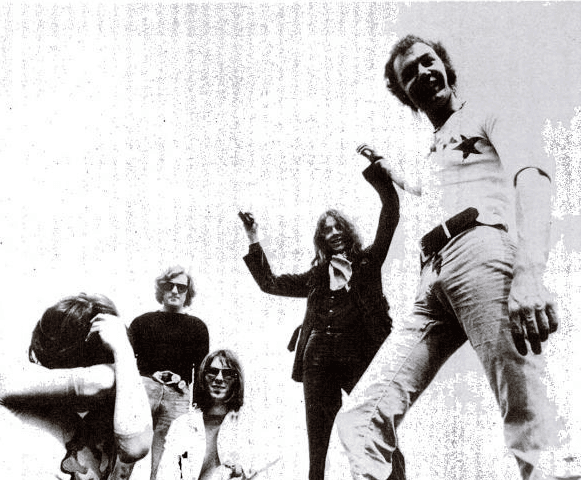
Amon Düül II
Dense, anarchic psychedelic rock that feels like a communal ritual. Heavy guitars, haunting violins, and occult energy for deep, immersive listening.
Dense, anarchic psychedelic rock that feels like a communal ritual. Heavy guitars, haunting violins, and occult energy for deep, immersive listening.
Listening to Amon Düül II is like stumbling upon a pagan ritual being held in a 1970s Munich basement. It is music that feels thick with smoke and intention, moving between heavy, blues-inflected riffs and sprawling, cosmic improvisations that seem to have no beginning or end. There is a wild, untamed energy here that separates them from the more clinical precision of their Krautrock peers, favoring a gritty, organic chaos that feels both ancient and futuristic.
What truly sets them apart is the sense of communal friction. Unlike the motorik pulse of Neu! or the electronic landscapes of Tangerine Dream, Amon Düül II is defined by the interplay of multiple voices, dual guitars, and Renate Knaup’s haunting, operatic vocals. Their sound is a tapestry of acid-rock, folk, and avant-garde experimentation, often shifting from a delicate acoustic passage to a crushing wall of distorted sound within a single track.
For those new to the commune, start with 'Yeti' or 'Wolf City'. 'Yeti' captures their peak improvisational power, offering a sprawling double-album experience that defines the genre's boundaries. 'Wolf City' provides a more structured, melodic entry point without sacrificing the band's essential weirdness. It is the perfect soundtrack for when you want music that demands your full attention and a bit of your soul.
Amon Düül II (or Amon Düül 2, Pronunciation: Amon Düül) are a German rock band formed in 1968. The group is generally considered to be one of the pioneers of the West German krautrock scene. Their 1970 album Yeti was described by British magazine The Wire as "one of the cornerstones of ... the entire Krautrock movement". Amon Düül II emerged from the radical West German Amon Düül art commune in Munich. The band's first album, Phallus Dei, was released in 1969. Amon Düül II received offers to write music for films and won a German film award, the Deutscher Filmpreis, for their contribution to the 1970 film San Domingo.
Shares psychedelic rock, progressive rock, art rock (subgenres); mysterious, restless, brooding (moods)
Shares psychedelic rock, progressive rock, art rock (subgenres); mysterious, brooding, restless (moods)
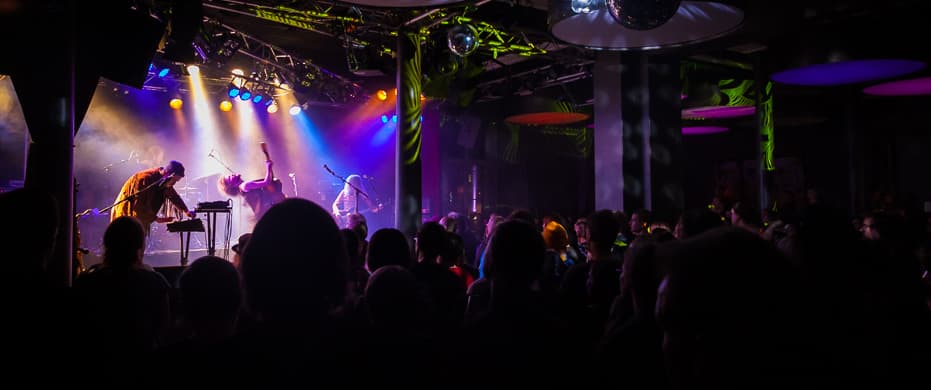
Shares psychedelic rock, progressive rock, art rock (subgenres); analog warmth, layered dense, live recording (production style)
Shares psychedelic rock, progressive rock, art rock (subgenres); analog warmth, layered dense, live recording (production style)
Shares psychedelic rock, progressive rock, art rock (subgenres); mysterious, brooding, restless (moods)
Shares psychedelic rock, progressive rock, art rock (subgenres); mysterious, restless, brooding (moods)

Shares psychedelic rock, progressive rock, art rock (subgenres); mysterious, restless, haunting (moods)
Shares psychedelic rock, progressive rock, art rock (subgenres); mysterious, brooding, haunting (moods)
Shares psychedelic rock, progressive rock, art rock (subgenres); mysterious, restless, haunting (moods)
Shares psychedelic rock, progressive rock, art rock (subgenres); analog warmth, live recording (production style)
Shares krautrock, androgynous, organ, progressive rock (signature)
Cassette uses generative AI to enrich its catalog. How we use AI →


