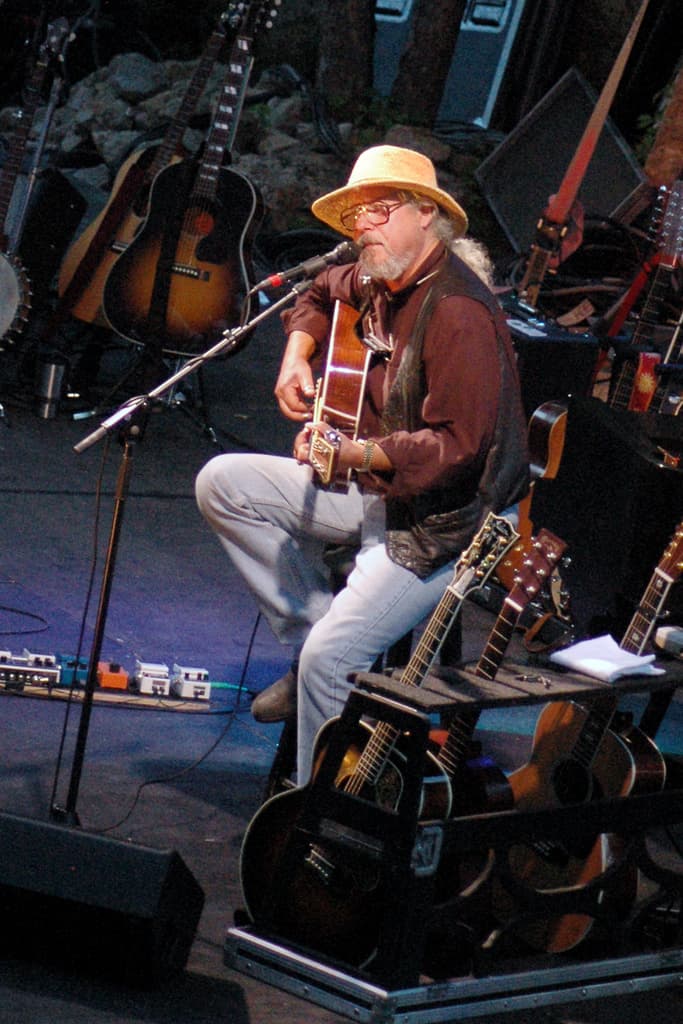
Arlo Guthrie
Wry storytelling and warm acoustic melodies that feel like a long conversation on a cross-country train. The definitive voice of humorous, high-stakes folk protest.
Wry storytelling and warm acoustic melodies that feel like a long conversation on a cross-country train. The definitive voice of humorous, high-stakes folk protest.
Arlo Guthrie occupies a singular position in American music as both the literal and spiritual heir to the folk revival. The son of Woody Guthrie, Arlo successfully navigated the immense shadow of his father by leaning into a more humorous, anecdotal, and suburban-inflected version of the folk protest tradition. His career is anchored by the 1967 release of 'Alice's Restaurant,' which transformed a true story about littering into a sprawling indictment of the Vietnam War draft. This track established his signature 'talking blues' style, characterized by a deadpan, nasal delivery and rhythmic acoustic accompaniment.
Beyond his satirical work, Guthrie proved himself a formidable interpreter of the American songbook, most notably with his definitive version of Steve Goodman's 'City of New Orleans.' His sound evolved from pure solo folk to include the more robust, country-rock textures of his band Shenandoah in the 1970s. Critically, he is viewed as a bridge between the dust-bowl radicalism of the 1930s and the hippie counterculture of the 1960s. His influence persists through his commitment to social justice and his role as a cultural storyteller, maintaining the Guthrie Center as a hub for community and activism.
Cassette uses generative AI to enrich its catalog. How we use AI →