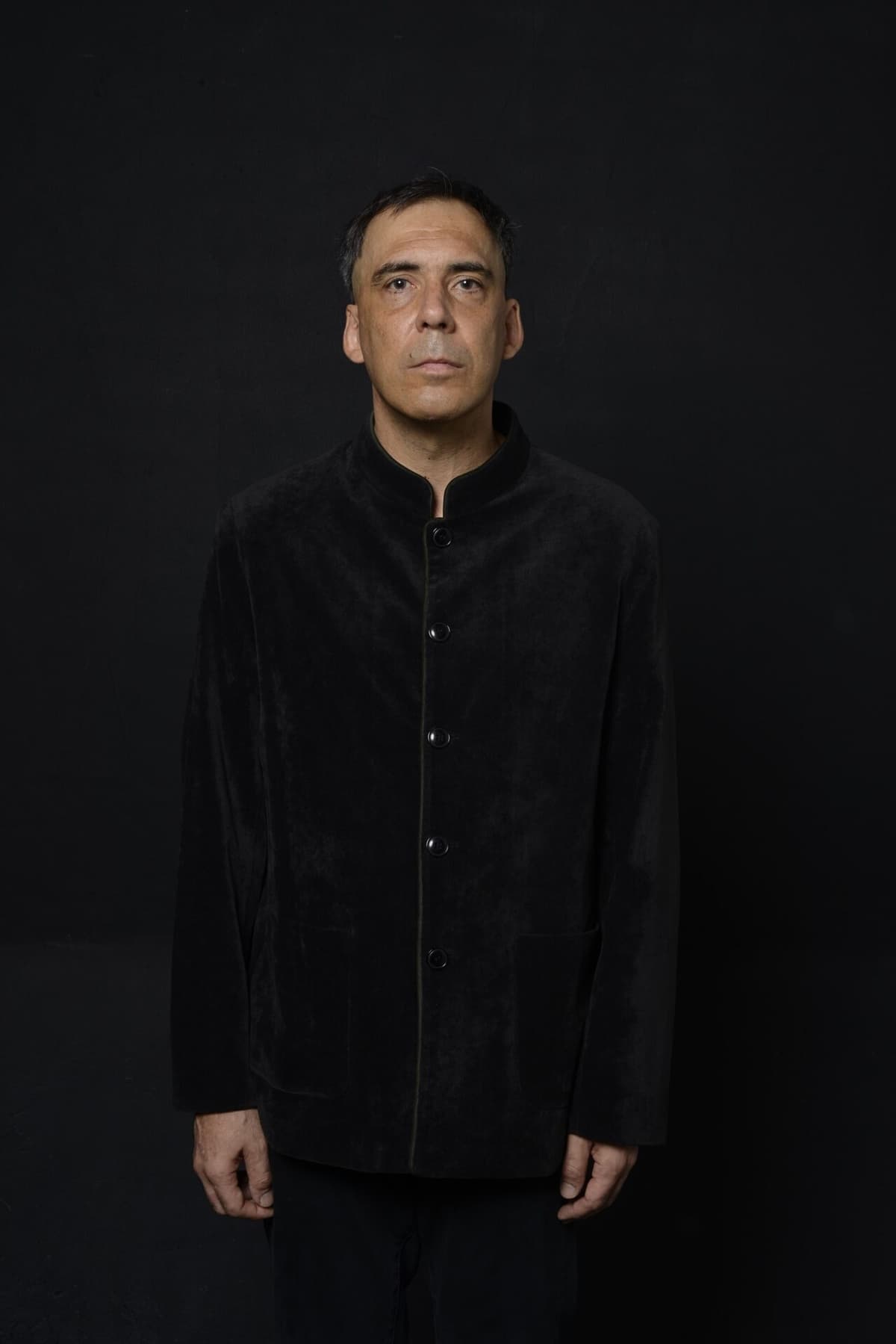
Arnaldo Antunes
Deep, resonant baritone vocals meeting the precision of concrete poetry. Sophisticated Brazilian art-pop for listeners who value intellect as much as rhythm.
Deep, resonant baritone vocals meeting the precision of concrete poetry. Sophisticated Brazilian art-pop for listeners who value intellect as much as rhythm.
Arnaldo Antunes sounds like a philosopher who decided to start a rock band but couldn't stop thinking about the shape of words. His music is characterized by a striking, deep baritone that often sits somewhere between a chant and a deadpan narration. It is rhythmically precise, often utilizing staccato patterns and repetitive structures that feel both ancient and futuristic. The instrumentation shifts from the raw energy of Brazilian post-punk to the delicate, stripped-back arrangements of his later acoustic and multimedia works.
What truly sets him apart is his background as a concrete poet. He treats lyrics not just as vehicles for emotion, but as physical objects to be manipulated. You'll hear him play with the phonetics of Portuguese, repeating syllables until they lose meaning or gain a new, percussive power. His work with Tribalistas showed his capacity for warmth and melody, but his solo output remains more jagged, intellectual, and restlessly experimental, constantly probing the boundaries between music, literature, and visual art.
Start with the album 'Iê iê iê' for a vibrant, retro-inspired entry point that showcases his unique pop sensibility. If you want to hear his more contemplative, poetic side, 'O Silêncio' offers a masterclass in how much power can be found in the space between notes. For a taste of his collaborative genius, the self-titled 'Tribalistas' album remains a cornerstone of modern Brazilian music.
Arnaldo Antunes (pronounced [aʁˈnawdu ɐ̃ˈtunis]; born Arnaldo Augusto Nora Antunes Filho, 2 September 1960) is a Brazilian singer, writer, and composer. He was a member of the rock band Titãs, which he co-founded in 1982 and left ten years later. After 1992, he embarked on a solo career. He has published poetry and had his first book published in 1983. He has worked with Marisa Monte, Tribalistas, Carlinhos Brown and Pequeno Cidadão.
Cassette uses generative AI to enrich its catalog. How we use AI →


