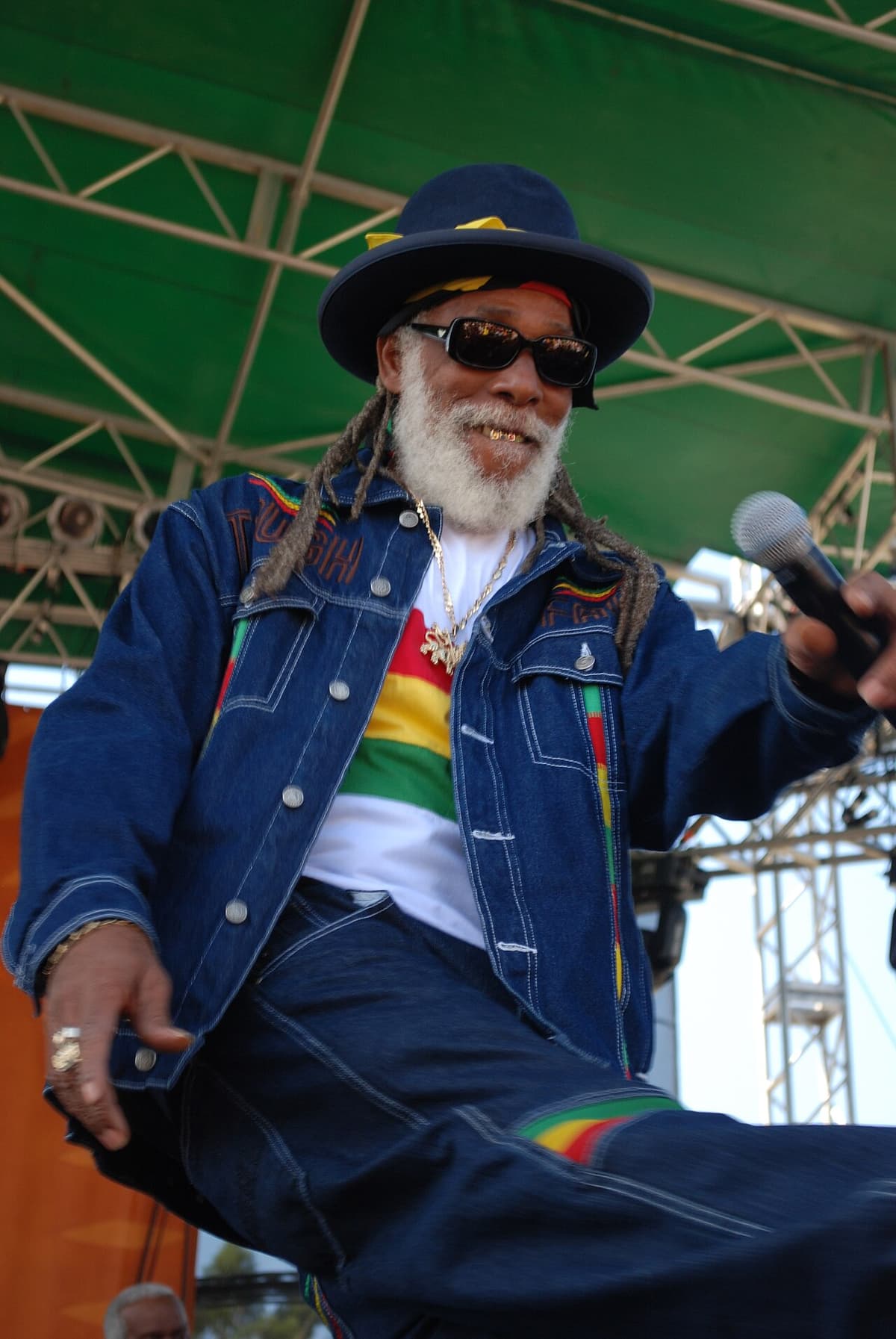
Big Youth
Rhythmic street sermons delivered over heavy, echo-drenched dub. The sound of 1970s Kingston sound systems vibrating through the floorboards.
Rhythmic street sermons delivered over heavy, echo-drenched dub. The sound of 1970s Kingston sound systems vibrating through the floorboards.
Big Youth represents the raw, unfiltered voice of the Jamaican sound system. His music is defined by 'toasting', a rhythmic, semi-spoken vocal style that predates and heavily influenced hip-hop. It feels like a direct transmission from a street corner in Trenchtown, where the bass is so heavy it becomes a physical presence in the room. The production is thick with the warmth of 1970s analog tape, characterized by deep, cavernous reverb and drums that snap with military precision.
What sets him apart is his transition from a pure toaster to a 'singjay', blending melodic chanting with rhythmic speech. His delivery is improvisational and charismatic, often punctuated by his signature high-pitched yelps and deep, gravelly hums. He doesn't just perform over a track; he inhabits the dub, weaving his voice through the gaps in the instrumentation like another percussion instrument. It is music that is simultaneously deeply spiritual and intensely political.
Start with the 1973 masterpiece 'Screaming Target'. It captures the lightning-in-a-bottle energy of early toasting culture and features some of the most iconic riddims in reggae history. From there, move to 'Dreadlocks Dread' for a more polished but no less potent exploration of his Rastafarian worldview and his unique vocal evolution.
Manley Augustus Buchanan (born 19 April 1949, Trenchtown, Kingston, Jamaica), better known as Big Youth (sometimes called Jah Youth), is a Jamaican deejay, mostly known for his work during the 1970s. He commented, "Deejays were closest to the people because there wasn't any kind of establishment control on the sound systems".
Cassette uses generative AI to enrich its catalog. How we use AI →


