Blind Pilot
Warm, coastal indie folk anchored by gentle trumpet swells and shimmering vibraphone. It sounds like the exact moment the sun dips below the Pacific horizon.
Warm, coastal indie folk anchored by gentle trumpet swells and shimmering vibraphone. It sounds like the exact moment the sun dips below the Pacific horizon.
Blind Pilot emerged from Portland, Oregon, during the late-2000s indie folk revival, initially as a duo consisting of Israel Nebeker and Ryan Dobrowski. Their origin story is famously tied to a bicycle tour they undertook to promote their debut album, '3 Rounds and a Sound', which established their identity as a band deeply connected to the landscape and a DIY ethos.
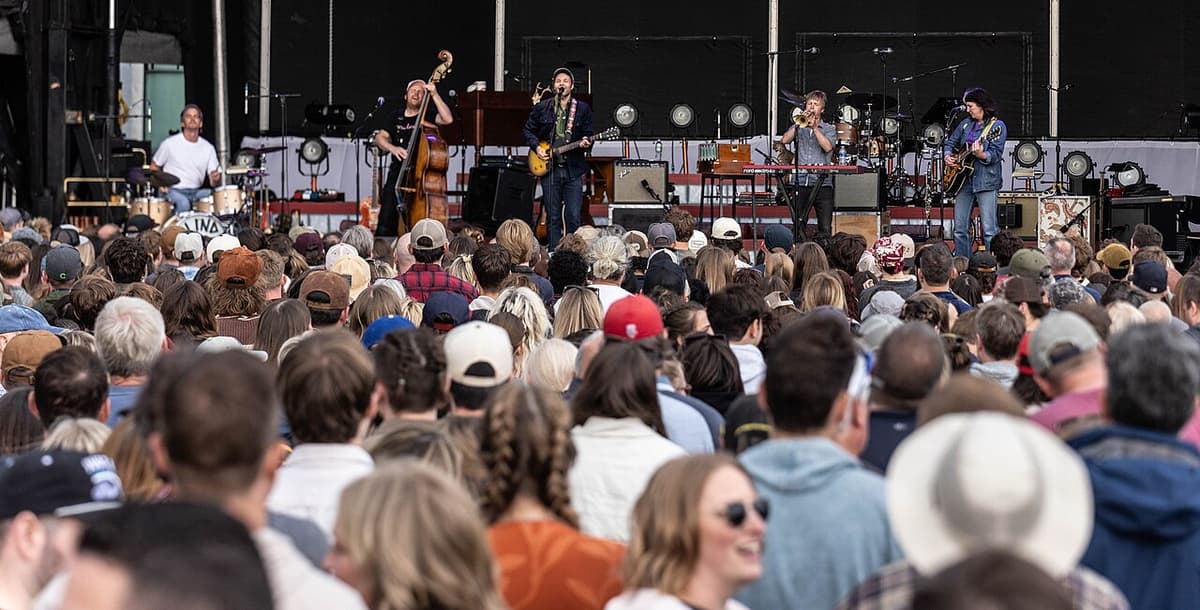
Over time, they expanded into a six-piece ensemble, incorporating diverse instruments like the vibraphone, trumpet, and upright bass. This expansion allowed them to pivot from simple busking-style folk to a more complex chamber-folk sound. Their music is characterized by Nebeker's gentle, breathy tenor and a production style that emphasizes analog warmth and organic textures. Critically, they are praised for their melodic consistency and the way they use brass and percussion to create a sense of 'coastal' atmosphere. They occupy a cultural space alongside artists like The Decemberists and Gregory Alan Isakov, serving as a bridge between traditional Americana and modern indie-pop sensibilities. Their career arc shows a steady maturation, moving from the raw, seaside-inspired debut toward the more polished, emotionally complex arrangements of 'And Then Like Lions' and 'In the Shadow of the Holy Mountain'.
Shares ocean, chamber folk, cabin_in_woods, americana (signature)
Shares chamber folk, banjo, cabin_in_woods, americana (signature)
Shares chamber folk, cabin_in_woods, americana, indie folk (signature)
Shares chamber folk, cabin_in_woods, americana, acoustic folk (subgenre)
Shares chamber folk, banjo, cabin_in_woods, americana (signature)
Shares chamber folk, cabin_in_woods, acoustic folk, indie folk (subgenre)
Shares chamber folk, banjo, cabin_in_woods, americana (signature)
Shares banjo, chamber folk, cabin_in_woods, americana (instrumentation)
Cassette uses generative AI to enrich its catalog. How we use AI →