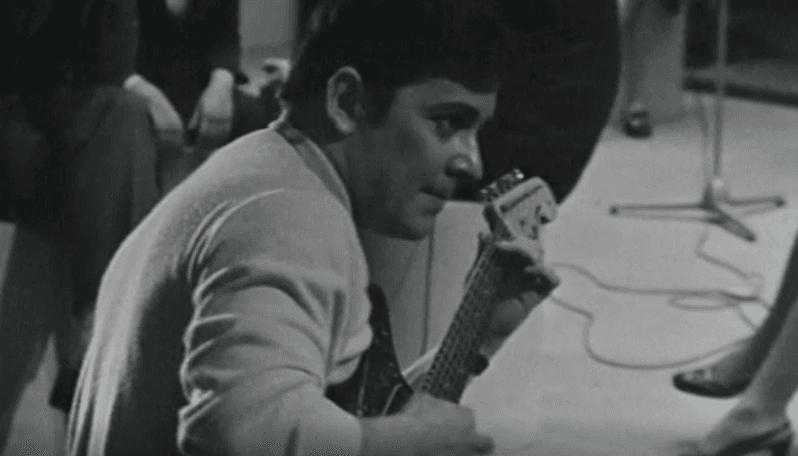
Bruno Battisti D'Amario
Cinematic nylon-string mastery that defined the sound of the Spaghetti Western. Dusty, tense, and deeply evocative guitar work for moments of high drama.
Cinematic nylon-string mastery that defined the sound of the Spaghetti Western. Dusty, tense, and deeply evocative guitar work for moments of high drama.
This is the sound of the Italian silver screen, where the guitar is not just an instrument but a narrator. It carries the heat of the Mediterranean and the grit of the desert, moving between formal classical precision and the wild, improvisational spirit of 1970s library music. The tone is often dry and intimate, making you feel every pluck of the string and every slide across the fretboard.
What makes D'Amario truly distinctive is his ability to bridge the gap between high-art conservatory technique and the psychotronic, often eerie world of Italian genre cinema. While his work with Morricone is legendary, his solo recordings reveal a fascination with the esoteric and the avant-garde, utilizing space and silence as much as melody to create a sense of impending revelation or danger.
Start with his contributions to 'The Good, The Bad and the Ugly' for the iconic cultural touchstones, then move to 'Trasparenze' to hear his more experimental, atmospheric side. It is essential listening for anyone who loves the intersection of folk traditions and cinematic surrealism.
Bruno Battisti D'Amario (born 1937) is an Italian classical guitarist, teacher and composer. D'Amario is known for his performances on film scores by Ennio Morricone and Nino Rota, and became Professor of Classical Guitar at the Santa Cecilia Conservatory in Rome. Morricone commented that D'Amario is "able to conjure up extraordinary sounds with his guitar" for his appearances on the soundtrack to the film The Good, The Bad and the Ugly. He was a member of the Gruppo di Improvvisazione Nuova Consonanza. In 2011 he published a composition inspired by the Tarot cards.
Cassette uses generative AI to enrich its catalog. How we use AI →


