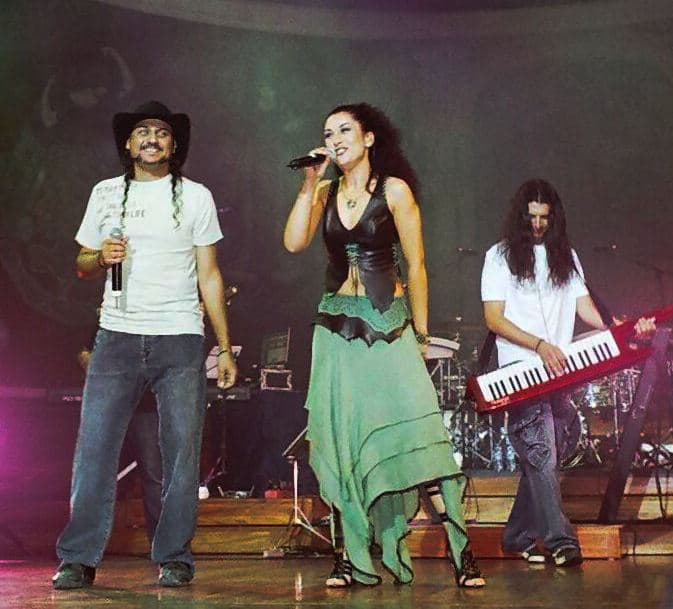
Camela
High-velocity synth-pop meets traditional Spanish rumba. Melodramatic vocal duets over driving electronic beats, perfect for long drives and nostalgic celebrations.
High-velocity synth-pop meets traditional Spanish rumba. Melodramatic vocal duets over driving electronic beats, perfect for long drives and nostalgic celebrations.
Camela sounds like the heart of a Spanish street fair. It is a collision of worlds: the ancient, soulful ache of flamenco rumba and the plastic, neon energy of 90s Eurodance. The music is defined by its relentless 'chunda-chunda' beat, a driving electronic pulse that never lets up, topped with bright, unapologetically synthetic keyboard melodies that mimic brass sections and string arrangements.
What makes them truly distinctive is the vocal interplay between Dioni and Ángeles. Their voices carry a specific nasal, passionate quality that feels raw and immediate, delivering lyrics about betrayal, impossible love, and romantic longing with the intensity of a soap opera. It is music that was born in the margins, sold as cassettes in gas stations, and eventually conquered the mainstream through sheer emotional resonance and infectious rhythm.
Start with 'Lágrimas de Amor' or 'Corazón Indomable' to understand the blueprint of tecno-rumba. These tracks capture the band at their peak of cultural saturation, offering a masterclass in how to pair a dancefloor tempo with a broken heart. It is the ultimate soundtrack for when you want to dance away a tragedy.
Camela is a Spanish musical group credited with being the pioneers of the style baptised as tecno-rumba in the 90s. Its members are Dionisio Martin Lobato (singer-composer), María de los Ángeles Muñoz Dueñas (singer-songwriter), and until February 2013, Miguel Angel Jimenez Cabrera (keyboards), all of them from the Madrid neighbourhood of San Cristóbal de los Ángeles. The group is a landmark in the Spanish popular music scene, without critics' acceptance, and hardly any support from the media, they became a massive selling success, having a great musical and sociological impact on Spanish society. Camela is the second best selling band in Spain in the past 20 years, only surpassed by La Oreja de Van Gogh. In 1994, the group released their debut album Lágrimas de amor in Spain on CD and cassette. It was the most successful of the group's career, even though it failed to enter charts. All songs were written by Miguel Ángel Cabrera and recorded in the winter of 1993 to 1994 under the direction of Daniel Muneta. The first single was "Lágrimas de amor". In 2024, the group was awarded the Gold Medal of Merit in the Fine Arts.

Shares dance-pop, synth-pop, eurodance (subgenres); drum machine, digital clarity (production style)

Shares dance-pop, synth-pop, eurodance (subgenres); drum machine, digital clarity, maximalist (production style)
Shares dance-pop, synth-pop, eurodance (subgenres); drum machine, digital clarity (production style)
Shares dance-pop, synth-pop, eurodance (subgenres); melancholic, nostalgic, sentimental (moods)
Shares dance-pop, synth-pop, eurodance (subgenres); drum machine, digital clarity (production style)

Shares dance-pop, synth-pop, eurodance (subgenres); drum machine, digital clarity, maximalist (production style)
Shares dance-pop, synth-pop, eurodance (subgenres); drum machine, digital clarity, maximalist (production style)
Shares dance-pop, synth-pop, eurodance (subgenres); drum machine, digital clarity (production style)

Shares dance-pop, synth-pop, eurodance (subgenres); drum machine, digital clarity, maximalist (production style)
Shares dance-pop, synth-pop, eurodance (subgenres); drum machine, digital clarity (production style)
Shares nasal vocal harmonies, eurodance, harmonized, nasal (detail)
Cassette uses generative AI to enrich its catalog. How we use AI →


