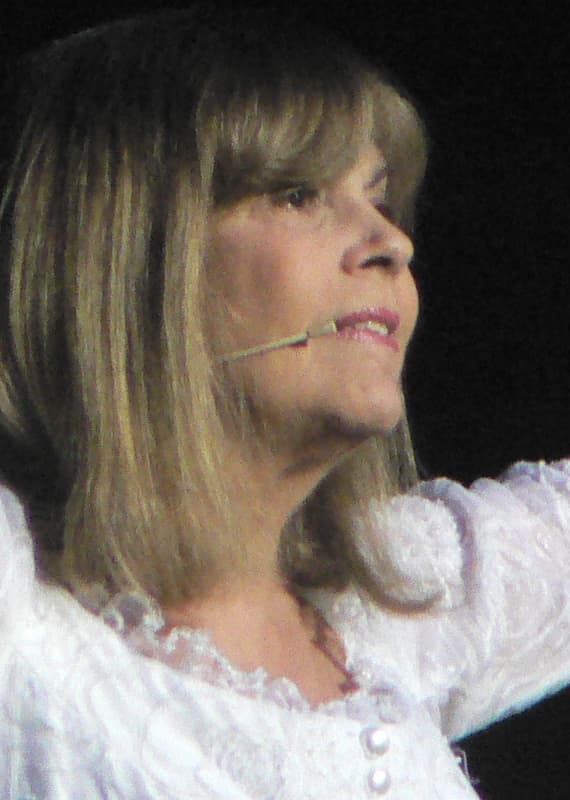
Chantal Goya
Whimsical, storybook pop with a theatrical French soul. Technicolor arrangements and gentle vocals that turn every room into a magical forest.
Whimsical, storybook pop with a theatrical French soul. Technicolor arrangements and gentle vocals that turn every room into a magical forest.
Listening to Chantal Goya is like stepping into a vintage French picture book. Her music is defined by a lush, orchestral brightness that feels both grand and intimate, anchored by her distinctively clear and gentle vocal delivery. It is a world where every song is a character study or a journey to a far-off land, wrapped in the sophisticated pop sensibilities of 20th-century France.
What truly sets her apart is the high-production value brought by her collaborator Jean-Jacques Debout. Unlike modern children's music that can feel thin or digital, Goya's catalog is rich with real strings, brass, and theatrical pacing. She carries the poise of her New Wave cinema roots into the world of Marie-Rose, treating her young audience with musical respect and a sense of wonder.
Start with her 1980s classics like 'C'est Guignol !' or 'Bouba' to hear how she blends catchy hooks with narrative charm. These tracks serve as the perfect gateway into her expansive, magical universe, offering a blend of nostalgia for adults and pure, unadulterated joy for children.
Chantal de Guerre (French pronunciation: [ʃɑ̃tal də ɡɛʁ]; born 10 June 1942), known as Chantal Goya ([ɡɔja]), is a French singer and actress. Goya started her career as a yé-yé singer, singing a mid-1960s hybrid of girl-group pop and French chanson. She also enjoyed a career as a French New Wave actress; she had a starring role as Madeleine in the 1966 Jean-Luc Godard film Masculin, féminin and in Jean-Daniel Pollet's L'amour c'est gai, l'amour c'est triste (Love is joy, love is sad). Since 1975, she has become mostly known as a singer for children. Together with her husband, songwriter and composer Jean-Jacques Debout, and with a team of designers and costume people, she does shows for and with children. The main themes are dreams and traveling. Her usual character is called Marie-Rose.
Cassette uses generative AI to enrich its catalog. How we use AI →


