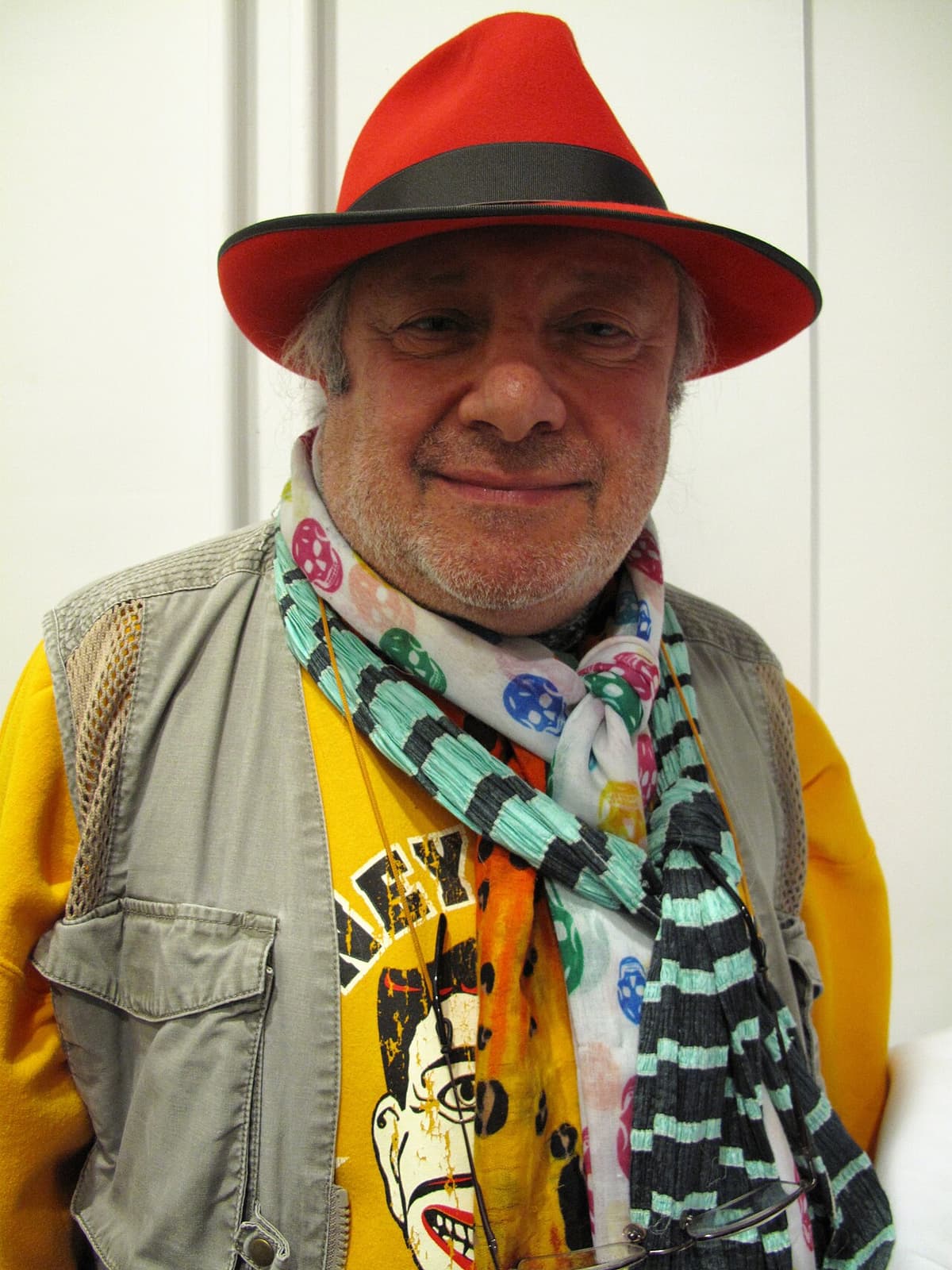
Charlemagne Palestine
Dense, shimmering clouds of piano and organ that transform repetition into a physical experience. Immersive minimalism that feels like a ritual in a stone cathedral.
Dense, shimmering clouds of piano and organ that transform repetition into a physical experience. Immersive minimalism that feels like a ritual in a stone cathedral.
Charlemagne Palestine is a foundational figure in the New York school of minimalism, though his 'maximalist' aesthetic distinguishes him from contemporaries like Philip Glass or Steve Reich. His work is defined by 'Strumming Music,' a technique involving rapid, repetitive keyboard strikes that emphasize the harmonic overtones of the piano or organ.
This approach creates a 'sonorous body' - a dense, vibrating mass of sound that explores the physical properties of acoustics. Palestine's career is marked by a significant hiatus from the late 1970s to the early 1990s, during which he focused on visual art and sculpture, particularly his iconic stuffed animal installations. His return to music saw him expanding into massive pipe organ works and electronic collaborations. Critically, he is viewed as the bridge between the rigorous structuralism of early minimalism and the more emotive, ritualistic traditions of drone and avant-garde performance art. His influence is deeply felt in the drone and noise scenes, where his emphasis on sustain and overtone-rich textures serves as a primary blueprint.
Cassette uses generative AI to enrich its catalog. How we use AI →


