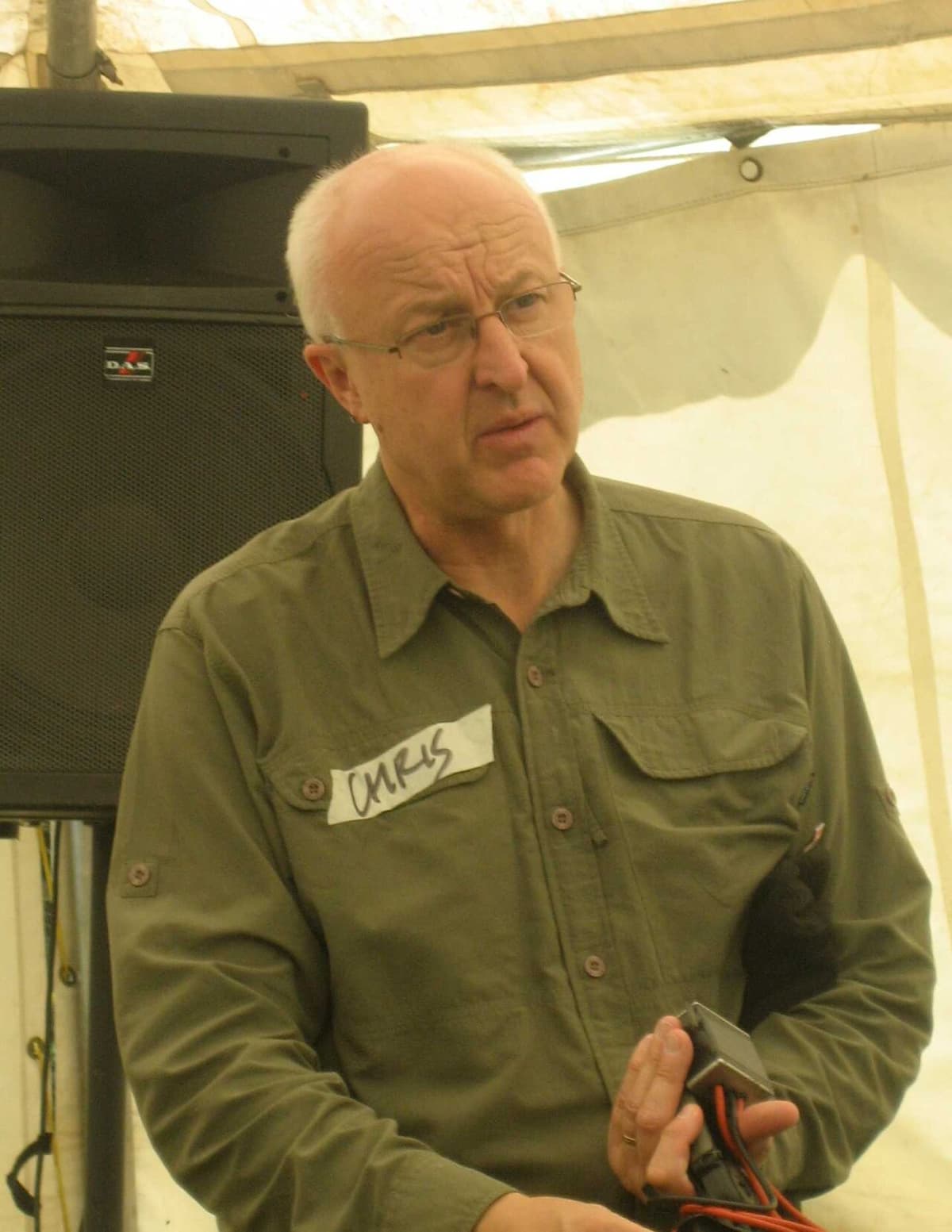
Chris Watson
Hyper-detailed environmental recordings that place you inside the center of a storm, a rainforest, or a ghost train. Pure sonic immersion for deep focus and meditation.
Hyper-detailed environmental recordings that place you inside the center of a storm, a rainforest, or a ghost train. Pure sonic immersion for deep focus and meditation.
Listening to Chris Watson is less like hearing music and more like being transported to a specific geographic coordinate. His work strips away the artifice of traditional composition, replacing instruments with the high-fidelity textures of the natural world. You might find yourself inside a hollow log in the Kalahari or submerged beneath the Arctic ice. It is an experience of radical presence, where every crackle of a leaf or distant rumble of thunder carries the weight of a symphonic movement.
What makes Watson distinctive is his technical mastery of the microphone as a narrative tool. Having spent decades as a sound recordist for David Attenborough, he understands how to capture the 'voice' of a place without imposing a human ego upon it. His recordings possess a crystalline clarity that reveals sounds the human ear usually ignores, creating a sense of hyper-reality that is both soothing and profoundly alien.
For those new to his catalog, El Tren Fantasma is a perfect entry point, offering a rhythmic, almost industrial journey across Mexico via rail. If you prefer the stillness of nature, Weather Report provides a stunning triptych of environmental shifts. It is the ultimate music for when you want to disappear from your current surroundings and inhabit a different corner of the earth.
Christopher Richard Watson (born 21 November 1953) is an English musician and sound recordist. A founding member of the Sheffield-based industrial band Cabaret Voltaire, Watson's subsequent work in field recordings since 1981 has included television documentaries and experimental musical collaborations.
Cassette uses generative AI to enrich its catalog. How we use AI →


