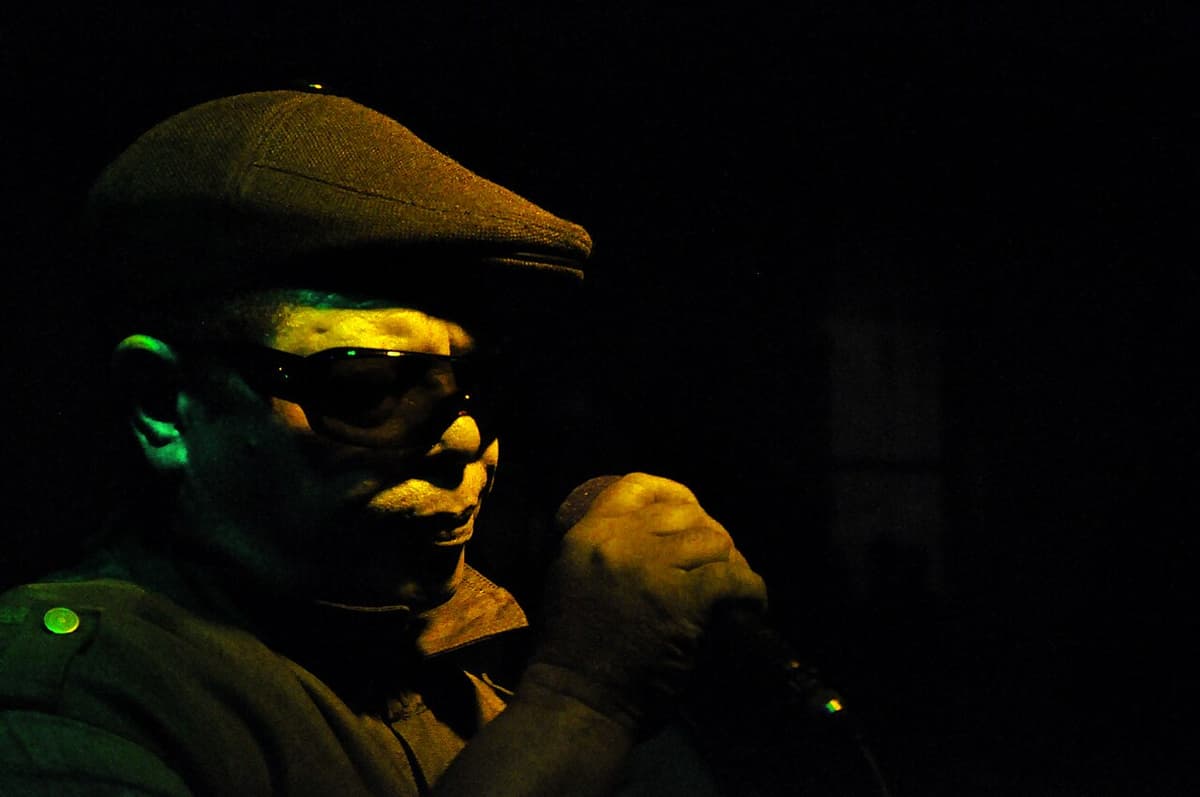
Di Melo
Effortlessly cool Brazilian funk that pairs gritty street-level grooves with psychedelic soul. A masterclass in rhythmic swagger and soulful defiance.
Effortlessly cool Brazilian funk that pairs gritty street-level grooves with psychedelic soul. A masterclass in rhythmic swagger and soulful defiance.
Di Melo is the sound of a 1970s Brazil that was looking toward the future while staying rooted in the street. His music is a potent cocktail of American soul influences and unmistakable Brazilian swing. It is music that feels lived-in, slightly dangerous, and incredibly stylish, characterized by thick basslines that drive every track forward with a sense of purpose.
What truly sets him apart is his 'deboche' - a subtle, elegant mockery or irony that colors his vocal delivery. He doesn't just sing; he narrating with a rhythmic swagger that blurs the line between a street poet and a soul superstar. The arrangements are dense but never cluttered, featuring sharp horn sections and psychedelic guitar flourishes that give the music a timeless, experimental edge.
Start with his self-titled 1975 debut. It is a flawless document of the 'Black Rio' movement's energy, offering everything from high-octane funk to introspective, psychedelic ballads. It is the perfect introduction to an artist who was rediscovered by global DJs for a very good reason: his groove is universal.
Roberto de Melo Santos (born 22 April 1949), known professionally as Di Melo, is a Brazilian singer-songwriter. His albums are characterized by a variety of musical genres, frequently mixing soul and funk elements with psychedelia. He released his first album in 1975, at a time when several members of Brazilian black music started their careers. After giving up public visibility, he went into ostracism, performing in bars and canteens. He started a songwriting partnership with Geraldo Vandré in the 1980s. At the beginning of the following decade, he suffered a serious motorcycle accident, which gave rise to rumors about Melo's supposed death. However, in 1997, one of his songs was included in the compilation Blue Brazil 2, making English DJs rediscover his work. During the 2000s, he released several independent albums. He was later the subject of two documentaries and a fictional short film. Currently, he also works with paintings, sculptures and poems, having also written two books and acted in a play. In 2011, his first album had an appearance in The Black Eyed Peas' Don't Stop the Party music video. In 2022, his first album was considered one of the 500 greatest albums in Brazilian music history, in a poll by podcast Discoteca Básica.
Cassette uses generative AI to enrich its catalog. How we use AI →