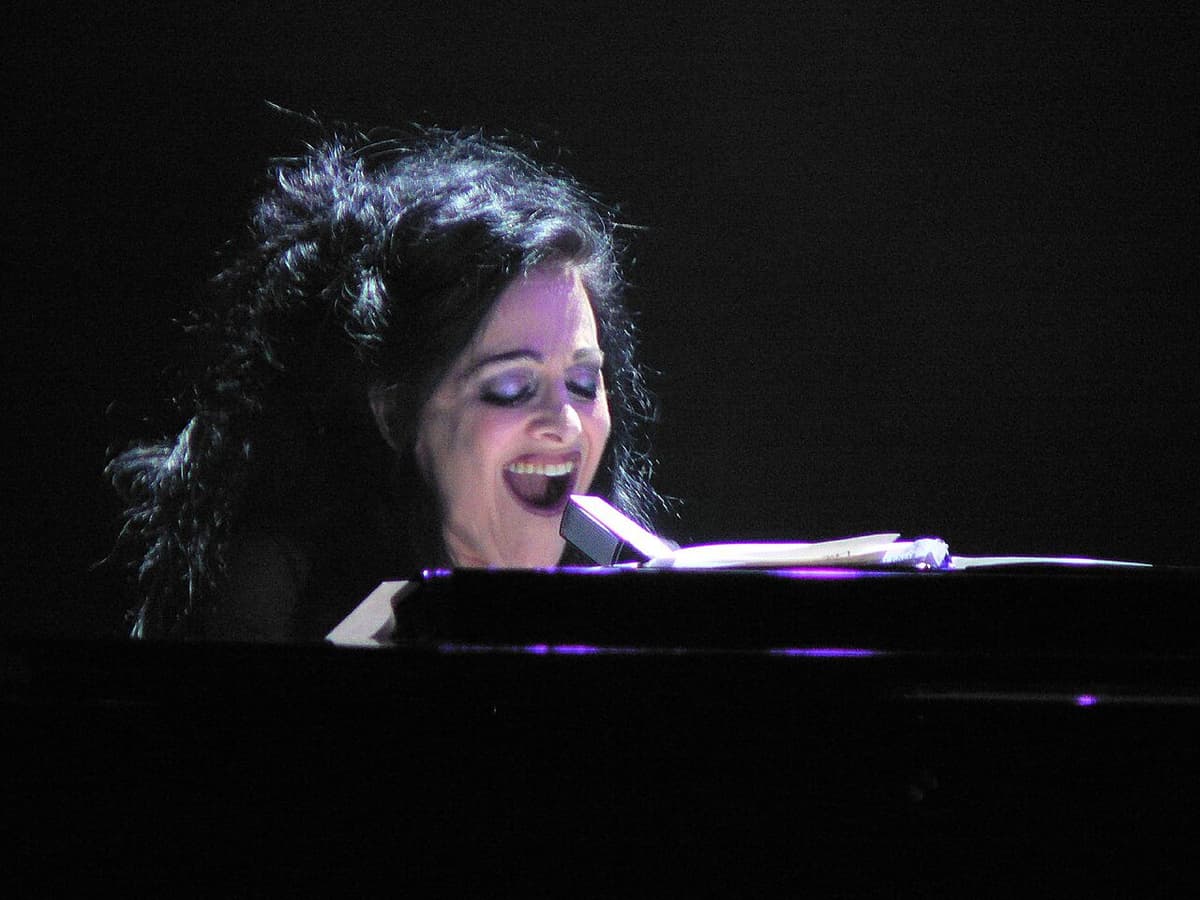
Diamanda Galás
Shattering, four-octave vocal performances that blend operatic terror with liturgical grief. A confrontational, high-stakes experience for the fearless listener.
Shattering, four-octave vocal performances that blend operatic terror with liturgical grief. A confrontational, high-stakes experience for the fearless listener.
Listening to Diamanda Galás is less like hearing a concert and more like witnessing a ritualistic exorcism. Her music is defined by a staggering, four-octave vocal range that moves from guttural groans to piercing, glass-shattering shrieks. It is a sound rooted in the 'Schrei' (shriek) opera tradition, utilizing sophisticated microphone setups to create a disorienting, immersive wall of vocal terror that demands your absolute attention.
What makes her truly distinctive is the way she weaponizes her classical training. Whether she is performing a radical interpretation of a blues standard or a massive liturgical work like 'Plague Mass,' her piano playing is as sharp and percussive as her voice. She uses the aesthetics of the church and the opera house to critique power, mourn the victims of genocide and disease, and explore the furthest reaches of human suffering and defiance.
For those new to her work, 'At Saint Thomas the Apostle Harlem' offers a haunting entry point into her live power, while 'The Litanies of Satan' showcases her early, more electronic-leaning experimentalism. It is music for the moments when you need art that is as heavy, honest, and uncompromising as the world itself.
Diamanda Galás (born August 29, 1955) is an American musician, singer-songwriter, visual artist, and activist. Galás has attracted the attention of the press particularly for her voice – a soprano sfogato – and written accounts that describe her work as original and thought-provoking refer to her as "capable of the most unnerving vocal terror", an "aesthetic revolutionary", "a mourner for the world's victims" and "an envoy of risk, honesty and commitment". As a composer, pianist, organist and performance artist, Galás has presented mainly her own work, but her live performances have also included works by other musicians, such as the avant-garde composers Iannis Xenakis and Vinko Globokar, jazz musician Bobby Bradford, saxophonist John Zorn, and Led Zeppelin bassist John Paul Jones. Galás's recordings have also included collaborations, some of which are with the bands Recoil and Erasure, instrumentalist Barry Adamson, and musician Can Oral (also known as Khan), among others.
Cassette uses generative AI to enrich its catalog. How we use AI →


