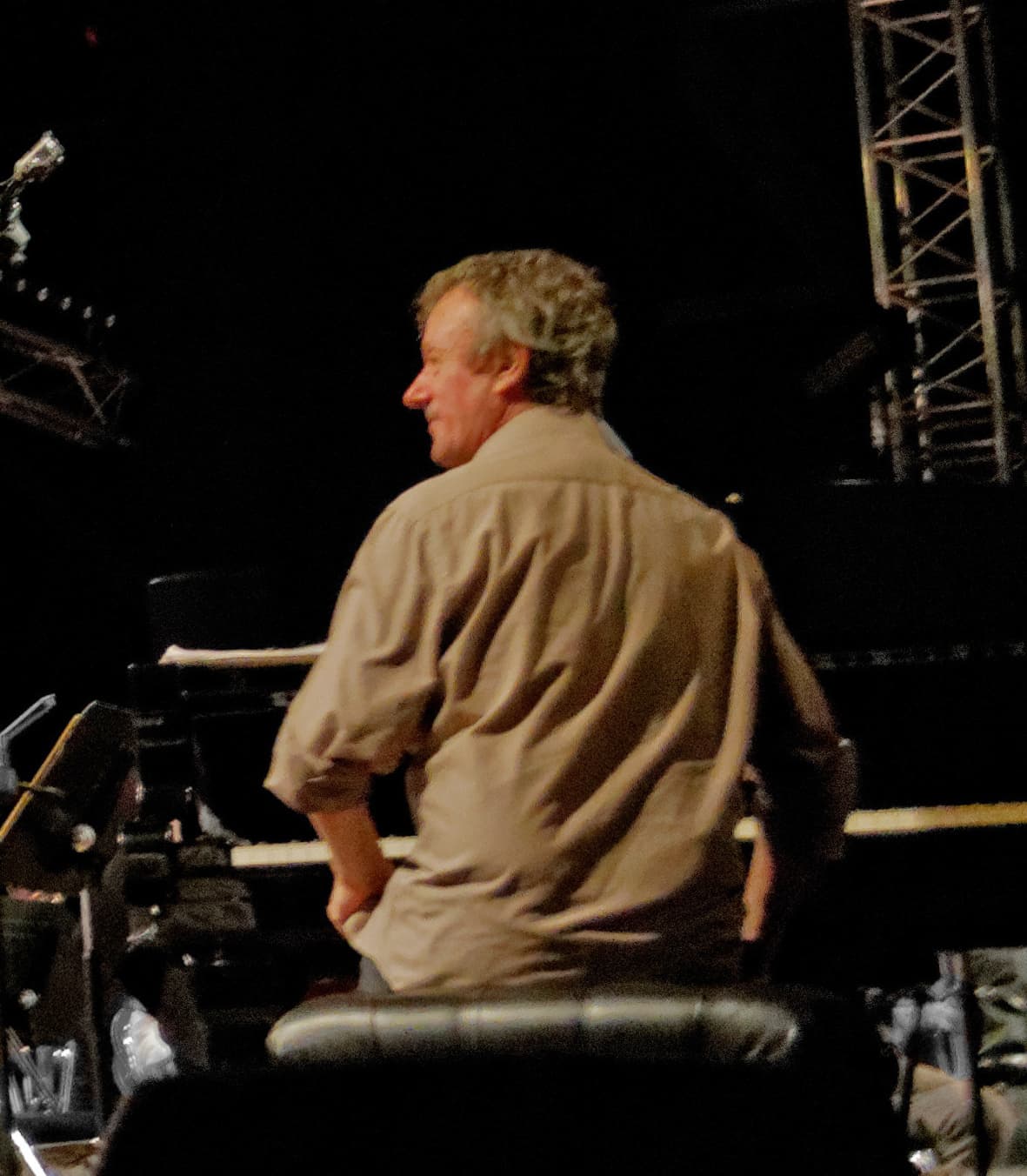
Didier Squiban
Lyrical solo piano that captures the salt air and rugged beauty of the Breton coast. A serene meeting of Celtic folk roots and French impressionist elegance.
Lyrical solo piano that captures the salt air and rugged beauty of the Breton coast. A serene meeting of Celtic folk roots and French impressionist elegance.
Didier Squiban is a pivotal figure in modern Breton music, credited with successfully integrating the piano into a tradition historically dominated by the harp, bagpipes, and accordion. Born in 1959 in Ploudalmézeau, Finistère, his formal training in musicology and conservatory studies provided a rigorous foundation in classical harmony and improvisation.
His career trajectory shifted significantly in the early 1990s through his collaboration with Yann-Fañch Kemener on the 'Héritage des Celtes' project, which reconnected him with his regional roots. Squiban's sound identity is defined by a 'triangular' influence: the modal structures of Breton folk, the harmonic sophistication of French Impressionism (Debussy, Satie), and the improvisational fluidity of American jazz (Bill Evans, Keith Jarrett). His landmark trilogy - 'Molène', 'Rozbras', and 'Ile d'Ex' - established a new maritime aesthetic in solo piano music. Critically, he is lauded for his 'Symphonie Bretagne', which expanded his folk-jazz-classical synthesis to a full orchestral scale. He occupies a unique cultural position as a bridge-builder between traditionalists and the avant-garde, maintaining a high level of technical precision while prioritizing emotional resonance and regional identity.
Shares impressionism, contemplative, vocal jazz, library (signature)
Shares impressionism, sparse_bare, library, peaceful (subgenre)
Shares sparse_bare, modern classical, library, peaceful (production)
Shares contemplative, modern classical, library, peaceful (signature)
Shares ocean, modern classical, peaceful, serene (signature)
Shares modern classical, library, peaceful, serene (subgenre)
Shares impressionism, modern classical, library, peaceful (subgenre)
Cassette uses generative AI to enrich its catalog. How we use AI →