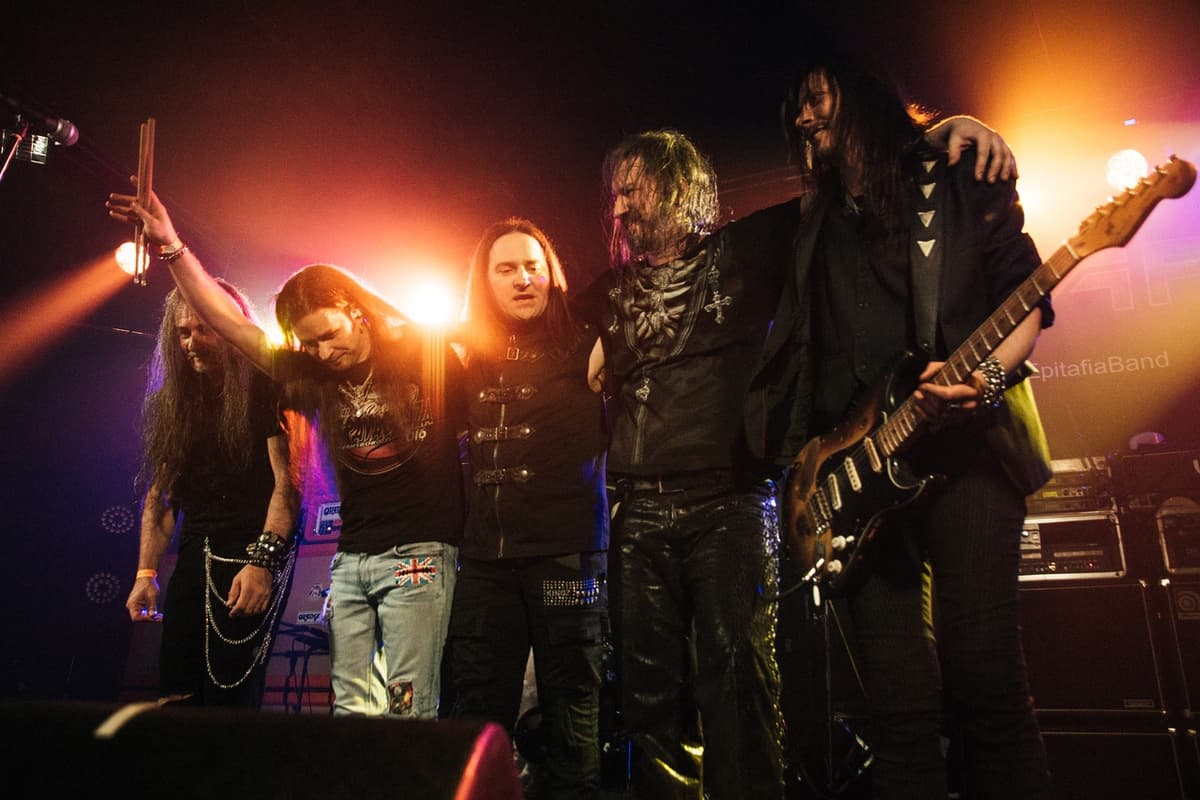
Epitaph
Twin-guitar harmonies and jazz-flecked progressive rock that evolved into muscular hard rock. Warm, driving, and distinctly vintage German energy for long drives.
Twin-guitar harmonies and jazz-flecked progressive rock that evolved into muscular hard rock. Warm, driving, and distinctly vintage German energy for long drives.
Epitaph delivers a sound that sits at the crossroads of early 70s experimentation and the raw power of classic hard rock. Their music is defined by a rich, analog warmth and a rhythmic complexity that betrays their jazz-influenced roots. You can feel the weight of the instruments; the guitars don't just play melodies, they weave intricate, interlocking patterns that feel both calculated and spontaneous. It is the sound of a band that spent years in smoke-filled clubs perfecting the art of the extended jam without losing sight of a solid hook.
What truly sets them apart is the 'twin-guitar' approach. Unlike many of their contemporaries who relied on a single lead, Epitaph utilized dual harmonies that created a massive, symphonic wall of sound. This technique, paired with occasional jazz-inflected time signatures, gives their earlier work a sophisticated edge that separates them from standard boogie-rock. Even as they transitioned into a heavier, more straightforward hard rock style in the late 70s, that foundational technical proficiency remained their signature.
To understand the band's evolution, start with their 1971 self-titled debut. It captures the perfect balance of psychedelic exploration and progressive ambition. For those who prefer a more direct, high-energy experience, their later live recordings showcase a band that never lost its bite, even decades after their initial formation. It is essential listening for anyone who values the craftsmanship of the golden era of rock.
Epitaph is an Anglo-German rock band, formed in Dortmund in 1969. Playing initially what AllMusic described as "post-psych progressive rock, spiced with occasional jazz accents and widespread twin-guitar harmonies", in 1973 they started shifting towards more straightforward hard rock stylings. After releasing six studio albums, they disbanded in 1982. In 2000, Epitaph reunited and several new releases followed.
Shares progressive rock, hard rock, heavy metal (subgenres); analog warmth, live recording, studio polished (production style)
Shares analog warmth, live recording, studio polished (production style); progressive rock, hard rock, art rock (subgenres)
Shares progressive rock, hard rock, art rock (subgenres); basement show, urban night, road trip (atmosphere)
Shares progressive rock, hard rock, heavy metal (subgenres); analog warmth, live recording, dynamic range (production style)
Shares progressive rock, art rock, hard rock (subgenres); analog warmth, live recording, studio polished (production style)
Shares analog warmth, live recording, studio polished (production style); progressive rock, hard rock, heavy metal (subgenres)
Shares analog warmth, live recording, studio polished (production style); progressive rock, hard rock, art rock (subgenres)
Shares progressive rock, hard rock, art rock (subgenres); analog warmth, live recording, dynamic range (production style)
Shares progressive rock, hard rock, art rock (subgenres); analog warmth, live recording, dynamic range (production style)
Shares progressive rock, hard rock, art rock (subgenres); analog warmth, live recording, dynamic range (production style)
Shares progressive rock, heavy metal, dynamic range, hard rock (signature)
Shares progressive rock, electric guitar, dynamic range, hard rock (signature)
Cassette uses generative AI to enrich its catalog. How we use AI →


