Listening to feedtime feels like standing too close to a running jet engine that is somehow playing a Delta blues riff. Their sound is defined by a massive, slab-like low end and a slide guitar that doesn't twinkle or weep, but rather screams and drones with industrial force. It is music stripped of all artifice, reduced to its most primal, rhythmic components until only the raw friction remains.
What sets them apart is their 'sonic reduction' - a philosophy of doing more with less. While their peers in the 80s noise scene were often chaotic, feedtime was disciplined and chugging, leaning into a heavy, motorik pulse that felt more like a machine than a band. They managed to bridge the gap between the rural grit of American roots music and the cold, urban alienation of post-punk, creating a sound that was both ancient and futuristic.
Start with the album Shovel. It is the definitive document of their power, capturing the band at their most cohesive and punishing. From there, explore Cooper-S to hear how they dismantle classic rock standards and rebuild them into towering walls of noise.
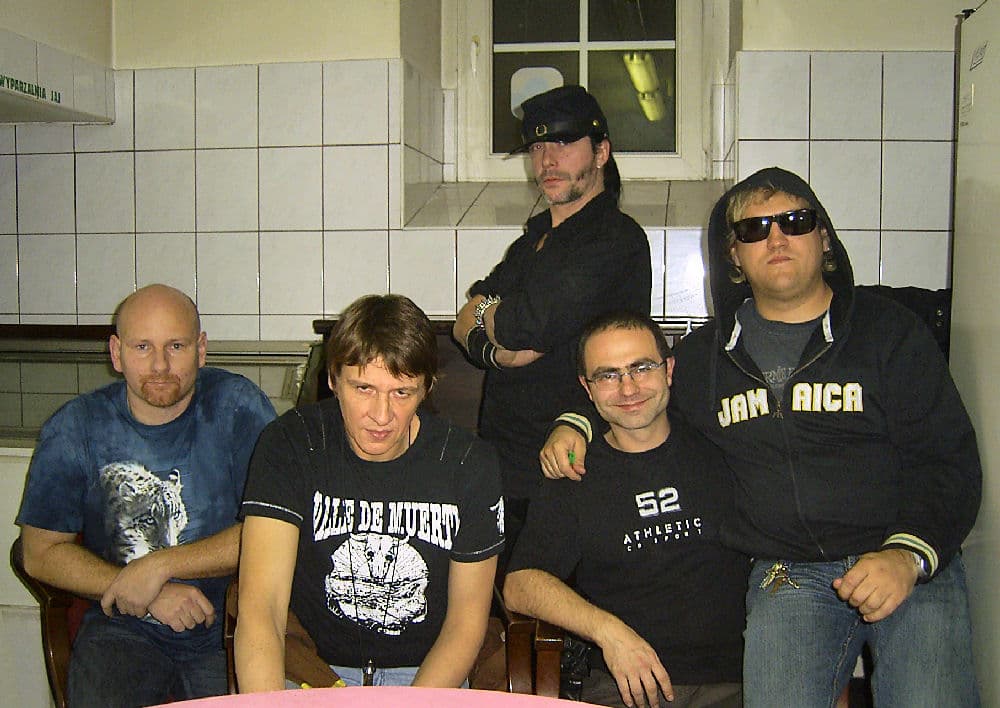
Feedtime (stylised as feedtime) is an Australian noise rock band from Sydney, New South Wales, that was initially formed as a duo in 1979 by Rick Johnson on guitar and vocals and Allen Larkin on bass guitar and vocals. They soon became a trio with various drummers until 1982, when they were joined by Tom Sturm. This line-up issued four albums, Feedtime (late 1985), Shovel (February 1987), Cooper-S (May 1988) and Suction (early 1989), before disbanding in February 1989. They reunited in 1995 with Johnson and Larkin joined by the latter's younger brother, John Larkin, on drums for another album, Billy (April 1996), before disbanding again in 1997. The Rick-Al-Tom line up reunited again, in 2011.


Shares noise rock, post-punk (subgenres); lo fi, noise textured, minimalist (production style)
Shares noise rock, post-punk, alternative rock (subgenres); aggressive, brooding, intense (moods)
Shares lo fi, noise textured, analog warmth (production style); dive bar, basement show, urban night (atmosphere)
Shares aggressive, restless, defiant (moods); noise rock, post-punk (subgenres)
Shares intense, brooding, defiant (moods); noise rock, post-punk (subgenres)
Shares noise rock, post-punk, alternative rock (subgenres); aggressive, brooding, defiant (moods)
Shares lo fi, noise textured, stripped back (production style); basement show, dive bar, urban night (atmosphere)
Shares noise rock, post-punk, alternative rock (subgenres); lo fi, noise textured, minimalist (production style)
Shares aggressive, brooding, defiant (moods); lo fi, noise textured, analog warmth (production style)
Shares noise rock, thunderstorm, post-punk, stripped back (signature)
Shares noise rock, thunderstorm, post-punk, gravelly (signature)
Cassette uses generative AI to enrich its catalog. How we use AI →