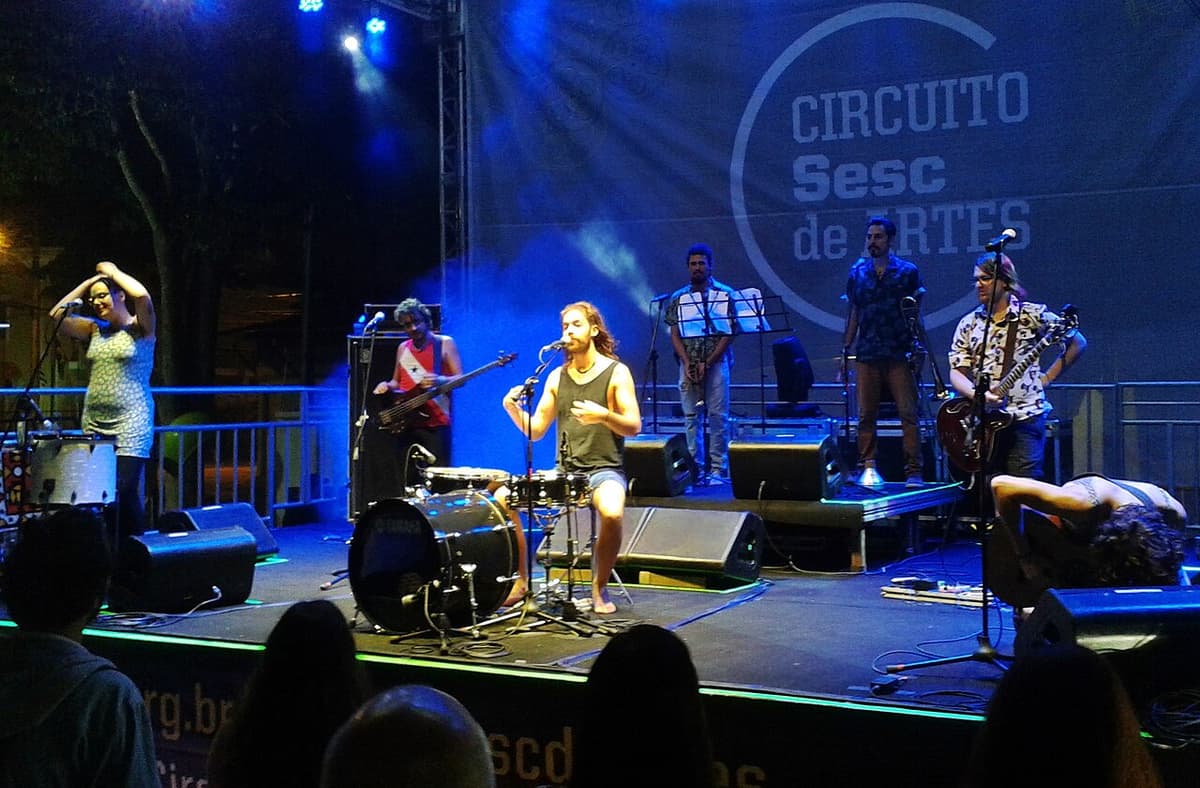
Francisco, el Hombre
Explosive Latin rhythms meet punk-rock grit. A high-energy collision of Brazilian and Mexican sounds built for festivals and late-night defiance.
Explosive Latin rhythms meet punk-rock grit. A high-energy collision of Brazilian and Mexican sounds built for festivals and late-night defiance.
Francisco, el Hombre sounds like a border crossing that turned into a block party. Their music is a high-velocity blend of acoustic textures and electric intensity, where traditional Latin American rhythms are filtered through a punk-rock filter. It is loud, communal, and deeply rhythmic, characterized by heavy percussion and vocal harmonies that often escalate into defiant shouts. There is a sense of perpetual motion in their sound, reflecting their origins as a traveling band of buskers.
What makes them truly distinctive is their 'pachanga folk' aesthetic, which rejects the polish of modern pop in favor of a raw, live-wire energy. They bridge the gap between the political urgency of Nação Zumbi and the nomadic spirit of Manu Chao, creating a sound that feels both ancient and immediate. The interplay between Portuguese and Spanish lyrics reinforces their trans-American identity, making the music feel like a shared language of resistance and celebration.
Start with the album SOLTASBRUXA, specifically the track 'Triste, Louca ou Má.' It serves as a perfect entry point, showcasing their ability to blend powerful social messaging with haunting, rhythmic arrangements. From there, move to CASA FRANCISCO to hear their more evolved, studio-refined take on their signature chaotic energy.
Francisco, el Hombre is a Brazilian rock, Mexican, Brazilian and Latin American music band formed in 2013 by Mexican-born Brazilian brothers Sebastián and Mateo Piracés-Ugarte in the city of Campinas, São Paulo. With three other Brazilian-born members, the group mixes musical elements from both countries and others from Latin America, based on continental trips by the brothers, resulting in music sung in Spanish, Portuguese and English. They are self-defined as a "pachanga folk" band. Rolling Stone Brasil described them as a mixture of Manu Chao and Nação Zumbi. Their initial Latin American tours were self-financed, improvised, and often began with few scheduled shows. They performed in streets, hostels, bars and at birthday parties. Their 2017 song "Triste, Louca ou Má" (Sad, Crazy or Bad) was nominated for the 2017 Latin Grammy award for Best Portuguese Language Song.
Cassette uses generative AI to enrich its catalog. How we use AI →


