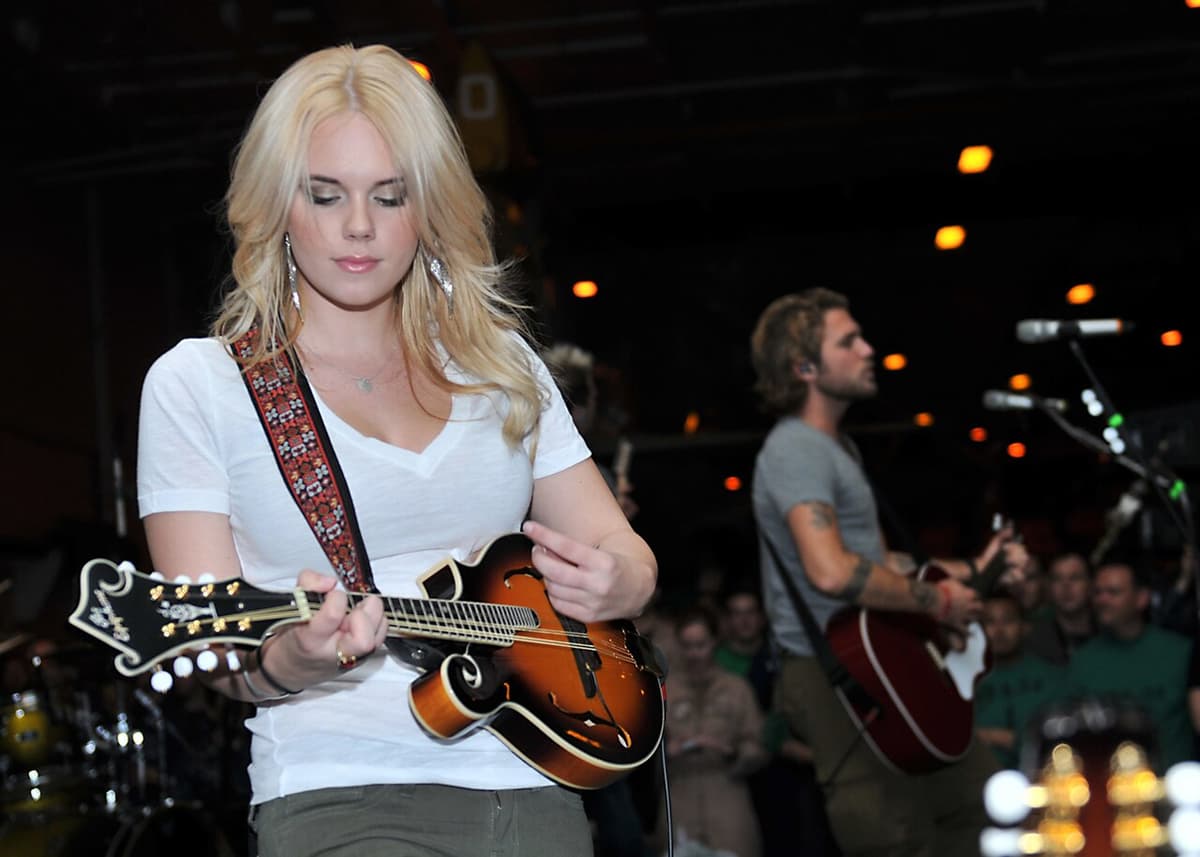
Gloriana
Polished, harmony-rich country pop that feels like a long summer evening. Shimmering mandolins and interlocking vocals for fans of big, melodic radio hooks.
Polished, harmony-rich country pop that feels like a long summer evening. Shimmering mandolins and interlocking vocals for fans of big, melodic radio hooks.
Gloriana captures the specific, shimmering glow of contemporary country pop at its most melodic. Their sound is defined by a lush, wall-of-vocal approach where male and female voices don't just trade lines but weave together in dense, four-part stacks. It is music that feels perpetually set during golden hour, balancing the organic snap of an acoustic guitar with the high-gloss production of a Nashville hit factory.
What truly distinguishes them is the interplay between the Gossin brothers' sturdy foundations and the airy, emotive leads of Rachel Reinert and Cheyenne Kimball. While many of their peers lean into the 'stomp and holler' aesthetic, Gloriana opts for a smoother, more rhythmic pulse. The mandolin isn't just a folk ornament here; it's used as a percussive, melodic engine that drives their biggest hooks forward.
Start with 'A Thousand Miles Left Behind' to hear the band at their commercial and creative peak. The hit single '(Kissed You) Good Night' serves as the perfect entry point, showcasing their ability to turn a quiet, intimate moment into a soaring, radio-ready anthem that stays with you long after the final chord.
Gloriana was an American country music group founded in 2008 by Cheyenne Kimball (vocals, mandolin), Rachel Reinert (vocals), and brothers Tom Gossin (vocals, guitar) and Mike Gossin (vocals, guitar). Prior to the group's foundation, Kimball recorded as a solo artist. The original lineup recorded one self-titled album for Emblem/Reprise Records in 2009, which included their first chart hit, "Wild at Heart". Kimball left before the release of the band's second album A Thousand Miles Left Behind, which produced their highest-charting single, "(Kissed You) Good Night", along with the top 20 "Can't Shake You". After a third album, Three, Reinert left as well, effectively disbanding the group.
Cassette uses generative AI to enrich its catalog. How we use AI →


