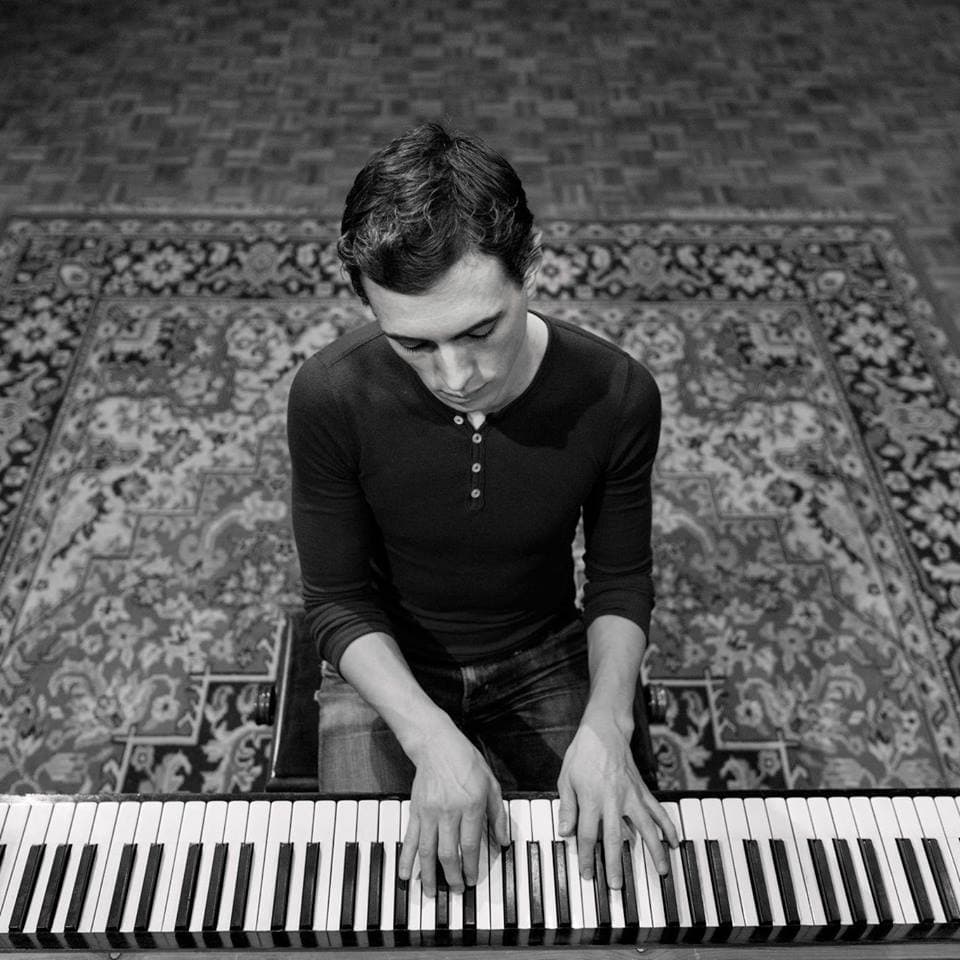
Guillaume Poncelet
Intimate felt piano and ghostly trumpet lines that feel like a private conversation. Minimalist, jazz-tinged neoclassical for deep focus and quiet reflection.
Intimate felt piano and ghostly trumpet lines that feel like a private conversation. Minimalist, jazz-tinged neoclassical for deep focus and quiet reflection.
Guillaume Poncelet creates music that feels like a physical space you can inhabit. It is dominated by the 'felt piano' sound, where the mechanical movements of the instrument - the thud of the pedal, the click of the keys, the friction of the hammers - are as much a part of the composition as the notes themselves. This creates an incredible sense of intimacy, as if you are sitting directly on the piano bench beside him.
While he is often grouped with neoclassical giants, his background in jazz and hip-hop production gives his melodies a different skeletal structure. There is a rhythmic sophistication and a certain 'blue' note to his phrasing that feels more grounded and soulful than the more saccharine side of modern classical. His trumpet playing, when it appears, is breathy and ethereal, acting more like a human voice than a brass instrument.
Start with the album '88' to experience the pure, unadorned power of his solo piano work. It is the perfect companion for moments that require a clear head or a soft landing, offering a sophisticated backdrop that rewards both passive listening and deep, focused attention.
Guillaume Poncelet (born 1978) is a French musician, composer, trumpet and piano player, born in Grenoble, France. As a composer, producer or musician, he collaborated with MC Solaar, C2C, Ben l'Oncle Soul, Oxmo Puccino, Sixun, Beat Assailant, Claude Nougaro, Stevie Wonder, Maurice White and Earth, Wind & Fire (within the band noJazz), Ousman Danedjo, Electro Deluxe, Dave, Michel Jonasz, Milk Coffee and Sugar, Gaël Faye, Ayo, Ben Mazué, Zaz and Joyce Jonathan.
Cassette uses generative AI to enrich its catalog. How we use AI →

