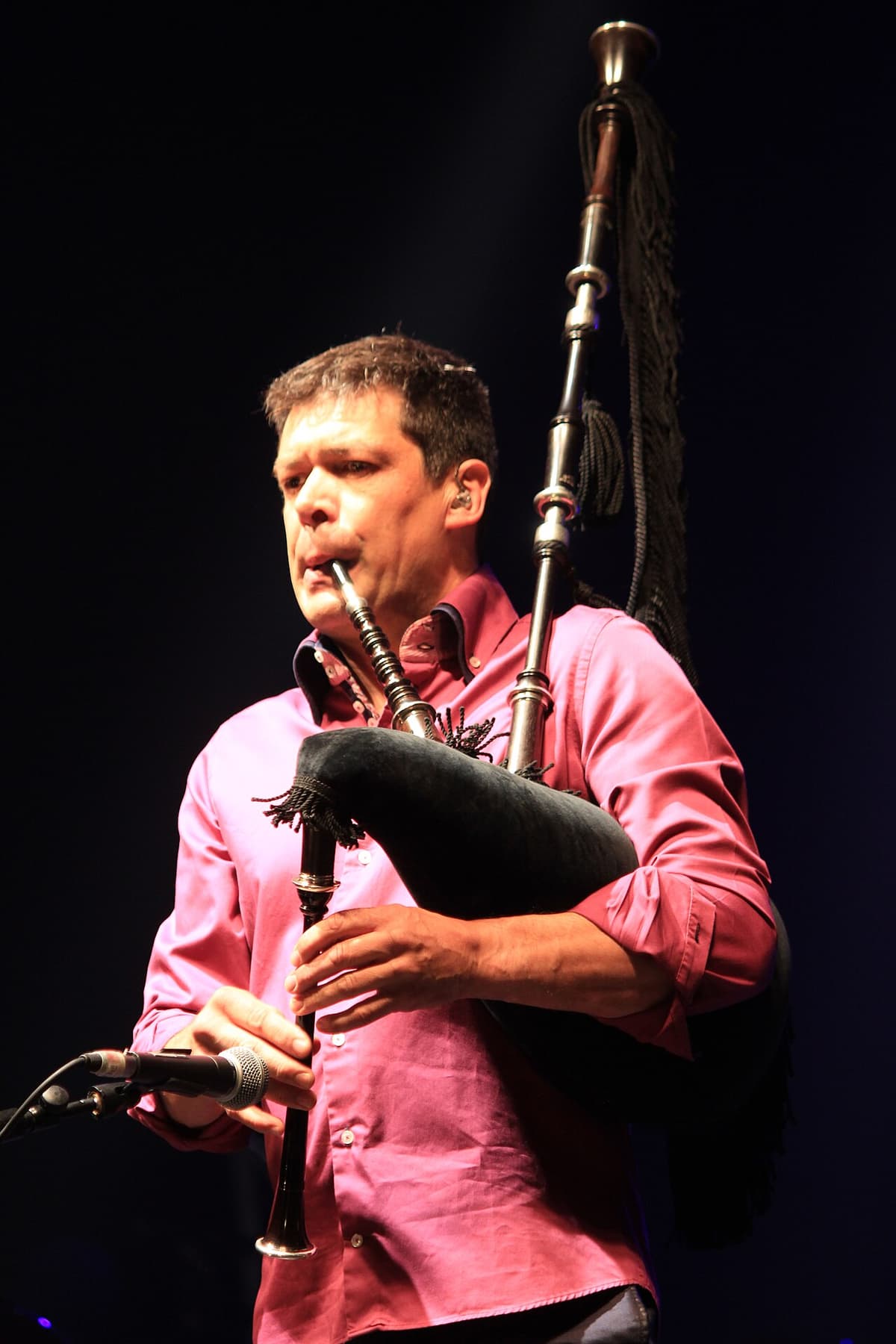
Hevia
High-definition Asturian bagpipes meeting sleek electronic production. Cinematic, rhythmic, and deeply rooted in Northern Spanish tradition with a futuristic edge.
High-definition Asturian bagpipes meeting sleek electronic production. Cinematic, rhythmic, and deeply rooted in Northern Spanish tradition with a futuristic edge.
Hevia’s music sounds like the exact moment a centuries-old tradition decides to plug into a high-voltage amplifier. It is dominated by the piercing, triumphant wail of the Asturian gaita, but instead of being backed by a simple village band, it’s supported by massive cinematic percussion, shimmering synthesizers, and polished electronic grooves. There is a distinct sense of verticality to the sound, evoking the rugged peaks and misty valleys of Asturias through a lens of modern production clarity.
What truly sets Hevia apart is his pioneering use of the MIDI electronic bagpipe, an instrument he helped invent. This allows him to maintain the soulful, breath-like phrasing of traditional piping while exploring textures that would be impossible on a wooden instrument. The result is a sound that feels both ancient and space-age, where complex folk reels are transformed into anthemic, floor-filling compositions that bridge the gap between a village square and a global stage.
Newcomers should start with the landmark album Tierra de Nadie. It contains his most famous work, Busindre Reel, which perfectly encapsulates his ability to turn a traditional melody into a global pop-folk phenomenon. It’s the ideal entry point for anyone who loves the energy of Celtic music but wants the scale and polish of modern electronic scoring.
José Ángel Hevia Velasco, known professionally as Hevia (born October 11, 1967 in Villaviciosa, Asturias), is an Asturian bagpiper – specifically, an Asturian gaita player. He commonly performs with his sister, María José, on drums. In 1992 he was awarded first prize for solo bagpipes at the Festival Interceltique de Lorient, Brittany. Possibly his most recognisable composition is the 1998 piece Busindre Reel, from his first album Tierra de Nadie. Hevia is known for helping invent a special brand of MIDI electronic bagpipes, which he is often seen playing live. The instrument was developed with Alberto Arias (pupil and computer programmer) and the electronic technician Miguel Dopico. Two of Hevia's tracks, La Línea Trazada and El Garrotin (single release), appeared on the cross-platform video game Vigilante 8: 2nd Offense. His music was also featured in Walt Disney World at Epcot, just before the nightly IllumiNations: Reflections of Earth fireworks show.
Cassette uses generative AI to enrich its catalog. How we use AI →


