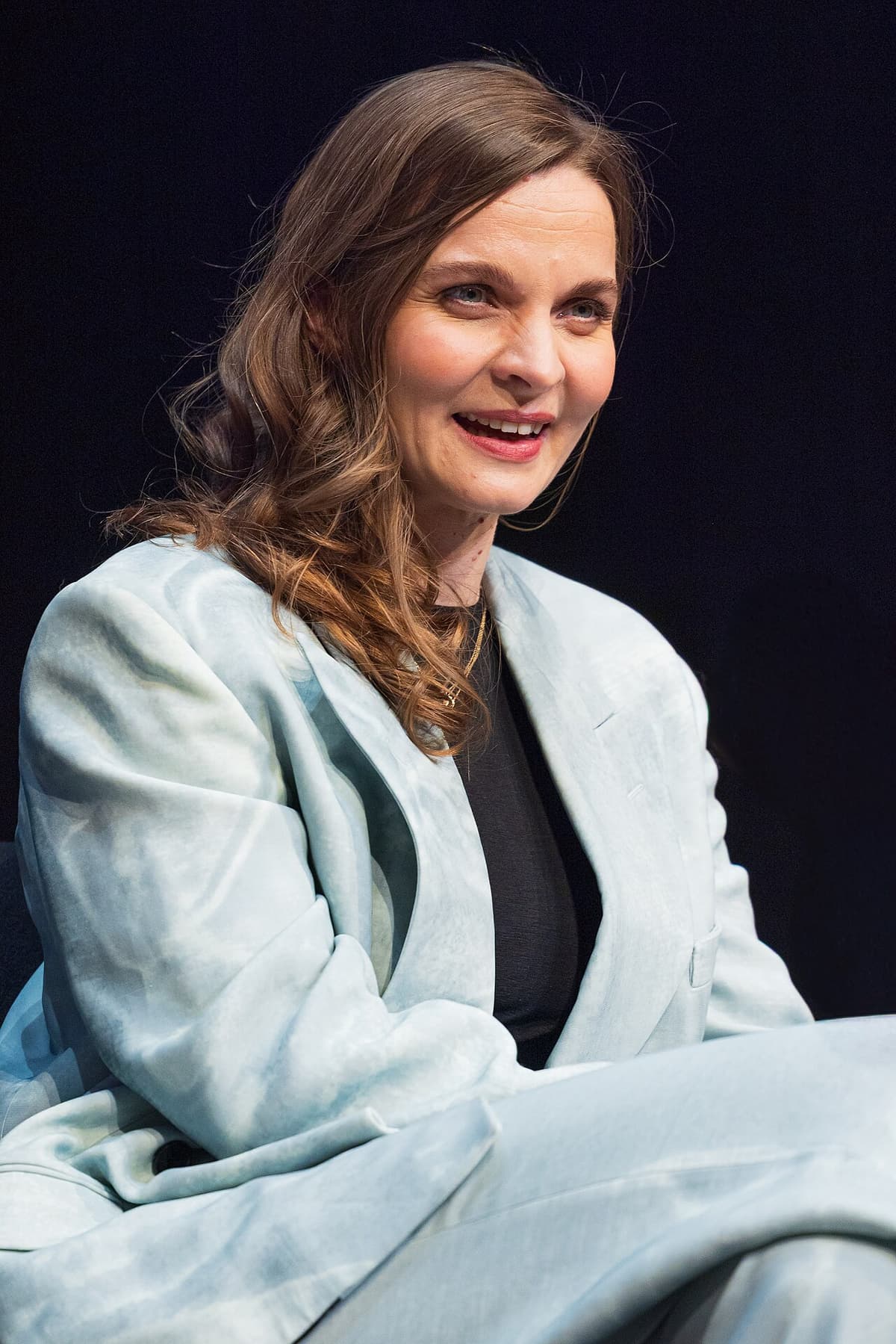
Hildur Guðnadóttir
Deep, resonant cello textures and industrial field recordings that feel like the weight of history. Somber, visceral, and profoundly immersive modern classical.
Deep, resonant cello textures and industrial field recordings that feel like the weight of history. Somber, visceral, and profoundly immersive modern classical.
Hildur Guðnadóttir creates music that feels like it was excavated from the earth rather than written on paper. Her sound is dominated by the cello, but not in a traditional sense; she treats the instrument as a source of raw, vibrating energy, often slowing it down or layering it until it becomes a massive, breathing organism. There is a profound sense of physical space in her recordings, often leaning into the darker, more resonant frequencies that vibrate in the chest.
What truly distinguishes her is her ability to bridge the gap between classical training and industrial experimentation. Her work on 'Chernobyl' famously utilized field recordings from a decommissioned power plant, turning the sounds of metal and machinery into a haunting orchestral palette. She doesn't just provide a melody; she builds a sonic environment that captures the psychological weight of her subjects, whether it is the descent into madness or the aftermath of a catastrophe.
For those new to her work, the 'Chernobyl' soundtrack is a masterclass in atmospheric dread, while her solo album 'Without Sinking' offers a more intimate but equally profound exploration of her melodic sensibilities. It is music for deep focus, for moments of heavy reflection, or for anyone who finds beauty in the darker, more quiet corners of the human experience.
Hildur Ingveldardóttir Guðnadóttir (born 4 September 1982) is an Icelandic musician and composer. A classically trained cellist, she has played and recorded with the bands Pan Sonic, Throbbing Gristle, Múm, and Stórsveit Nix Noltes, and has toured with Animal Collective and Sunn O))). She has received various accolades, including an Academy Award, two Grammy Awards, and a Primetime Emmy Award. Hildur has gained international recognition for her film and television scores, including Journey's End (2017), Mary Magdalene (2018), Sicario: Day of the Soldado (2018), Todd Field's Tár and Sarah Polley's Women Talking (both 2022). For her score for Todd Phillips' psychological thriller film Joker (2019), she won the Academy Award for Best Original Score, the BAFTA Award for Best Original Music, and the Golden Globe Award for Best Original Score, making her the first solo female composer to win in all three. She is also known for her work on the HBO miniseries Chernobyl (2019), which won her a Primetime Emmy Award, a BAFTA TV Award and a Grammy Award.
Cassette uses generative AI to enrich its catalog. How we use AI →


