Human Race was a Swedish power metal outfit active during the late 1990s and early 2000s, a period when the Scandinavian metal scene was diversifying beyond its death and black metal roots. Their sound identity is firmly rooted in the neo-classical metal tradition, characterized by high-speed alternate picking, sweep-picked arpeggios, and a rhythm section utilizing relentless double-bass drumming.
Unlike the 'flower metal' variants of the genre, Human Race maintained a harder edge, often incorporating elements of traditional heavy metal and progressive structures. Their career arc saw them transition from the raw energy of 'For the Sake of Your Soul' to the more polished and complex 'Dirt Eater'. Culturally, they represent the 'hidden gem' tier of the Swedish scene, highly respected by power metal purists for their refusal to rely on campy tropes. Critically, they are noted for their technical execution and the spiritual undertones of their lyrics, which provided a more serious alternative to the dragon-slaying narratives common in the genre at the time.
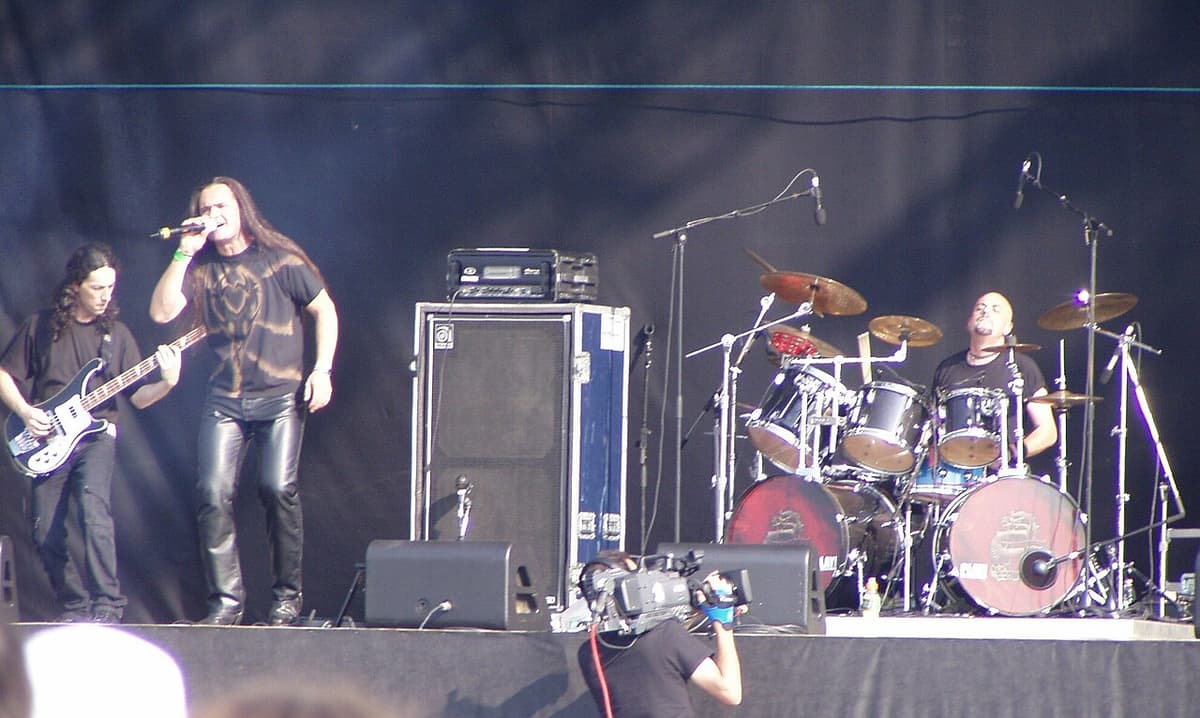
Shares high-register operatic vibrato, neo-classical guitar shredding, power metal, operatic (detail)
Shares power metal, operatic, progressive metal, mountain (subgenre)
Shares power metal, mountain, heavy metal, electric guitar (signature)
Shares power metal, operatic, progressive metal, mountain (signature)
Shares power metal, operatic, progressive metal, mountain (signature)
Shares double-kick drum precision, operatic, power metal, progressive metal (detail)
Shares power metal, operatic, progressive metal, mountain (signature)
Shares power metal, operatic, progressive metal, heavy metal (signature)
Shares power metal, operatic, progressive metal, heavy metal (signature)
Shares double-kick drum precision, power metal, operatic, progressive metal (detail)
Cassette uses generative AI to enrich its catalog. How we use AI →