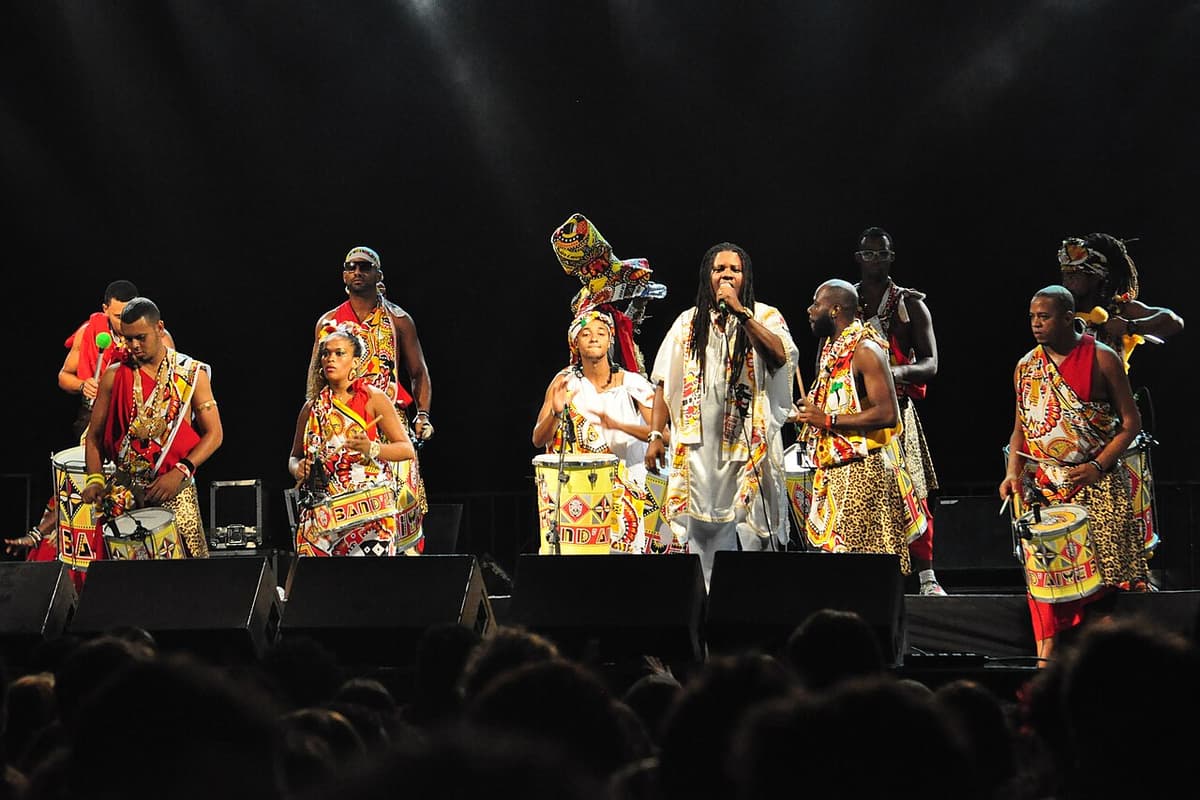
Ilê Aiyê
Thunderous Afro-Brazilian percussion and massed choral vocals that capture the soul of Salvador. Pure, rhythmic power for moments of collective celebration.
Thunderous Afro-Brazilian percussion and massed choral vocals that capture the soul of Salvador. Pure, rhythmic power for moments of collective celebration.
Listening to Ilê Aiyê is like standing at the epicenter of a tectonic shift powered entirely by human hands and voices. The sound is dominated by the 'bloco afro' aesthetic they pioneered: a massive, rolling wall of percussion led by the deep, resonant boom of surdo drums. It is music that refuses to be background noise, demanding a physical response from the listener through its relentless, polyrhythmic drive and the earthy warmth of its vocal arrangements.
What truly distinguishes the group is the spiritual and political weight carried by their rhythms. This isn't just party music; it is a sonic reclamation of African identity in Brazil. The vocal delivery often utilizes a call-and-response structure that feels ancient and immediate, blending the sacred atmosphere of Candomblé ceremonies with the public defiance of a street protest. The production, especially on their classic recordings, preserves the raw, open-air quality of a live procession.
Start with the 1984 landmark 'Canto Negro'. It serves as the definitive blueprint for the Afro-Bahian sound, featuring tracks that have become anthems of Black consciousness. It is the perfect entry point to understand how Ilê Aiyê transformed the landscape of Brazilian music by centering the drum and the community above all else.
Ilê Aiyê is a carnival block from Salvador, Bahia, Brazil. It is located in the Curuzu/Liberdade neighborhood, the largest afro-descendent population area of Salvador. The name stems from the Yoruba language: Ilé - home; Ayé - life, the world or human existence; which can be loosely translated as 'earth'. It was founded in 1974 by Antônio Carlos “Vovô” and Apolônio de Jesus, making it the oldest Afro-Brazilian block. Ilê Aiyê works to raise the consciousness of the Bahian black community. Persecuted by the police and the media during its first years, and still controversial for only allowing blacks to parade with the group, Ilê Aiyê is a renowned element of Bahia’s carnival. The group pioneered the type of carnival group known as the bloco afro, featuring themes from global black cultures and history, and celebrating the aesthetic beauty of black people. All other Afro-Brazilian blocos borrow elements originally created by Ilê Aiyê, including such groups founded shortly afterwards, such as Olodum and Malê Debalê. During Bahian carnival, the group includes hundreds of musicians, dozens of dancers, and thousands of members. They traditionally begin their procession on the Saturday night of Carnaval at the home of the Dos Santos family, where for many years Mãe Hilda de Jitolu, the mother of co-founder Vovô, presided as spiritual mother to the group and formal leader of a candomblé. As Ilê Aiyê passes, carnival crowds sing along by the thousands to songs about the importance of African and Afro-Brazilian culture and religion. Ilê Aiyê was responsible for a huge cultural revolution in Brazil. It is often mentioned that in Salvador, before the founding of Ilê Aiyê, black men and women would never wear colorful dresses, would often not enter through the front door, would not wear afro hairstyles, and black women would not use lipstick – all because of long-standing racist stigmatization. This situation has been thoroughly changed for many Afro-Brazilians thanks to the empowerment processes that Ilê Aiyê implemented through music and through the praise of African culture and history.
Cassette uses generative AI to enrich its catalog. How we use AI →

