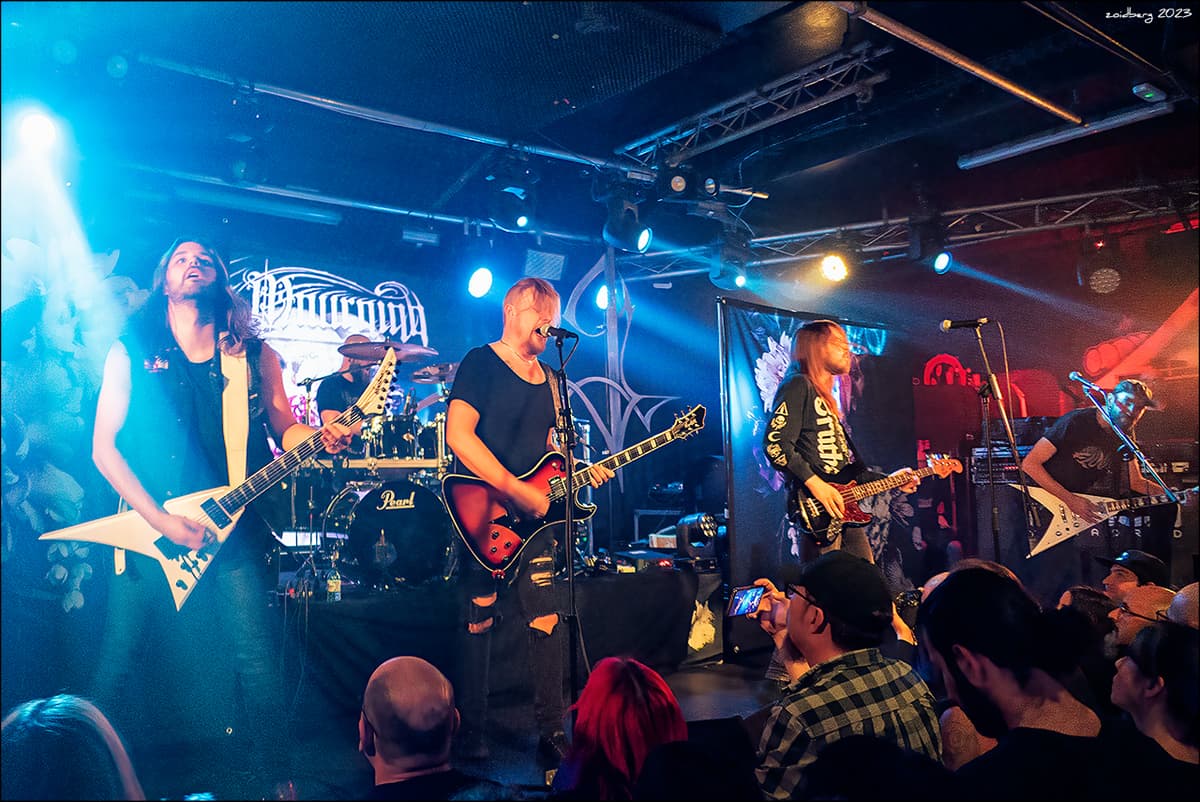
In Mourning
Heavy, oceanic metal that balances crushing riffs with progressive beauty. It feels like a storm at sea: powerful, unpredictable, and deeply atmospheric.
Heavy, oceanic metal that balances crushing riffs with progressive beauty. It feels like a storm at sea: powerful, unpredictable, and deeply atmospheric.
In Mourning is a cornerstone of the Swedish progressive melodic death metal scene, emerging from Vansbro in 2000. While they began with gothic metal leanings, their evolution led to a sophisticated blend of Opeth-ian progression and the driving energy of the Gothenburg sound.
Their breakthrough debut, 'Shrouded Divine' (2008), established them as a critical darling, noted for its maturity and atmospheric depth. The band is particularly distinguished by their use of a three-guitar lineup, which facilitates complex harmonic layering and counterpoint rarely seen in the genre. Their thematic focus often revolves around nautical mythology and the sublime power of nature, particularly the ocean, which serves as a recurring metaphor for existential struggle. Throughout the 2010s, they solidified their position with albums like 'The Weight of Oceans' and 'Afterglow,' moving toward a more polished, high-fidelity sound while retaining their signature 'ebb and flow' dynamic structure. They are frequently cited alongside peers like Be'lakor and Insomnium for their ability to balance extreme metal aggression with melancholic beauty.
Shares ebb_and_flow, post-metal, melodic death metal, doom metal (signature)
Shares ebb_and_flow, post-metal, melodic death metal, progressive metal (signature)
Shares post-metal, melodic death metal, doom metal, ocean (subgenre)
Shares melodic death metal, doom metal, ocean, progressive metal (subgenre)
Shares progressive metal, ebb_and_flow, post-metal, dynamic_range (signature)
Shares ebb_and_flow, melodic death metal, progressive metal, dynamic_range (signature)
Shares post-metal, melodic death metal, doom metal, cathartic (subgenre)
Shares progressive metal, melodic death metal, gravelly, baritone (signature)
Shares progressive rhythmic shifts, progressive metal, ebb_and_flow, doom metal (detail)
Cassette uses generative AI to enrich its catalog. How we use AI →


