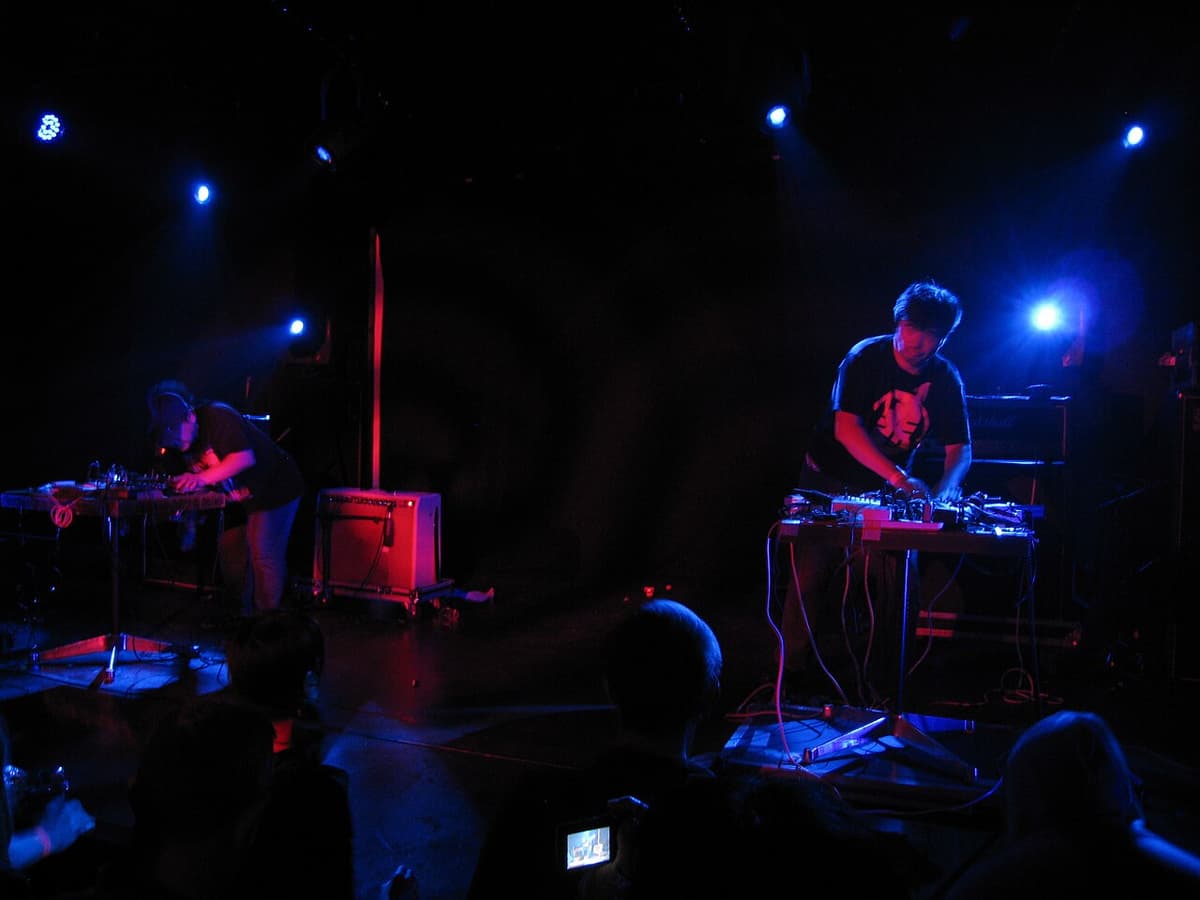
Incapacitants
A relentless wall of high-voltage electronic entropy. Pure, uncompromised harsh noise that feels like a physical weight in the room. For those seeking total catharsis.
A relentless wall of high-voltage electronic entropy. Pure, uncompromised harsh noise that feels like a physical weight in the room. For those seeking total catharsis.
Listening to Incapacitants is less like hearing music and more like standing directly behind a jet engine or inside a malfunctioning electrical substation. It is a dense, unwavering wall of 'pure' noise that seeks to bypass traditional musical structures entirely. There are no rhythms to latch onto and no melodies to hum; instead, you are met with a saturated, high-frequency landscape of feedback, distorted vocals, and electronic screams that demand your total attention through sheer volume and intensity.
What makes the duo of Mikawa and Kosakai distinctive is their 'hard noise' philosophy, which treats noise with the same improvisational rigor as jazz but strips away the instruments. Their sound is famously physical, mirroring their legendary, high-energy live performances that often resemble professional wrestling matches. Unlike the more conceptual or atmospheric corners of the noise genre, Incapacitants provide a joyful, almost celebratory form of sonic destruction that feels vital and alive.
If you are ready to dive in, start with 'As Loud as Possible'. The title is not a suggestion but a mission statement. It serves as the definitive document of their mid-90s peak, offering a masterclass in how to sustain interest through texture and density alone. It is the perfect entry point for anyone wanting to understand why the Japanese noise scene became a global phenomenon.
Incapacitants (インキャパシタンツ, Inkyapashitantsu) are a Japanese noise music group formed in 1981. Initially a solo project of Toshiji Mikawa, Fumio Kosakai joined upon the project's relocation to Tokyo. The duo's stated aim is to produce "pure" noise, uninfluenced by musical ideas or even human intention, using primarily feedback, vocals, and various electronics. Kosakai calls this sound "hard noise", as a nod to the jazz subgenre hard bop.
Cassette uses generative AI to enrich its catalog. How we use AI →


