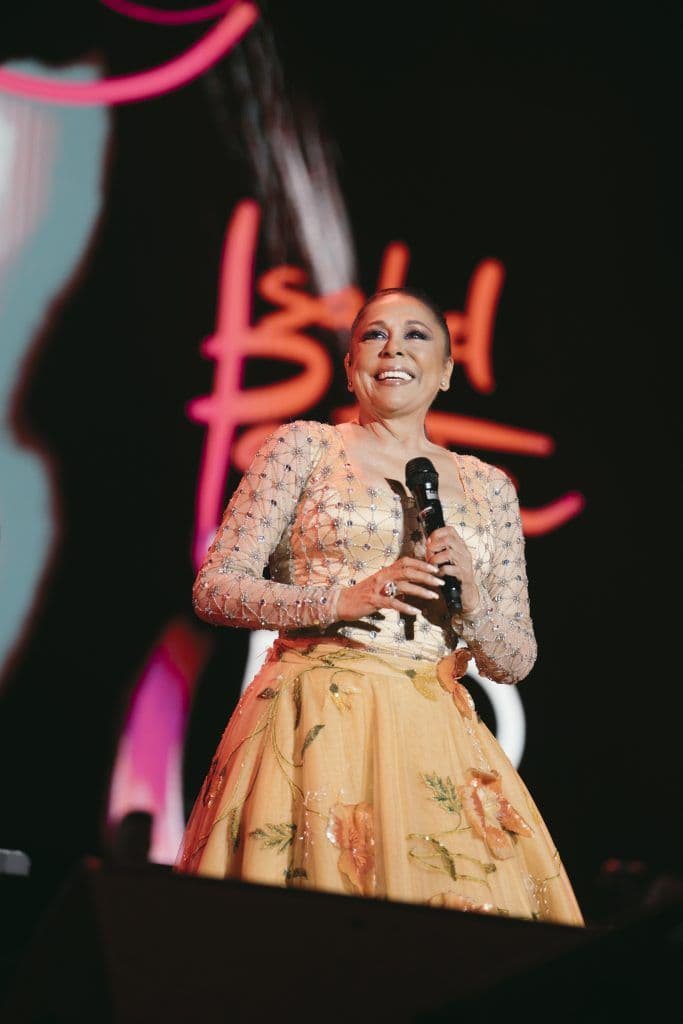
Isabel Pantoja
Grand, theatrical Spanish copla and Latin pop. Sweeping orchestral arrangements meet a voice defined by intense passion and tragic elegance. Perfect for high drama.
Grand, theatrical Spanish copla and Latin pop. Sweeping orchestral arrangements meet a voice defined by intense passion and tragic elegance. Perfect for high drama.
Isabel Pantoja is the high priestess of the Copla, a uniquely Spanish genre that blends folk traditions with the scale of an opera. Her music feels like a stage play in song form: every note is heavy with history, every lyric is delivered with a trembling intensity that suggests the stakes are life or death. It is lush, expensive-sounding music that relies on massive string sections and Pantoja's own formidable, vibrato-rich voice to convey deep-seated longing and pride.
What sets her apart is the 'Andalusian style' - a specific way of phrasing that carries the ghost of flamenco without the grit of the tablao. She is a master of the slow-burn crescendo, starting a song in a hushed, conspiratorial whisper before exploding into a powerful, room-filling belt. Her public persona as the 'Widow of Spain' after the death of her bullfighter husband Paquirri is baked into the DNA of her most famous recordings, lending them a layer of authentic grief that few pop stars can emulate.
For those new to her catalog, her mid-career work from the late 80s and early 90s offers the perfect balance of traditional Spanish roots and polished Latin pop production. It is music for moments that require maximum emotional volume, whether you are processing a loss or simply want to feel the weight of a grand, romantic narrative.
María Isabel Pantoja Martín (Spanish pronunciation: [isaˈβel panˈtoxa]; born August 2, 1956) is a Spanish singer. She was born in the Triana district of Seville, Spain. She has released more than a dozen albums throughout a career spanning many decades, mostly of copla genre, and is known for her distinctive Andalusian style.
Cassette uses generative AI to enrich its catalog. How we use AI →


