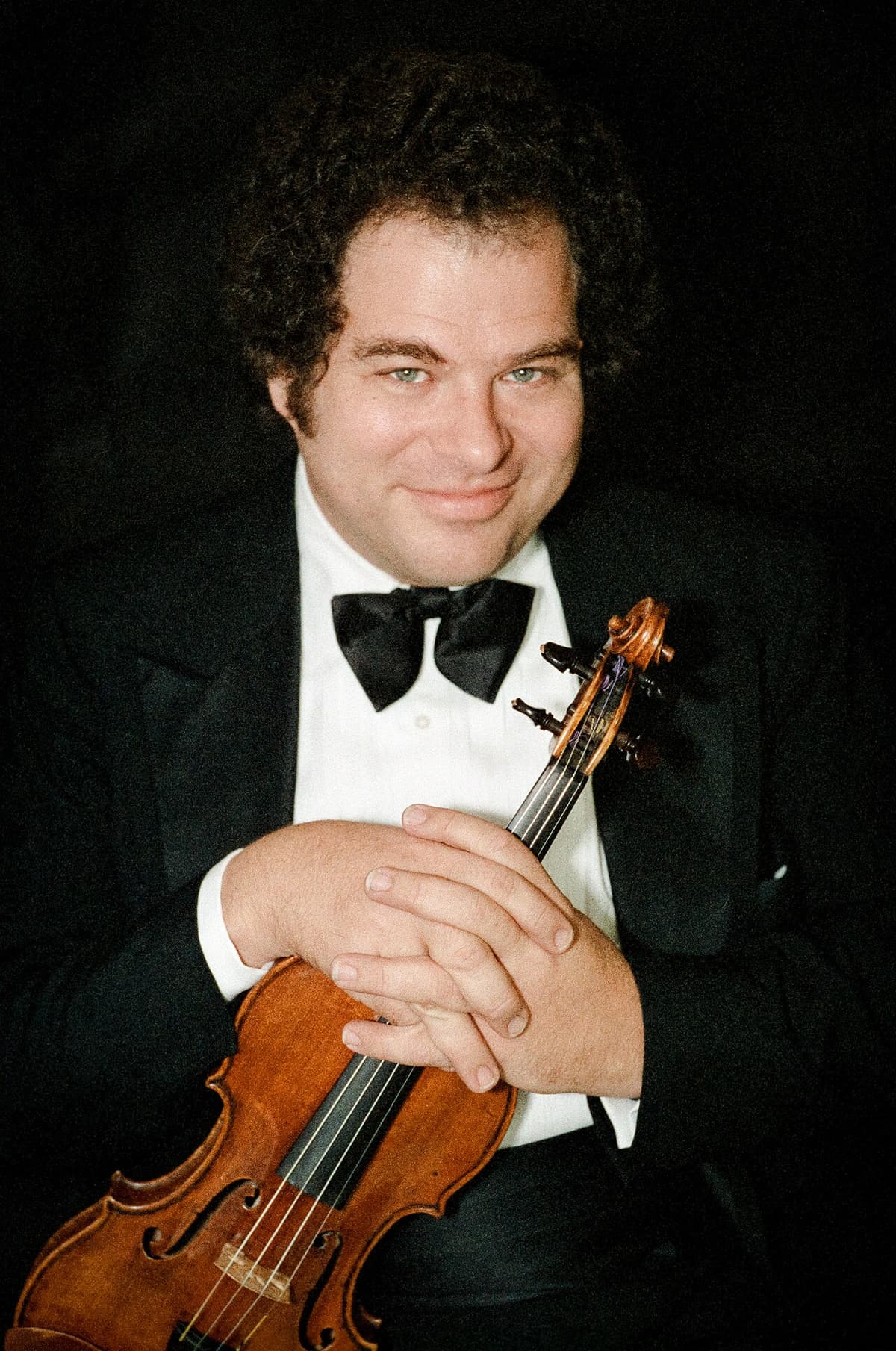
Itzhak Perlman
Lush, singing violin lines that feel like a warm embrace. Technically flawless but deeply human, it is the sound of a master storyteller without words.
Lush, singing violin lines that feel like a warm embrace. Technically flawless but deeply human, it is the sound of a master storyteller without words.
Listening to Itzhak Perlman is like hearing the violin finally learn how to speak. His tone is famously warm and generous, possessing a 'fat' sound that fills a room with golden-hued resonance. While other virtuosos might lean into cold, clinical precision, Perlman prioritizes the emotional curve of a phrase, making even the most complex concertos feel as intimate as a lullaby.
What sets him apart is his incredible vibrato and the way he 'sings' through the instrument. There is a palpable sense of joy and humanity in his playing that reflects his larger-than-life personality. His bow technique creates a seamless, liquid connection between notes, avoiding the scratchy artifacts of lesser players in favor of a pure, crystalline sustain.
Start with his recordings of the great Romantic concertos or his 'Cinema Serenade' for a more accessible entry point. Whether he is tackling the technical fireworks of Paganini or the soulful melodies of Klezmer, he brings a consistent sense of warmth and dignity that makes the music feel both historic and immediate.
Itzhak Perlman (Hebrew: יצחק פרלמן; born August 31, 1945) is an Israeli-American violinist. He has performed worldwide and throughout the United States, in venues that have included a state dinner for Elizabeth II at the White House in 2007, and at the 2009 inauguration of Barack Obama. He has conducted the Detroit Symphony Orchestra, the Philadelphia Orchestra, and the Westchester Philharmonic. In 2015, he was awarded the Presidential Medal of Freedom. Perlman has won 16 Grammy Awards, including a Grammy Lifetime Achievement Award, and four Emmy Awards.
Cassette uses generative AI to enrich its catalog. How we use AI →


