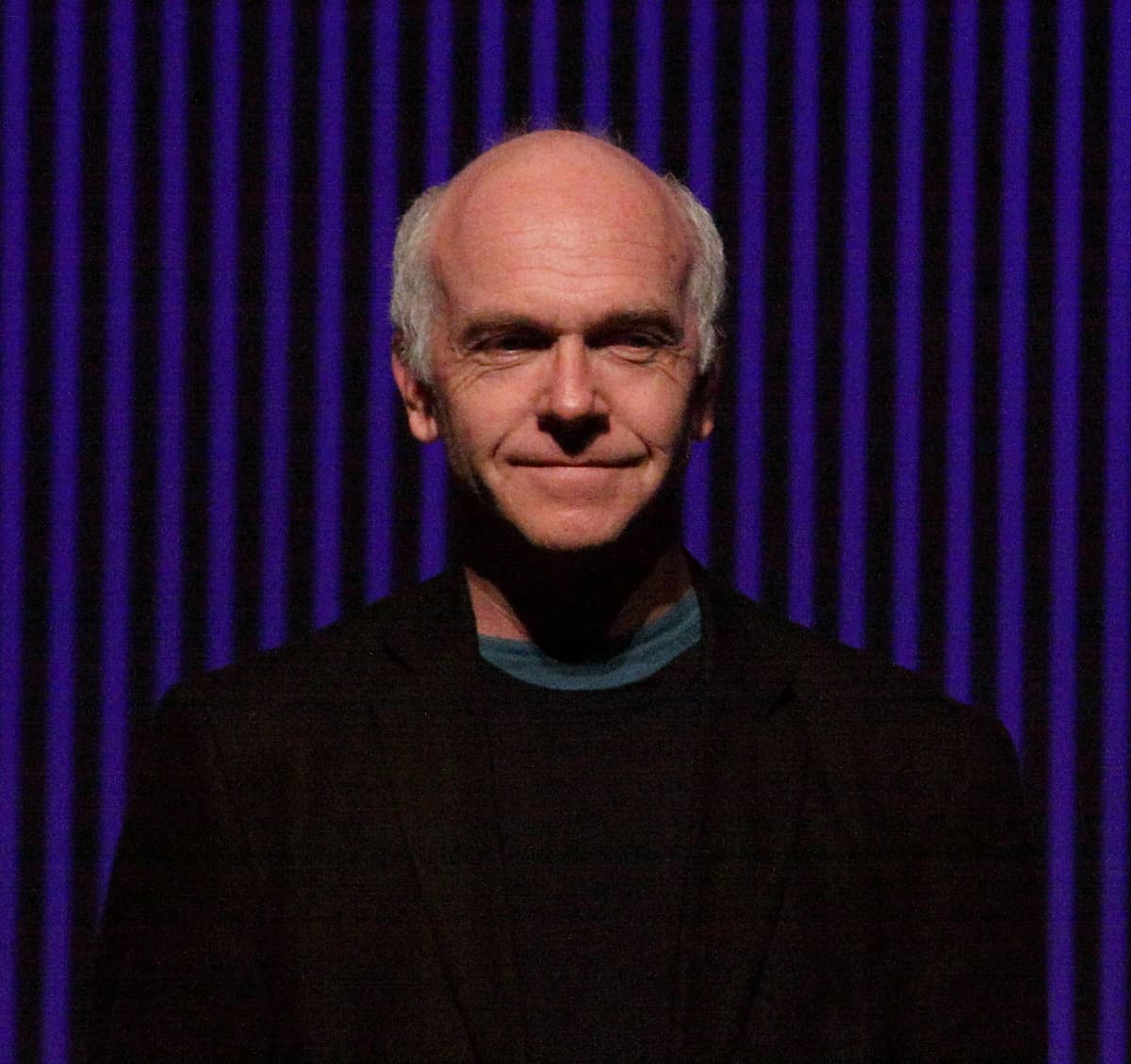
John Oswald
A dizzying, high-speed collision of familiar pop culture fragments. It is music built from other music, challenging your brain to keep up with the pace of change.
A dizzying, high-speed collision of familiar pop culture fragments. It is music built from other music, challenging your brain to keep up with the pace of change.
Listening to John Oswald is like watching the entire history of recorded sound put through a high-speed blender. It is a sensory overload of 'plunderphonics,' a term he coined to describe the art of taking existing audio and reassembling it into something entirely new, often unrecognizable, and technically illegal. The music is jittery, dense, and intellectually playful, constantly winking at the listener with half-remembered melodies that vanish as quickly as they appear.
What makes Oswald truly distinctive is his mastery of the 'micro-sample.' While other artists might loop a drum beat, Oswald will stitch together a thousand distinct sound fragments into a twenty-minute suite. His work, particularly the seminal 'Plexure,' feels less like a song and more like a data stream. It is a radical deconstruction of celebrity, copyright, and the very idea of authorship, delivered with a mischievous, avant-garde spirit.
Newcomers should start with the 'Plunderphonics 69/96' collection. It provides the broadest overview of his technique, ranging from slowed-down Dolly Parton vocals that sound like a soulful baritone to the frantic, kaleidoscopic pop-shredding of his later work. It is an essential document for anyone interested in how the digital age transformed our relationship with art.
John Oswald (born May 30, 1953 in Kitchener, Ontario) is a Canadian composer, saxophonist, media artist and dancer. He is best known for coining the term "plunderphonics", the practice of making new music out of previously existing recordings.
Cassette uses generative AI to enrich its catalog. How we use AI →


