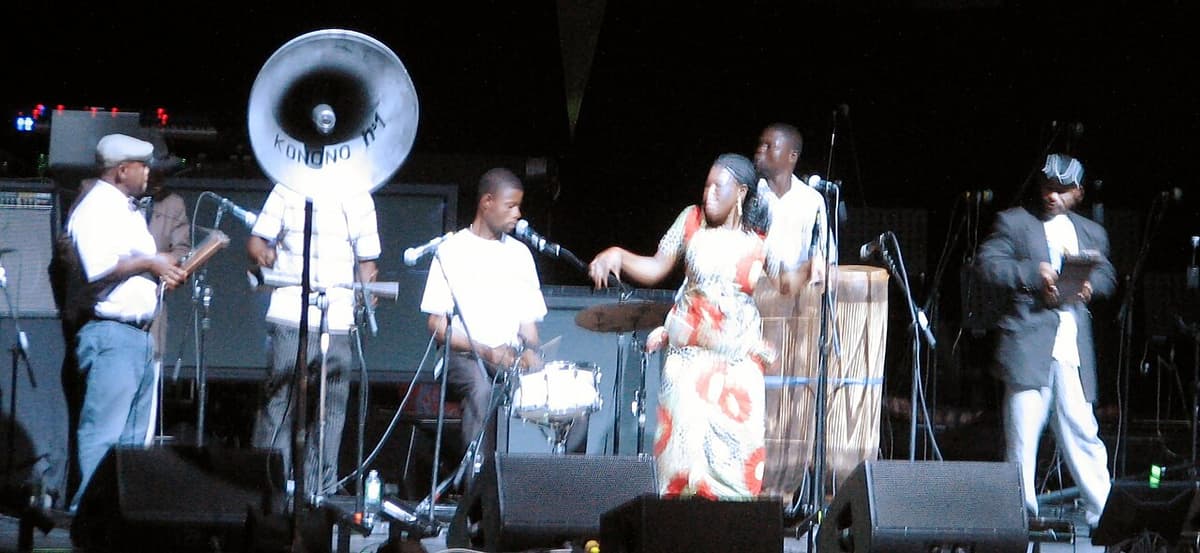
Konono Nº1
Electrified thumb pianos and junkyard percussion creating a wall of distorted, hypnotic joy. It is the sound of a Kinshasa street party plugged into a lightning bolt.
Electrified thumb pianos and junkyard percussion creating a wall of distorted, hypnotic joy. It is the sound of a Kinshasa street party plugged into a lightning bolt.
Konono No.1 sounds like a beautiful collision between ancient rhythmic traditions and the grit of a modern industrial city. The central sound is the likembe, or thumb piano, but it is amplified through DIY electronics that push the signal into a glorious, fuzzy distortion. This creates a sonic wall that feels closer to punk rock or noise-techno than traditional folk music, even though the structures are deeply rooted in Congolese heritage.
What makes them truly distinctive is their 'Congotronics' aesthetic: an unintentional byproduct of using salvaged car parts and homemade megaphones to be heard over the din of the city. The result is a dense, metallic texture that is both abrasive and incredibly uplifting. The rhythms are interlocking and relentless, creating a trance-like state that makes it impossible to stand still.
Start with the 2004 album 'Congotronics'. It is the definitive introduction to their sound, capturing the raw energy of their electrified likembes and the clatter of their junkyard drum kits. It is a record that sounds like nothing else on earth, bridging the gap between avant-garde experimentalism and pure, unadulterated dance music.
Konono Nº1 is a musical group from Kinshasa, Democratic Republic of the Congo. They are known for their DIY aesthetic, combining electric likembé (a traditional instrument similar to the mbira) with vocals, dancers, and percussion instruments that are made out of items salvaged from a junkyard. The group's amplification equipment is equally rudimentary, including a microphone carved out of wood fitted with a magnet from an automobile alternator and a gigantic horn-shaped amplifier. The genre of the band's music has been characterized as difficult to classify; the group themselves have classified their music under the labels of "tradi-modern" and "Congotronics". Konono Nº1 achieved international recognition around 2004, with the release of their album Congotronics through the Crammed Discs record label. Appealing to fans of rock and electronic music, they played at the Eurockéennes festival in France the following year. They collaborated with Björk for a song on her 2007 album Volta, and with Herbie Hancock for a song on his 2010 album The Imagine Project. Konono Nº1 released the album Assume Crash Position in 2010, followed by Konono Nº1 Meets Batida (2016), a collaboration between Konono Nº1 and the musician Batida, also known as Pedro Coquenão.
Cassette uses generative AI to enrich its catalog. How we use AI →


