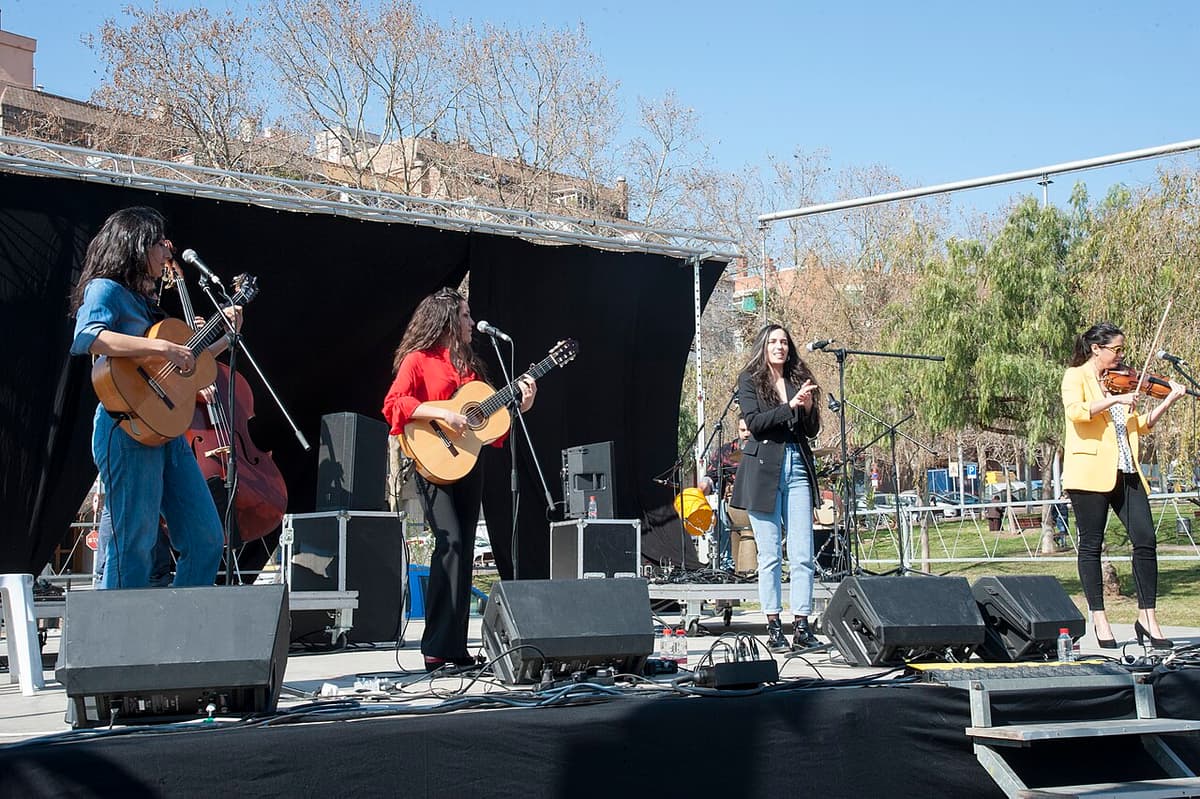
Las Migas
Sun-drenched flamenco that breathes with violin, acoustic guitars, and intricate vocal harmonies. A bright, sophisticated take on Mediterranean roots music.
Sun-drenched flamenco that breathes with violin, acoustic guitars, and intricate vocal harmonies. A bright, sophisticated take on Mediterranean roots music.
Las Migas offer a sound that feels like a warm breeze off the Balearic Sea. While their foundation is rooted in the rigorous traditions of flamenco, they approach the genre with a lightness and melodic clarity that makes it feel entirely modern. It is music defined by the interplay of nylon-string guitars and a soaring violin, anchored by rhythmic hand-claps and percussion that never feels heavy-handed.
What truly sets them apart is their identity as an all-female quartet who are both the vocalists and the primary instrumentalists. This creates a specific kind of intimacy and collective energy, where the vocal harmonies are as tightly woven as the guitar picking. They aren't afraid to let a bit of bluegrass fiddle or pop sensibility color their arrangements, resulting in a 'flamenco-chic' aesthetic that is both sophisticated and deeply accessible.
Start with their Latin Grammy-winning album 'Libres' to hear their most polished and expansive sound. It perfectly captures their ability to move from high-energy rumbas to delicate, introspective ballads without losing their signature Mediterranean warmth.
Las Migas is a Spanish all-female popular music quartet formed in Barcelona in 2004. Their music is based on traditional flamenco forms, frequently combined with a diverse set of musical styles including country, pop, urban music, bluegrass, folk, rumba, jazz, and classical music. Notably, the band members participate in playing instruments (el Toque), composition, and songwriting that extend beyond the limited roles traditionally assigned to women in flamenco since the early 20th century. Former members of Las Migas who have gone on to have solo musical careers include Sílvia Pérez Cruz and Alba Carmona. They have won the Latin Grammy Award for Best Flamenco Album twice, for Libres in 2022 and for Flamencas in 2025.
Cassette uses generative AI to enrich its catalog. How we use AI →


