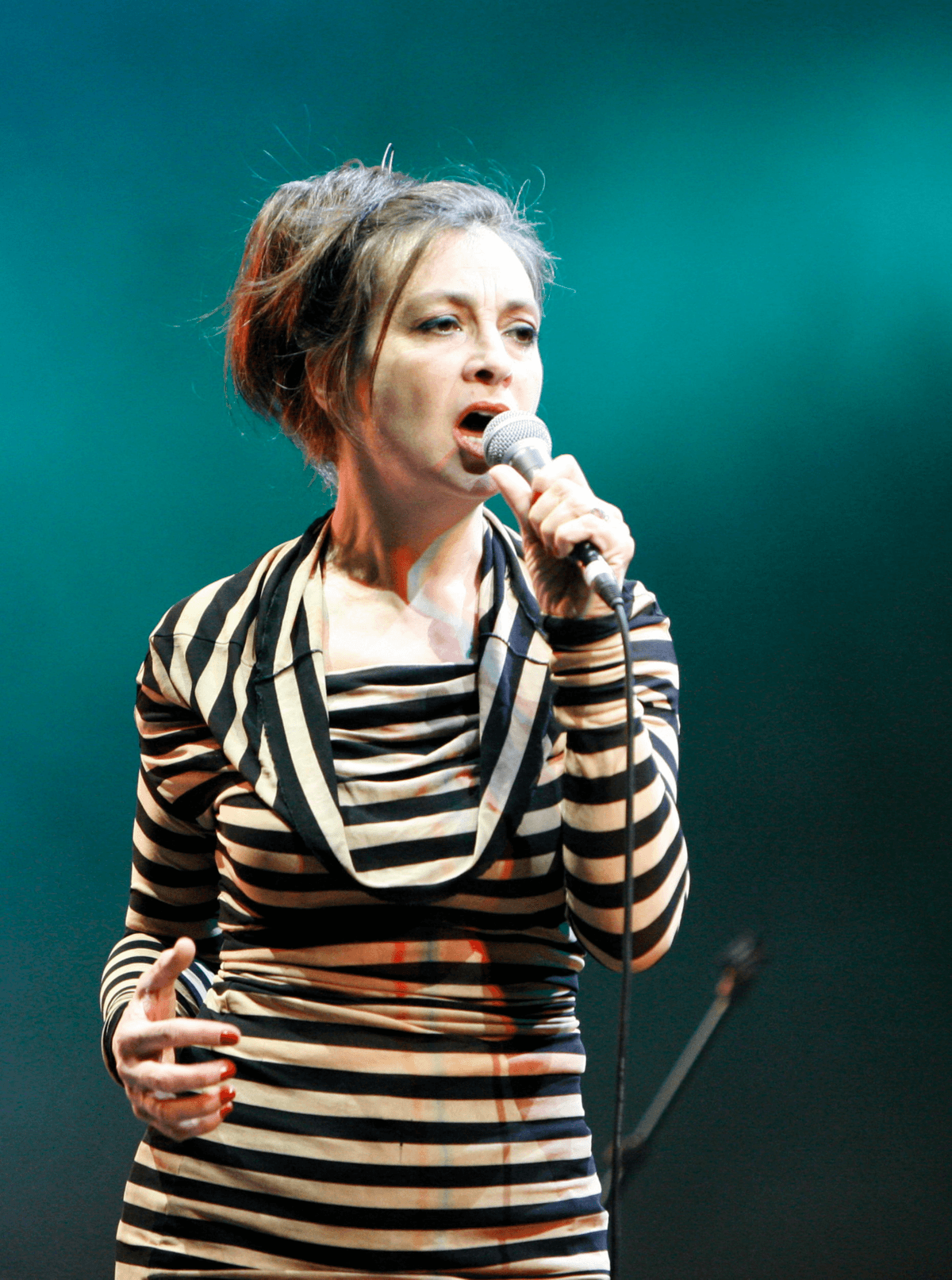
Lene Lovich
High-energy new wave featuring theatrical vocals and sharp saxophone. Eccentric, catchy pop with a dark, cabaret-inspired edge for restless nights.
High-energy new wave featuring theatrical vocals and sharp saxophone. Eccentric, catchy pop with a dark, cabaret-inspired edge for restless nights.
Lene Lovich sounds like a high-wire act between a gothic cabaret and a futuristic pop laboratory. Her music is defined by a restless, kinetic energy that refuses to sit still, blending the jagged edges of post-punk with the infectious hooks of early synth-pop. It is a sonic world where bird-calls, operatic squeals, and staccato saxophone lines coexist within tightly wound pop structures.
What truly sets her apart is her vocal gymnastics. Lovich uses her voice as a versatile instrument, jumping from a breathy whisper to a piercing, hiccuping falsetto in a single phrase. This theatricality, combined with her collaborator Les Chappell's sharp guitar work, creates a sense of delightful unpredictability. It is music that feels both deeply intellectual and wildly uninhibited, capturing the experimental spirit of the late 70s London art scene.
Start with her debut album, Stateless. It contains the quintessential hit Lucky Number, which perfectly showcases her signature vocal style and the quirky, upbeat production that made her a new wave icon. From there, move to Flex for a slightly darker, more atmospheric exploration of her unique art-pop vision.
Lili-Marlene Premilovich, known professionally as Lene Lovich ( LAY-nə LUV-itch), is an American-British singer. She first gained attention in 1979 with the release of her hit single "Lucky Number", which peaked at number 3 on the UK Singles Chart and made her a leading figure of the new wave music scene. She is equally notable for her eccentric hairstyle, clothing and quirky sense of humor while performing. Born in Detroit, Michigan, Lovich moved to England at the age of 13, where she met guitarist and songwriter Les Chappell, who later became her long-time music collaborator and life partner. She developed an interest in art and theatre, enrolling at the Central School of Art and Design where she took saxophone lessons. In 1975, she joined the band the Diversions and shortly afterwards wrote the lyrics to Cerrone's single "Supernature". After the band broke up, Lovich started looking for another band to join and contacted the radio presenter Charlie Gillett, who got her to record a demo of Tommy James and the Shondells' song "I Think We're Alone Now" and played it to Dave Robinson of Stiff Records, who decided to sign Lovich. The song was released as a single and appeared on her debut studio album Stateless (1978), which produced the single "Lucky Number". She released two more albums, Flex (1979) and No Man's Land (1982), on Stiff Records. In 1989, she independently released the album March, before her 15-year hiatus. She focused more on her family but returned in 2005 with the release of her album Shadows and Dust. In 2013, she established her own publishing label, Flex Music, and released a re-mastered version of all her previous albums in a limited edition box set.
Shares analog warmth, studio polished, layered dense (production style); new wave, post-punk, synth-pop (subgenres)
Shares analog warmth, studio polished, layered dense (production style); rebellious, playful, energetic (moods)
Shares playful, mysterious, energetic (moods); analog warmth, studio polished, layered dense (production style)
Shares darkwave, post-punk, art pop (subgenres); analog warmth, studio polished, layered dense (production style)
Shares analog warmth, studio polished, layered dense (production style); new wave, art pop, synth-pop (subgenres)
Shares analog warmth, studio polished, layered dense (production style); new wave, post-punk, synth-pop (subgenres)
Shares new wave, post-punk, art pop (subgenres); basement show, urban night (atmosphere)
Shares analog warmth, studio polished, layered dense (production style); playful, energetic, rebellious (moods)
Shares analog warmth, studio polished, layered dense (production style); basement show, urban night, festival (atmosphere)
Shares new wave, art pop, synth-pop (subgenres); basement show, urban night, festival (atmosphere)
Shares theatrical, new wave, post-punk, synth-pop (signature)
Cassette uses generative AI to enrich its catalog. How we use AI →