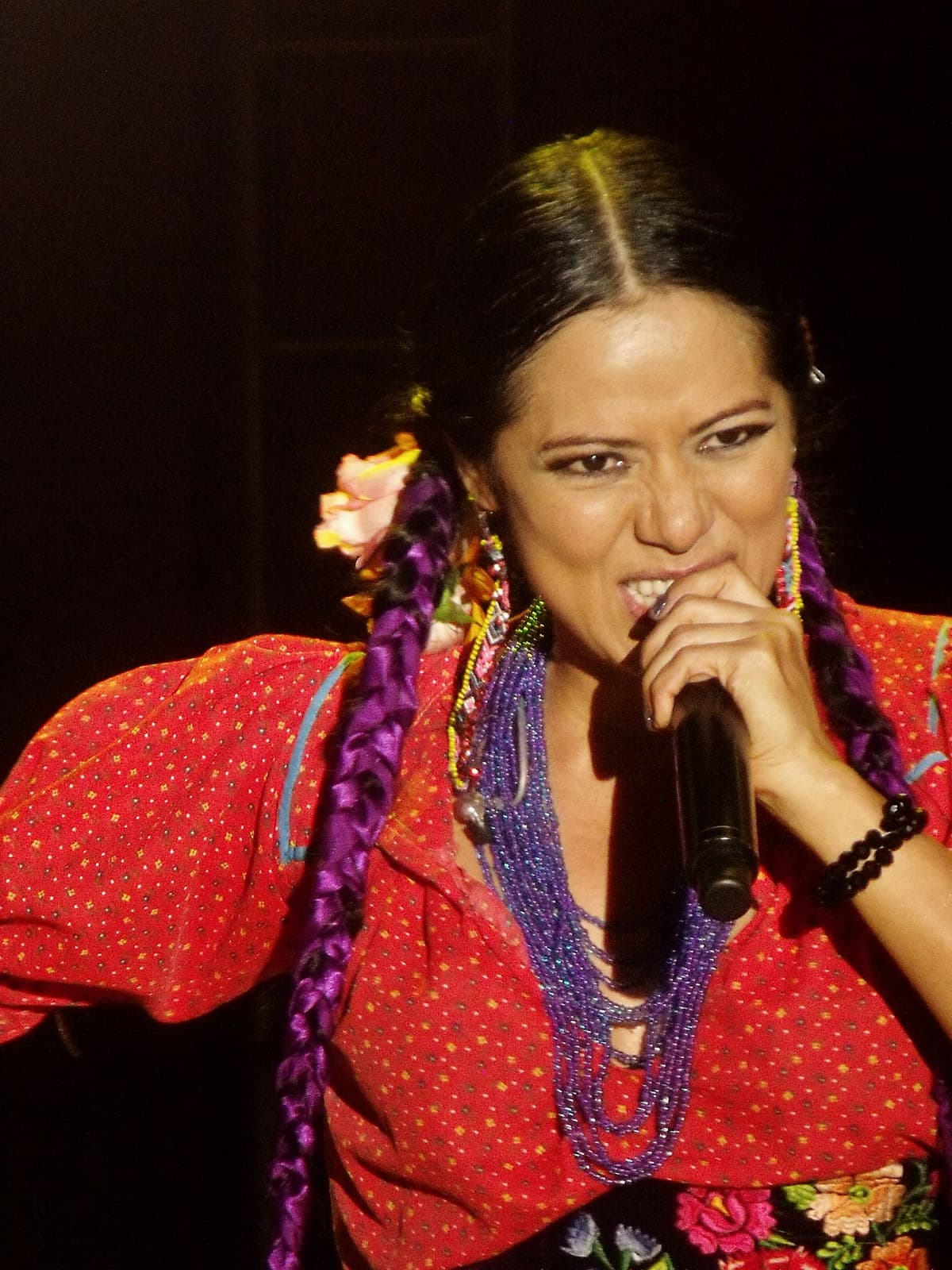
Lila Downs
A powerful, operatic voice bridging ancient indigenous roots and modern social protest. Cinematic Mexican folk that feels both deeply ancestral and urgently current.
A powerful, operatic voice bridging ancient indigenous roots and modern social protest. Cinematic Mexican folk that feels both deeply ancestral and urgently current.
Lila Downs creates a sound that is as vast and varied as the Mexican landscape itself. Her music is a vibrant tapestry where traditional ranchera and mariachi elements collide with jazz, blues, and even hip-hop. It is characterized by her extraordinary vocal range, which can shift from a low, gravelly whisper to a soaring, operatic belt in a single phrase, often punctuated by the sharp, celebratory cries of traditional Mexican folk.
What truly sets her apart is her deep commitment to her Mixtec heritage and her background in anthropology. She doesn't just sing in Spanish and English; she breathes life into indigenous languages like Zapotec and Nahuatl, weaving Mesoamerican mythology into modern narratives of migration, social justice, and feminine power. The production often feels earthy and organic, favoring live instrumentation like weeping violins, sharp trumpets, and hand-played percussion.
For those new to her work, La Sandunga is the essential entry point for its raw, traditional beauty, while Pecados y Milagros offers a more polished, conceptual look at the intersection of faith and modern life. It is music for those who want to feel the weight of history and the fire of the present moment simultaneously.
Ana Lila Downs Sánchez (born 9 September 1968) is a Mexican singer-songwriter. She performs her own compositions and the works of others in multiple genres, as well as tapping into Mexican traditional and popular music. She also incorporates indigenous Mexican influences and has recorded songs in many indigenous languages such as Mixtec, Zapotec, Mayan, Nahuatl and Purépecha. Born and raised in Oaxaca, she primarily studied at the Institute of Arts by Oaxaca and briefly attended the University of Minnesota, before withdrawing to focus on her musical career. She soon began performing in the traditional music scene of Oaxaca City. Her first (independent) album, Ofrenda, was released in 1994. In 1999, Downs came to prominence with her debut studio album, La sandunga, which was a critical and commercial success. She achieved international success in 2001 with the album Border which emerged in the music scene of Mexico and Latin America in the early 2000s (decade). Downs's seventh album, Pecados y milagros (2011), topped album charts in most major markets and generated chart-topping world music albums. Her eighth album, "Balas y Chocolate", was released in 2015. "Salón Lágrimas y Deseo", her ninth album, came out in 2017. Downs began performing in school, demonstrating her vocal ability with traditional music, Latin and American influences, and with her own original twist on dancing. Downs, a native Spanish speaker, also speaks fluent Mixtec and English. Downs through her activism has gone through great lengths to preserve the Mixtec language as well as many other Indigenous Mexican languages. Influenced by Chavela Vargas, Mercedes Sosa, Lucha Villa, and Amparo Ochoa, Lila Downs is recognized for her flamboyant, diverse and outré contributions to the music industry through her traditional and authentic fashion, the majority of which are based around Mexico's indigenous peoples' styles, cultures and heritages, which show through her performances and music videos. Her achievements include one Grammy Award and three Latin Grammy Awards. Besides her musical career, she involves herself with humanitarian causes and political activism, especially dealing with issues of Latin America's indigenous population.
Cassette uses generative AI to enrich its catalog. How we use AI →


