Lionel Loueke
Intricate West African rhythms meet sophisticated jazz harmony. A warm, percussive guitar style that feels like a conversation between tradition and the future.
Intricate West African rhythms meet sophisticated jazz harmony. A warm, percussive guitar style that feels like a conversation between tradition and the future.
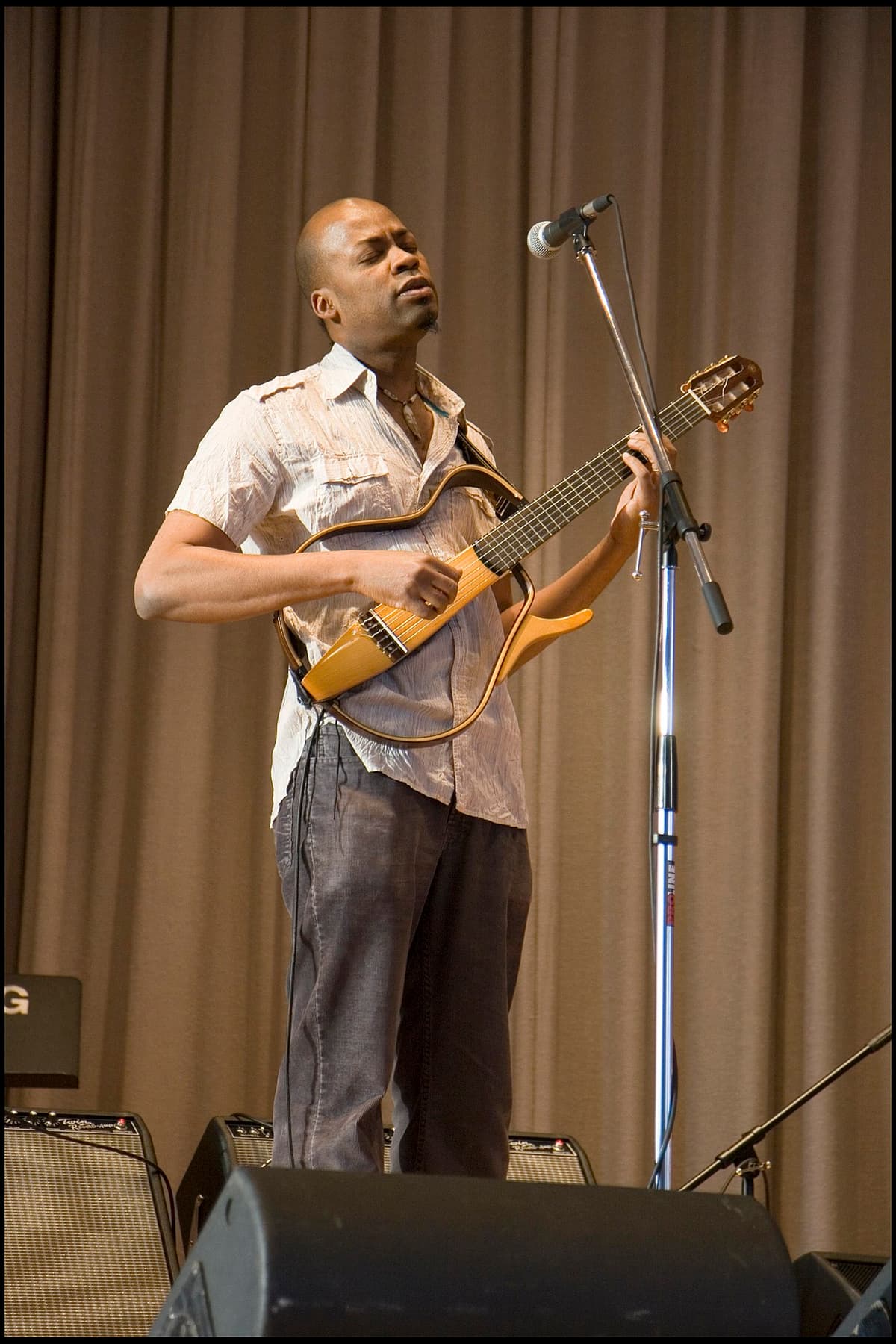
Lionel Loueke is a seminal figure in 21st-century jazz, bridging the gap between West African musical traditions (specifically from Benin) and modern improvisational theory. A protégé of Herbie Hancock, Loueke's sound identity is built on 'sprung rhythms' and a highly idiosyncratic approach to the guitar that incorporates percussive mouth sounds and unconventional string preparations.
His career arc moved from the Berklee and Thelonious Monk Institute circles to becoming a staple of the Blue Note roster, where he released defining works like 'Karibu' and 'Heritage.' Culturally, he represents a globalized jazz movement that prioritizes rhythmic complexity and non-Western scales without sacrificing melodic accessibility. Critics consistently praise his 'painterly' approach to harmony and his ability to function as a one-man rhythm section. His influence is seen in a new generation of guitarists like Julian Lage and Gilad Hekselman who value textural exploration and rhythmic fluidity over traditional bebop tropes.
Shares spiritual jazz, avant-garde jazz, jazz fusion, nu jazz (subgenre)
Shares spiritual jazz, avant-garde jazz, jazz fusion, nu jazz (subgenre)
Shares spiritual jazz, jazz fusion, dry_intimate, chanting (subgenre)
Shares spiritual jazz, jazz fusion, nu jazz, chanting (subgenre)
Shares spiritual jazz, avant-garde jazz, jazz fusion, nu jazz (subgenre)
Cassette uses generative AI to enrich its catalog. How we use AI →