Lowlow, born Giulio Elia Sabatello, is a pivotal figure in the second wave of Italian mainstream rap. Emerging from the Honiro Label collective, he initially gained notoriety for his technical proficiency and battle-rap pedigree.
His career arc is defined by a transition from the raw, competitive energy of the NSP crew to a more conceptual and polished solo career under major labels like Sugar and Columbia. His sound identity is built on 'metriche' (metrics), a focus on complex rhyme schemes and high-tempo delivery that often borders on the theatrical. Culturally, he occupies a space between the hardcore rap purists and the pop-leaning charts, often using his platform to discuss mental health and the darker side of fame. His influence is seen in the 'lyrical miracle' style of younger Italian rappers who prioritize flow complexity over trap aesthetics. Critical consensus highlights his ability to weave intricate stories, though some find his intensity polarizing. He remains a key architect of the 'conscious-pop' hybrid in Italy.



Shares pop rap, conscious hip-hop, trap (subgenres); studio_polished, digital_clarity, layered_dense (production style)

Shares brooding, intense, vulnerable (moods); studio_polished, digital_clarity, layered_dense (production style)

Shares brooding, intense, vulnerable (moods); studio_polished, layered_dense, compressed_loud (production style)
Shares studio_polished, digital_clarity, compressed_loud (production style); brooding, intense, vulnerable (moods)

Shares brooding, intense, vulnerable (moods); pop rap, conscious hip-hop, trap (subgenres)
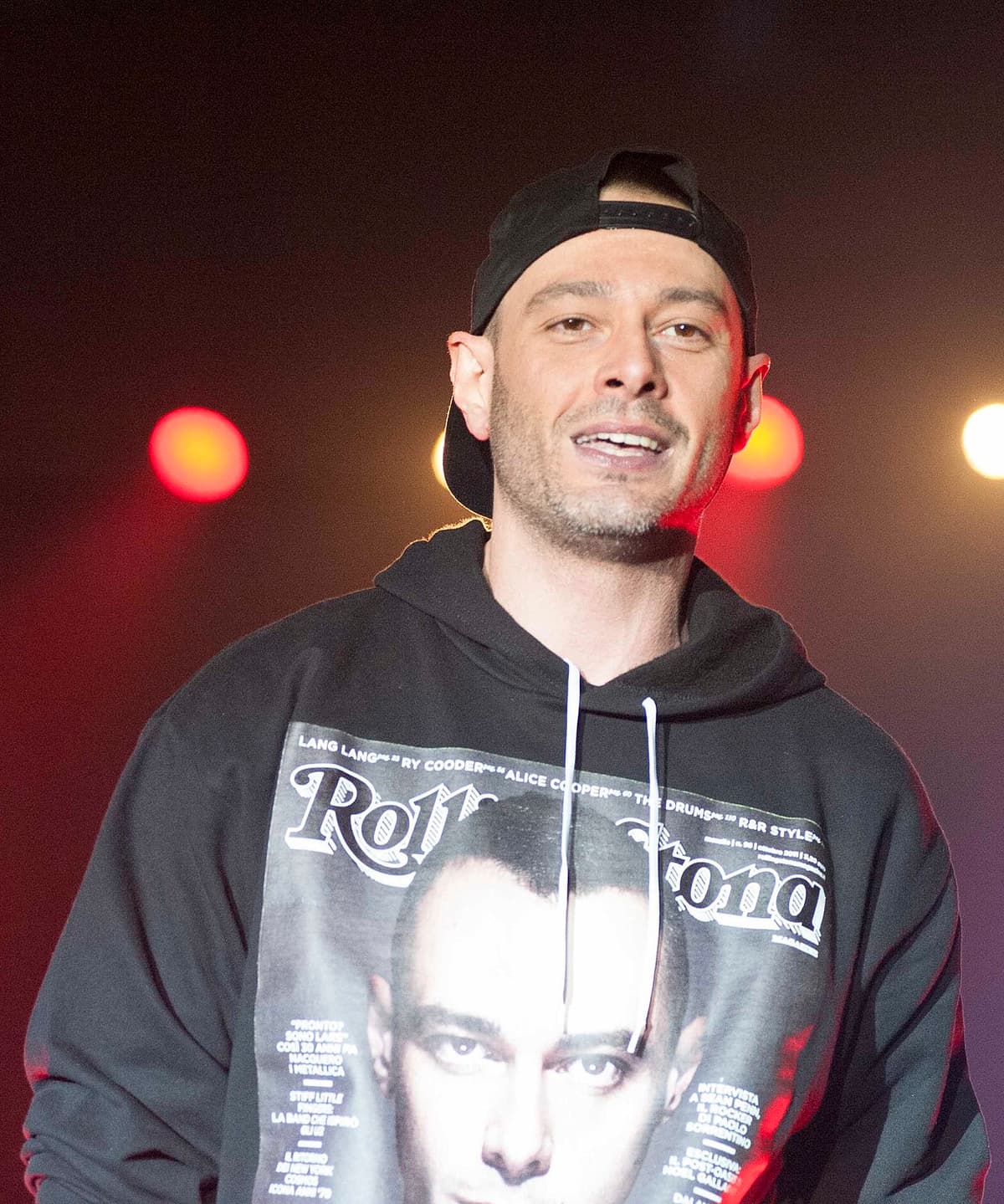

Shares pop rap, conscious hip-hop, trap (subgenres); studio_polished, digital_clarity, layered_dense (production style)
Shares studio_polished, digital_clarity, layered_dense (production style); pop rap, conscious hip-hop, trap (subgenres)
Cassette uses generative AI to enrich its catalog. How we use AI →