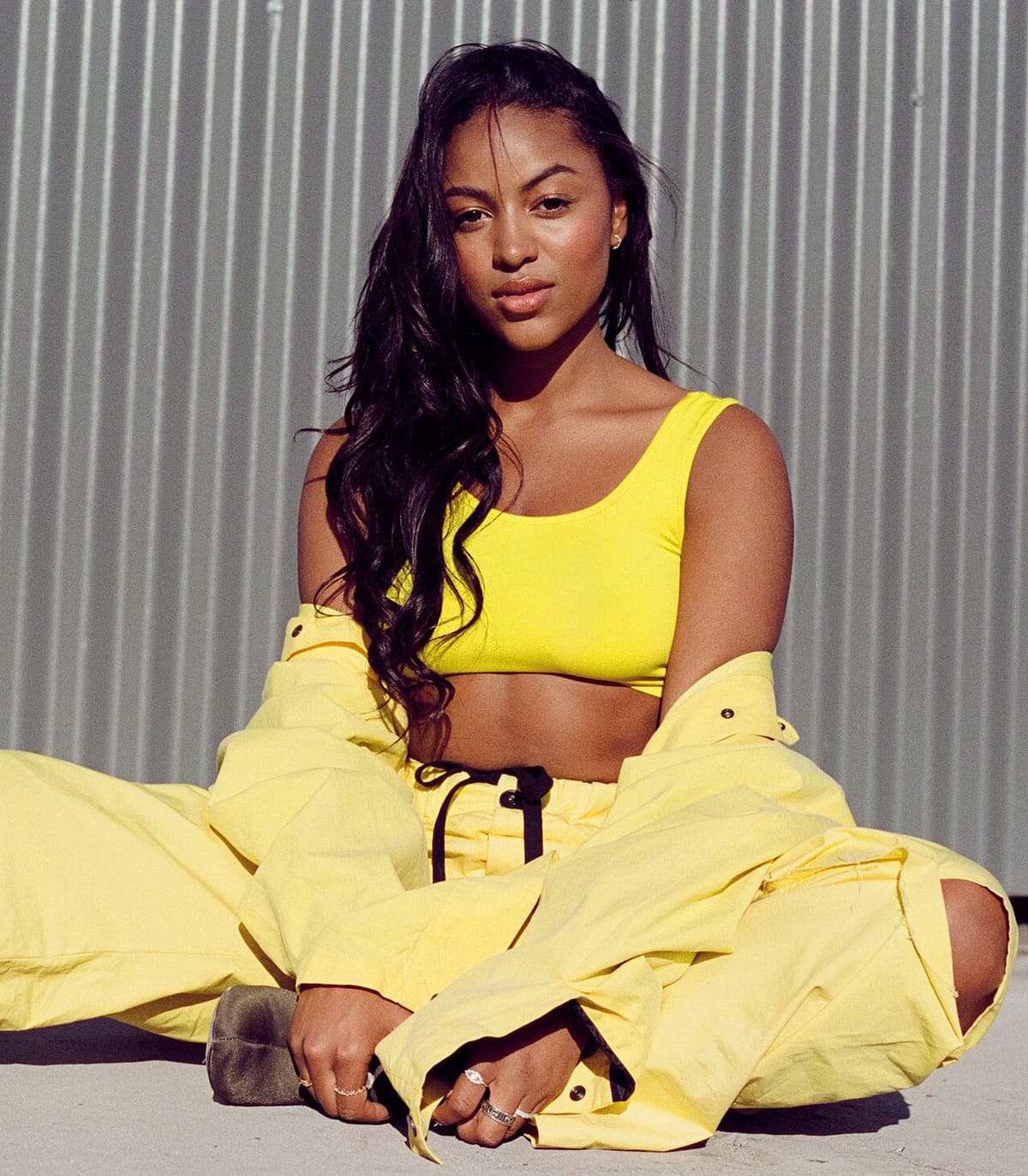
Mýa
Sleek, breathy R&B that balances street-ready hip-hop energy with a dancer's precision. Polished Y2K pop for late nights and neon-lit dance floors.
Sleek, breathy R&B that balances street-ready hip-hop energy with a dancer's precision. Polished Y2K pop for late nights and neon-lit dance floors.
Mýa emerged in the late 1990s as a pivotal figure in the second wave of contemporary R&B, bridging the gap between the soulful foundations of the early 90s and the high-gloss, hip-hop-integrated pop of the 2000s. Her sound identity is built on a foundation of breathy, light-soprano vocals, often layered to create a shimmering, ethereal effect.
Unlike many of her contemporaries who focused on power-house belting, Mýa utilized rhythmic precision and dance-influenced phrasing, a byproduct of her extensive training in ballet and tap. Her career arc saw her move from a teen-oriented debut to a dominant force in the early 2000s through massive collaborations like 'Ghetto Supastar' and the Grammy-winning 'Lady Marmalade.' Culturally, she is cited as a major influence on the 'alternative R&B' movement of the 2010s, with artists like Tinashe and Victoria Monét drawing from her blueprint of the dancer-vocalist. Critically, she is respected for her longevity and her transition to independent ownership, releasing several projects via her own label, Planet 9. Her work remains a touchstone for the Y2K aesthetic, prized by collectors for its pristine production and era-defining visual identity.
Cassette uses generative AI to enrich its catalog. How we use AI →