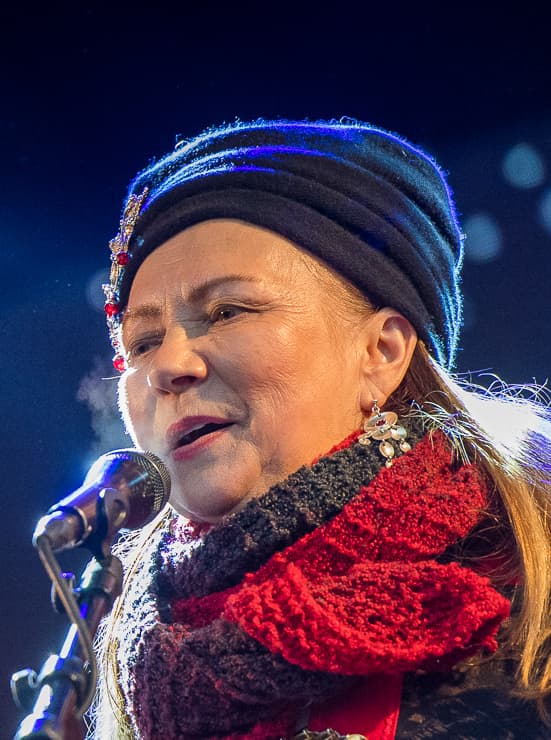
Mari Boine
Ancient Sámi joik traditions reimagined through jazz and art rock. A powerful, spiritual voice that feels like the wind across a tundra.
Ancient Sámi joik traditions reimagined through jazz and art rock. A powerful, spiritual voice that feels like the wind across a tundra.
Mari Boine creates music that feels like a living bridge between the ancient and the modern. Her sound is anchored by the joik, a traditional Sámi vocal form that is less about singing 'about' something and more about channeling the essence of a person, place, or animal. This is music of the earth, heavy with the resonance of frame drums and the breathy whistles of overtone flutes, yet it is unafraid to incorporate the electric textures of jazz fusion and rock.
What truly distinguishes Boine is the palpable sense of resistance and reclamation in her work. Having grown up in a culture where her native traditions were suppressed, her music carries a weight of historical survival. It is both haunting and empowering, moving from sparse, skeletal arrangements to dense, rhythmic grooves that feel like a heartbeat. The production often emphasizes a natural, spacious quality, allowing her voice to soar over a global tapestry of instruments like the charango, udu, and electric bass.
For those new to her catalog, the breakthrough album Gula Gula is the essential starting point. It captures her at a pivotal moment where her political message and musical innovation perfectly aligned. It is a profound listening experience that demands your full attention, rewarding you with a deep sense of place and a connection to a landscape that is as beautiful as it is harsh.
Mari Boine (born Mari Brit Randi Boine; 8 November 1956) is a Norwegian Sámi singer. She combined a form of Sámi joik singing with rock. In 2008, she became a professor of musicology at Nesna University College.
Cassette uses generative AI to enrich its catalog. How we use AI →


