Martin Carthy
Intricate, percussive guitar work meeting the stark weight of English history. Traditional folk that feels both ancient and urgently alive.
Intricate, percussive guitar work meeting the stark weight of English history. Traditional folk that feels both ancient and urgently alive.
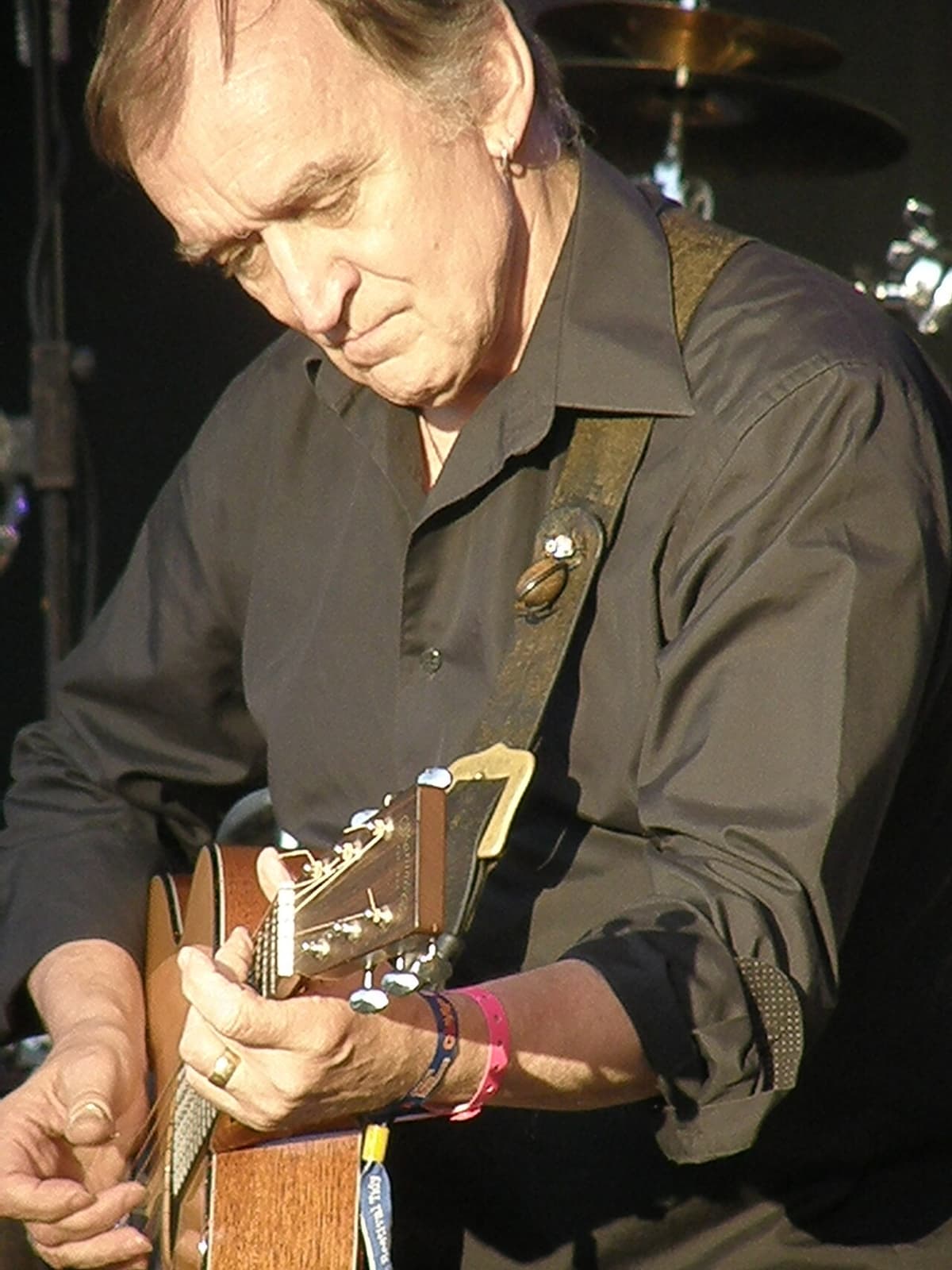
Martin Carthy is arguably the most significant figure in the second English folk revival. His sound identity is built upon a revolutionary approach to the acoustic guitar, specifically his use of non-standard modal tunings (like CGCDGA) and a percussive right-hand technique that emphasizes the 'thump' of the melody.
This style was so distinctive that it directly influenced Bob Dylan (who famously adapted Carthy's arrangement of 'Lord Franklin' for 'Bob Dylan's Dream') and Paul Simon (who learned 'Scarborough Fair' directly from Carthy). Career-wise, Carthy has functioned as both a solo titan and a collaborative linchpin, moving through Steeleye Span, The Watersons, and Brass Monkey. His work is characterized by a refusal to sentimentalize traditional music; he treats folk songs as living, breathing documents of social history, often focusing on the darker, more complex 'big ballads.' Critical consensus views him as the 'conscience' of English folk, a musician who maintained the integrity of the tradition while radically expanding its technical possibilities. His influence web extends from 60s icons to modern experimentalists like Richard Thompson and Ben Chasny.
Cassette uses generative AI to enrich its catalog. How we use AI →