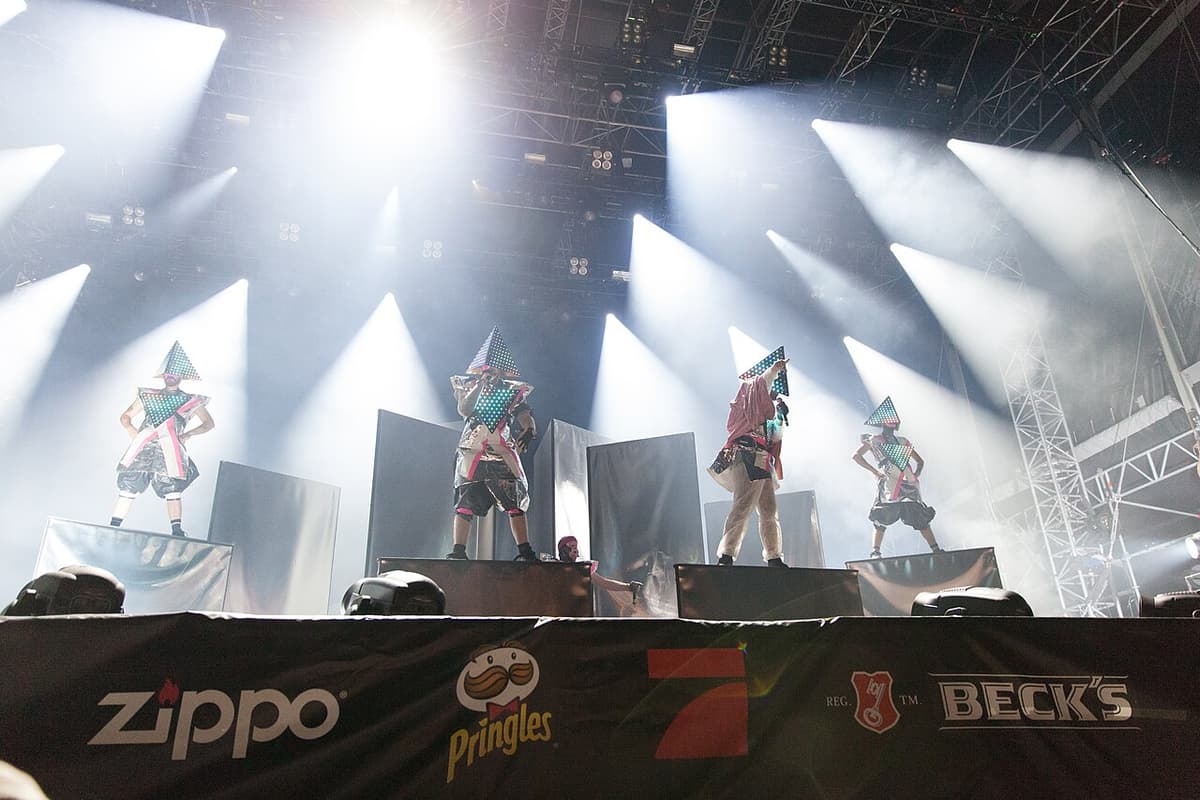
Maskinen
Aggressive Swedish electro-rap fueled by heavy bass and baile funk rhythms. High-octane club music for the front row of a festival stage.
Aggressive Swedish electro-rap fueled by heavy bass and baile funk rhythms. High-octane club music for the front row of a festival stage.
Maskinen emerged in 2007 as a supergroup of sorts, uniting Herbert Munkhammar (Afasi & Filthy) and Frej Larsson (Slagsmålsklubben), with early contributions from Oskar Linnros. Their sound identity is a potent mix of alternative hip-hop and heavy electronic dance music, specifically drawing from the rhythmic structures of Rio de Janeiro's baile funk scene, which was a novel influence in the Nordic region at the time.
Their career arc is marked by a period of intense dominance in the Swedish live circuit between 2007 and 2015, followed by a nine-year hiatus that ended with a surprise return in 2024. Culturally, they occupy a space between mainstream pop success and underground credibility, often associated with the 'vaskning' era of Swedish nightlife. Critical consensus highlights their ability to produce high-energy, cynical club music that maintains a high level of technical rap skill. They are a central node in the Swedish electronic-rap web, influencing a generation of artists who blend genre boundaries without hesitation.
Shares maximalist, digital_clarity, compressed_loud (production style); playful, energetic, rebellious (moods)

Shares maximalist, digital_clarity, compressed_loud (production style); electropop, dance-pop (subgenres)

Shares maximalist, digital_clarity, compressed_loud (production style); rap, deadpan, processed (vocal style)
Shares electropop, trap, dance-pop (subgenres); maximalist, digital_clarity, compressed_loud (production style)
Shares electropop, trap, dance-pop (subgenres); maximalist, digital_clarity, compressed_loud (production style)
Shares maximalist, digital_clarity, compressed_loud (production style); trap, dance-pop (subgenres)
Shares electropop, trap, dance-pop (subgenres); maximalist, digital_clarity, compressed_loud (production style)
Cassette uses generative AI to enrich its catalog. How we use AI →