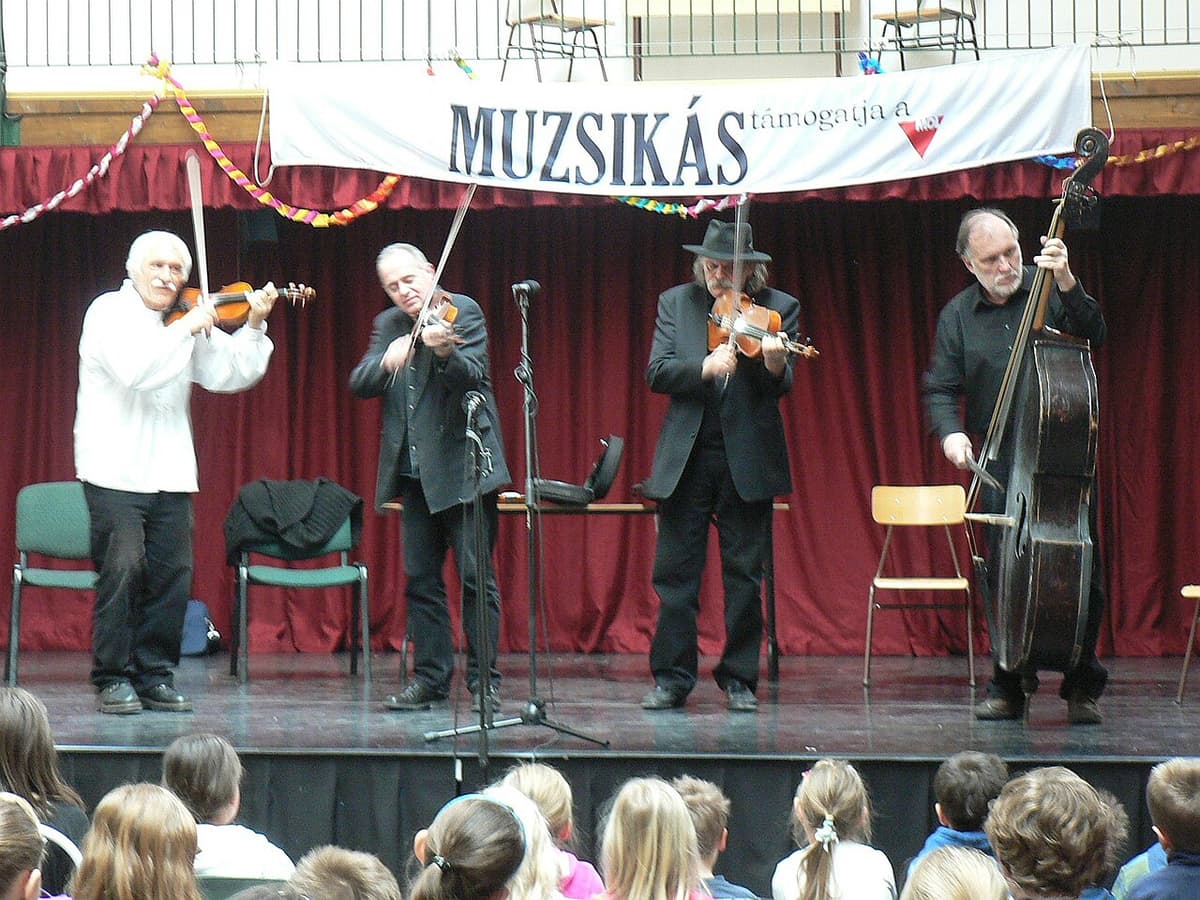
Muzsikás
Ancient Transylvanian melodies and haunting fiddle work. Earthy, unvarnished folk music that feels like a bridge to a lost rural world.
Ancient Transylvanian melodies and haunting fiddle work. Earthy, unvarnished folk music that feels like a bridge to a lost rural world.
Listening to Muzsikás is like stepping into a sepia-toned photograph of the Carpathian Mountains. Their sound is defined by the woody creak of fiddles, the deep thrum of the three-stringed kontra, and the haunting, bell-like clarity of Márta Sebestyén's vocals. It is music that feels pulled directly from the soil, carrying the weight of centuries without ever feeling like a museum piece. There is a raw, physical presence to the playing that captures both the joy of a village dance and the profound loneliness of the plains.
What sets them apart is their rigorous commitment to the 'táncház' (dance house) tradition, which prioritizes the authentic, unpolished textures of village life over commercial polish. They don't just play folk songs; they reconstruct the specific acoustic environments of Transylvania and rural Hungary. Whether they are exploring the Jewish klezmer roots of the region or the complex rhythmic structures that fascinated Béla Bartók, their music maintains a startling emotional honesty that feels both ancient and immediate.
Start with 'The Bartók Album' to hear how they bridge the gap between traditional village tunes and high-art composition. For a deeper dive into their most evocative and atmospheric work, 'Máramaros: The Lost Jewish Music of Transylvania' offers a haunting, essential look at a vanished cultural landscape.
Muzsikás is a Hungarian musical group playing mainly folk music of Hungary and other countries and peoples of the region. Established in 1973, it has also played works by classical composers, especially Béla Bartók, who himself collected folk tunes. The group has recorded other albums and, since 1978, has toured regularly around the world. The group's collaboration with the noted singer Márta Sebestyén has produced a string of highly regarded recordings. The traditional Hungarian folk song "Szerelem, Szerelem", performed by Muzsikas featuring Márta Sebestyén, featured in the movie The English Patient (1996). Three of their songs are used in the anime film Only Yesterday by Studio Ghibli: "Teremtés" ("Creation"), "Hajnali nóta" ("Morning Song"), and "Fuvom az énekem" ("I Sing My Song"). The group is mentioned by the main protagonists, while the songs play in the background in a prolonged dialogue about the benefits of a natural environment and rural life.
Cassette uses generative AI to enrich its catalog. How we use AI →


