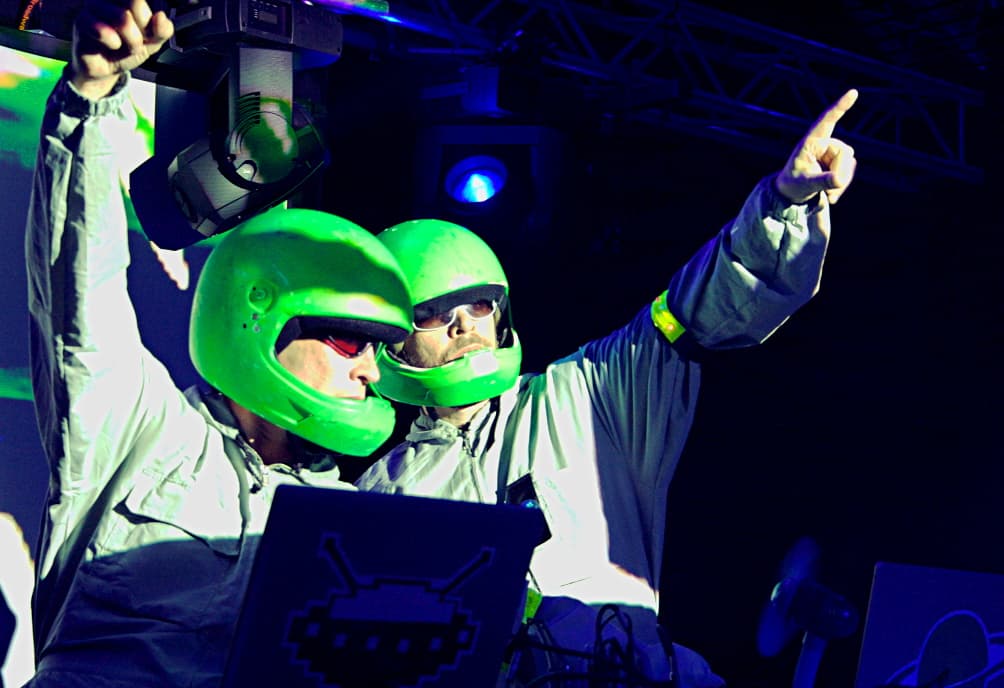
Ninjaspark is a pivotal entity in the Swedish bitpop movement, a subgenre that flourished in the late 2000s by merging chiptune aesthetics with indie-pop structures. Formed in 2005 under the humorous pretense of being a band before they actually owned instruments, the group's origin story defines their 'fake it until you make it' punk ethos.
Their sound is characterized by the use of legacy gaming hardware sounds (8-bit) layered with modern synth-pop production and Swedish-language lyrics. They gained notoriety for chaotic live sets at festivals like Arvikafestivalen and a memorable, if polarizing, appearance on the Swedish talent show 'Talang'. After a significant hiatus following their 2011 'breakup' album, the band returned in 2024 with 'EXTRALIV', signaling a matured but still hardware-focused evolution of their sound. Critically, they are viewed as cult heroes of the Scandinavian electronic underground, bridging the gap between technical chiptune composers and mainstream electropop acts.

Shares synth-pop, electropop, indie pop (subgenres); playful, energetic, joyful (moods)
Shares synth-pop, electropop (subgenres); bedroom_production, lo_fi, drum_machine (production style)
Shares synth-pop, electropop, indie pop (subgenres); playful, energetic, rebellious (moods)
Shares bedroom_production, lo_fi, digital_clarity (production style); playful, nostalgic, energetic (moods)
Shares synth-pop, indie pop (subgenres); playful, energetic, nostalgic (moods)

Shares synth-pop, electropop, indie pop (subgenres); bedroom_production, lo_fi, drum_machine (production style)
Shares synth-pop, indie pop (subgenres); playful, nostalgic, joyful (moods)

Shares playful, nostalgic, energetic (moods); lo_fi, bedroom_production, digital_clarity (production style)
Shares electropop, nasal, joyful, bedroom_production (subgenre)
Cassette uses generative AI to enrich its catalog. How we use AI →